
Integrated Brain & Body Care in Wesley Chapel, Florida
Blurry vision can be unsettling and often frustrating.
For some people, the cause is straightforward: a need for glasses or a change in prescription. But for many others, blurry vision persists despite normal eye exams, normal imaging, or updated prescriptions.
At Peak Brain and Body, we frequently see individuals whose blurry vision doesn’t fit neatly into an eye-only diagnosis. That’s because clear vision requires far more than healthy eyes it depends on proper brain, nervous system, vascular, and metabolic function.
Our role is to help determine where the breakdown is occurring and why the visual system is struggling to work together.
If this resonates, the issue may not be the eyes themselves but how the brain is coordinating vision.
Some causes of blurry vision originate primarily in the eyes and require ophthalmologic or optometric care.
Common eye-related causes include:
In these cases, correcting the structure of the eye improves clarity.
However, many people with persistent blurry vision are told:
This is where other systems must be considered.
Vision depends on consistent blood flow and metabolic stability.
Blurry vision may occur with:
In these cases, vision may:
These changes often reflect systemic vascular or metabolic stress, not an eye problem.
Autoimmune diseases can impact vision in multiple ways.
Examples include:
In autoimmune cases, blurry vision may be accompanied by:
Clear vision requires precise coordination between:
Neurological causes of blurry vision include:
In these cases, the eyes may be healthy but the brain is struggling to coordinate visual input, leading to:

One of the most misunderstood aspects of blurry vision is that neurological visual dysfunction can occur without a diagnosed concussion or brain injury.
Visual coordination can be disrupted by:
Because standard imaging (CT, MRI) is designed to detect structural damage such as bleeds or fractures it often comes back normal.
But normal imaging does not rule out dysfunction.
This is why many individuals feel stuck:
Blurry vision is rarely caused by one factor alone. It often develops when multiple systems lose coordination.
The brain must precisely coordinate eye movements, focus, and visual processing.
When this system is inefficient, vision can become blurry even with healthy eyes.
The autonomic nervous system regulates:
Dysfunction here can cause fluctuating or position-dependent vision changes.
Poor circulation, blood sugar swings, or blood pressure instability can temporarily impair visual clarity.
Inflammation can disrupt visual pathways, optic nerves, and processing centers in the brain.
Prolonged screen use, reading, or visually demanding environments can overwhelm an already stressed visual system.
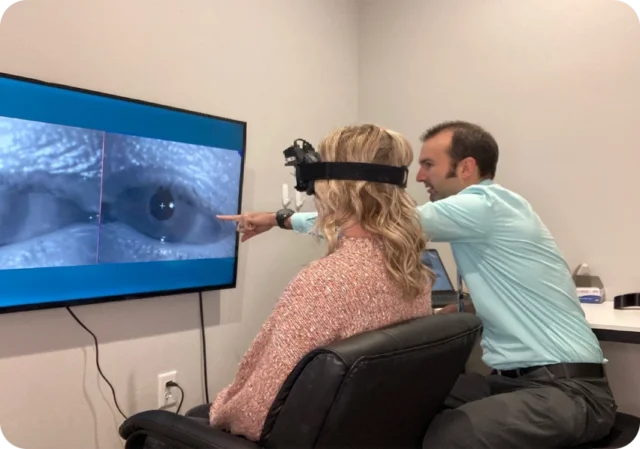
We evaluate blurry vision as a brain–body visual coordination issue, not just an eye problem. You can have more than one driver and it’s important to be able to ask the right question to find the right answers, not just the one thing.
We assess:
We also assess contributors such as:
You receive a clear explanation of:
Care for blurry vision at Peak Brain & Body follows one of three paths:
For eye coordination, tracking, and processing dysfunction.
For blood sugar, blood pressure, or circulation-related contributors.
An integrated approach addressing:
This approach often produces results when eye-only care has not.
We screen for red flags that require urgent ophthalmologic or medical care. When appropriate, we coordinate with eye doctors and medical providers to ensure comprehensive, safe care.
Yes. Many visual problems originate in the brain, not the eyes
Imaging detects structural damage, not functional coordination issues.
In many cases, yes. If the issue is neurological or systemic rather than structural.
Some components may be virtual, but detailed visual and neurological evaluation often benefits from in-person care usually leads to superior results.
If blurry vision has been disrupting your life and you’ve been told everything looks “normal” there may be another layer worth exploring.
Call 813-838-4005 or request a discovery call to see if our approach is right for you.
Clear vision starts with a coordinated brain–body system.
Leigh, R. J., & Zee, D. S. (2015). The neurology of eye movements (5th ed.). Oxford University Press.
Shumway-Cook, A., & Woollacott, M. H. (2017). Motor control: Translating research into clinical practice (5th ed.). Wolters Kluwer.
Bruce, B. B., & Newman, N. J. (2010). Functional visual loss. Neurologic Clinics, 28(3), 789–802.
You may also want to read about Functional Neurology, Dysautonomia & POTS, Concussion, Migraines, Functional Medicine, and Oculomotor Testing, since these areas often overlap with chronic fatigue and can influence autonomic stability, sleep-wake regulation, metabolic capacity, and cognitive clarity.
Medically Reviewed by: Spencer Zimmerman, FNP-C, DC, DACNB
Last Updated: February 2, 2026
At our dedicated doctor’s office, we take immense pride in the care and service we provide to our patients. Here, you can discover the genuine experiences and heartfelt feedback from those who have entrusted us with their health and well-being. These testimonials offer valuable insights into the compassionate and expert care that defines our practice. We are grateful for the trust our patients place in us and invite you to explore their stories, which reflect the exceptional standard of healthcare we aim to deliver every day.
Finally unravel the mysteries of your brain health issues so you can pave the way to lasting clarity and well-being by scheduling a time to speak with our team.