Integrated Brain & Body Care in Wesley Chapel, serving the greater Tampa area

The Power of Vitamin D for Brain Health: What You Need to Know

The Power of Vitamin D for Brain Health: What You Need to Know

Vitamin D is routinely associated with bone health and sun exposure, but this sells the benefits of vitamin D far short of what it’s truly capable of. At Peak Brain and Body in Wesley Chapel, our functional medicine experts want you to understand the role of vitamin D for brain fog, mental health, and neurological disorders.

Emerging research continues to link vitamin D levels to cognitive function, mental health, and even neurodegenerative diseases like Alzheimer’s and Parkinson’s. In this article, we will explore the science behind vitamin D’s impact on brain function, mental health, and neurological disorders, as well as the best ways to maintain optimal levels for long-term well-being.

It’s important to understand that vitamin D is powerful, but if it’s used as a stand-alone treatment, then the results are limited. It works best when combined with other strategies like nutrition, cognitive exercises, and rehabilitation for stroke recovery.
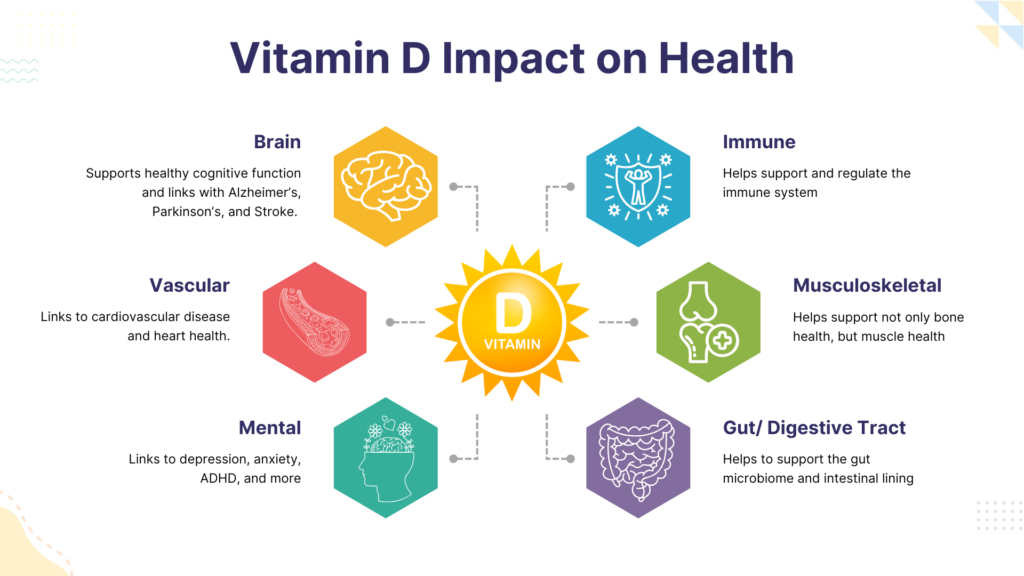
A informative diagram showing the impact of Vitamin D on our brain and gut health with other factors.

Vitamin D Impact on Brain Health

Vitamin D and Mental Health: The Scientific Connection

A recent study found that higher levels of vitamin D are associated with improved physical function and a reduction in depressive symptoms. Adults with lower vitamin D levels exhibited more depressive symptoms, and individuals diagnosed with depression had significantly lower intake of vitamin D compared to those without depression.

Vitamin D has also been linked to conditions like anxiety, ADHD, and bipolar disorder. This highlights the importance of adequate vitamin D intake—through diet, supplementation, or sun exposure—for maintaining mental health and vitamin D balance.

How Does Vitamin D Affect Mood?

Vitamin D influences neurotransmitters like serotonin, which plays a key role in mood regulation. Selective serotonin reuptake inhibitors (SSRIs), common medications for depression, work to increase serotonin in the brain. However, selective serotonin reuptake inhibitors’ adverse effects can include weight gain, insomnia, and emotional blunting.

Research suggests that vitamin D may naturally enhance serotonin synthesis, offering a non-pharmaceutical approach to improving mood and reducing depressive symptoms. Unlike medications, vitamin D does not cause serotonin syndrome symptoms, a dangerous condition sometimes triggered by drug interactions.

Beyond serotonin, vitamin D helps regulate inflammatory cytokines, which are often elevated in mood disorders. This makes it a powerful tool for resilience, mental clarity, and brain health.

Vitamin D For Brain Fog and Overall Health

Cognitive decline is one of the biggest fears as people age. Millions live with mild cognitive impairment—often without realizing it. With dementia rates rising, researchers have been investigating how vitamin D influences brain health.

A study on aging rats showed that higher vitamin D levels enhanced hippocampal function, improving memory and learning. These findings support vitamin D’s role in preventing dementia and early symptoms of neurological disorders such as brain fog and memory loss.

Vitamin D and Alzheimer’s Disease

Research indicates that vitamin D may help prevent Alzheimer’s disease by reducing amyloid-beta buildup in the brain. It also increases brain-derived neurotrophic factor (BDNF), which supports neuron survival and improves brain plasticity. For those wondering about the stages of Alzheimer’s, vitamin D may slow progression in the earlier stages by protecting brain cells.

Vitamin D and Parkinson’s Disease

Vitamin D has shown promising neuroprotective effects in Parkinson’s disease. Adequate levels may reduce alpha-synuclein buildup, protect dopamine neurons, and help maintain motor function. Since Parkinson’s disease stages progress differently for everyone, vitamin D may play a supportive role in slowing decline.

Vitamin D and Stroke Recovery

Strokes are a leading cause of disability. Studies show vitamin D supports:

  • Reduced inflammation post-stroke

  • Neuron survival

  • Improved motor function

Optimizing vitamin D levels can improve recovery from stroke, making it an important part of long-term brain rehabilitation strategies.

Vitamin D Deficiency: How Much is Enough?

Many individuals take vitamin D routinely because they’ve heard about the health benefits, but how do you know you are getting enough? This is why testing is essential. The definition of vitamin D deficiency varies among different health organizations, but general guidelines suggest:
  • Deficiency: Below 30 ng/mL
  • Insufficient: 30-50 ng/mL
  • Optimal: 50-75 ng/mL
My personal preference is if someone has immune issues including getting sick frequently, autoimmune disease, or neurodegeneration they should shoot to be on the higher end of 70-80 ng/mL. When we talk about these optimal ranges this is what many in functional medicine are shooting for as we understand traditional values are not meant for optimal health. In traditional medicine, individuals with low vitamin D levels are often prescribed a high-dose regimen, such as 50,000 IU once a week for a few months. Depending on the provider the levels will be rechecked or not, but it’s not something routinely done. It’s crucial to continue monitoring levels since temporary supplementation does not guarantee reaching an optimal level or long-term sufficiency. For ongoing maintenance, many experts recommend daily doses of 2,000-5,000 IU, depending on individual absorption rates, lifestyle factors, and geographic location. Once again, the ongoing dosing should be based off lab values because in our experience there isn’t an exact dose for every individual.

Can You Take Too Much Vitamin D?

Vitamin D toxicity is rare but can occur with extreme supplementation (e.g., 20,000+ IU per day for extended periods). Excess vitamin D leads to hypercalcemia, which can cause kidney stones, nausea, and other complications. This underscores the importance of regularly checking vitamin D levels to determine appropriate dosing.

Maximizing Vitamin D Absorption

1. Get Regular Sun Exposure

Your skin synthesizes vitamin D when exposed to sunlight, making outdoor activity an excellent way to maintain healthy levels. Aim for 10-30 minutes of midday sun exposure on bare skin several times a week, depending on skin type and geographic location. Despite this recommendation, in our experience sun exposure is not enough on its own to get optimal vitamin D levels despite what many claim.

2. Eat Vitamin D-Rich Foods

While it’s difficult to get sufficient vitamin D from food alone, the following sources can help:
  • Fatty fish (salmon, mackerel, sardines)
  • Egg yolks
  • Beef liver
  • Fortified dairy and plant-based milks

3. Take a High-Quality Supplement

Vitamin D3 (cholecalciferol) is the most effective supplement form. We prefer to use liquid or a liposomal form to facilitate absorption. There is some thought that pairing it with vitamin K2 may further enhance benefits, as K2 helps direct calcium to bones and away from arteries. In our experience even without K2, individuals are routinely able to achieve optimal vitamin D levels.

4. Monitor Your Levels

Regular blood testing ensures that you’re not deficient or exceeding safe levels. Individual needs vary, so personalized dosing is key. Initially checking levels every 3 months works best in our experience.

Final Thoughts: The Big Picture on Vitamin D and Brain Health

Vitamin D is more than a bone booster—it’s a powerful protector of brain health and mood. It plays a role in preventing Alzheimer’s, Parkinson’s, depression, and supports functional neurological symptom disorder recovery strategies. While vitamin D alone is not a magic bullet, it plays a crucial role in a comprehensive brain health strategy. Pairing adequate vitamin D intake with a nutrient-rich diet, physical activity, and proper sleep can significantly impact cognitive function and overall well-being.

Key Takeaways:

  • Low vitamin D levels are linked to depression and cognitive decline. 
  • Vitamin D for brain health may help prevent Alzheimer’s and Parkinson’s disease. 
  • Deficiency is common—regular testing and supplementation may be needed.
  • Sun exposure, diet, and supplements can help maintain optimal levels.
  • If you’re concerned about your vitamin D levels, consider getting tested and working with a healthcare professional to develop a personalized strategy for optimal brain health.
  • Here is a video that we did on this topic: Vitamin D Impact on Brain Fog and Health
How to increase serotonin naturally?

You can increase serotonin through regular exercise, exposure to sunlight, a healthy diet rich in tryptophan (like eggs, salmon, nuts), meditation, and quality sleep. In some cases, supplements or prescribed medications may also help.

Serotonin syndrome can be triggered by certain antidepressants (SSRIs, SNRIs, MAOIs), migraine medications (triptans), opioids, and even herbal supplements like St. John’s Wort when combined inappropriately.

Common signs include fatigue:

  • Low mood
  • Bone pain
  • Muscle weakness
  • Frequent illness
  • Slow wound healing
  • Hair loss
  • Back pain
  • Depression
  • Poor immunity
  • Weight gain
  • Brain fog
  • Sleep issues
  • Brittle bones.

Dementia is a general term for a decline in memory and cognitive skills. Alzheimer’s is the most common type of dementia, characterized by progressive brain cell damage affecting memory and thinking.

Conditions like Parkinson’s disease, multiple sclerosis (MS), stroke, cerebellar disorders, vestibular disorders, and peripheral neuropathy can all lead to balance issues.

SSRIs are commonly prescribed to treat depression, anxiety disorders, obsessive-compulsive disorder (OCD), panic disorder, and sometimes post-traumatic stress disorder (PTSD).

What Causes Dizziness

What Causes Dizziness: Causes, Types, and How to Get Relief

Dizziness is a common yet frustrating symptom that can disrupt daily life, making it difficult to function at work, engage in activities, and even complete simple tasks. Many people are constantly searching for what causes dizziness or even the causes of dizziness in women, since hormonal changes, pregnancy, and menopause can all play a role. Dr. Zimmerman at Peak Brain and Body in Wesley Chapel, Tampa area, has helped many complex dizziness cases using an integrative medicine approach that combines both functional medicine and functional neurology.

Many people struggle for months or even years to get answers because they don’t know where to look or what questions to ask. If that sounds like you, keep reading—we’re going to break down everything you need to know about dizziness, the symptoms of dizziness and vertigo, and how you can take steps toward recovery. This will help you understand why some people do well with one treatment, but others don’t respond at all.

What is Dizziness?

“Dizziness” is a broad term that can mean different things to different people. Some describe it as feeling lightheaded, off-balance, or like the world is shifting around them. Others experience a sensation of spinning, known as vertigo. Understanding the difference is critical because using the wrong terminology could lead to misdiagnosis and ineffective treatment.

  • Vertigo: A rotational sensation where either you feel like you are spinning or the world around you is spinning.

  • Dizziness: A general feeling of unsteadiness, lightheadedness, or imbalance without a spinning sensation.

This distinction matters because the underlying causes of vertigo in women may differ from the broader causes of vertigo and dizziness found in men or the general population. The right diagnosis ensures the right treatment.

The 5 Key Causes of Dizziness

In this section, we are going to discuss in detail what causes dizziness and set a framework for finding answers. Dizziness is a brain-based issue, meaning that if your brain isn’t processing signals correctly, you’re going to feel off balance.

Mind map showing major causes of dizziness and vertigo, including neurological, metabolic, musculoskeletal, inflammatory, and vascular factors.

Visual overview of the key causes of vertigo and dizziness, such as neurological issues, inflammation, vascular problems, metabolic imbalances, and musculoskeletal dysfunctions.

1. Inflammation

Inflammation in the brain or body can impact your nervous system, leading to dizziness. Food sensitivities, infections, and allergies are common triggers. Some people may experience dizziness and nausea simultaneously, particularly when inflammation disrupts the balance systems in the ear and brain. Common sources include:

  • Food sensitivities: Gluten, dairy, and ultra-processed foods can cause systemic inflammation.
  • Infections: Viral, bacterial, or fungal infections, including mold exposure, can contribute to dizziness.
  • Allergies: Seasonal allergies can create congestion in the eustachian tubes, impacting balance and stability.

2. Metabolic Issues

Metabolic problems like anemia, thyroid dysfunction, and blood sugar imbalances are common causes of dizziness in women, particularly during pregnancy or menopause. Low iron, thyroid fluctuations, and poor blood sugar control can all lead to dizziness, fatigue, and confusion. Key metabolic causes of dizziness include:

  • Anemia: Low iron levels reduce oxygen delivery to the brain, leading to dizziness. A complete iron panel (including ferritin and iron saturation) is essential for proper diagnosis. Many will only have a CBC and be told things are normal, but this will miss many individuals who have an iron deficiency.
  • Thyroid Dysfunction: Hypothyroidism or hyperthyroidism can contribute to dizziness. Proper thyroid testing should include TSH, T4, T3, free T3, free T4, and thyroid antibodies.
  • Blood Sugar Imbalances: Both high and low blood sugar levels can cause dizziness. Symptoms of dysregulated blood sugar include energy crashes after meals or sudden surges in energy.

3. Musculoskeletal Issues

Your neck and spinal alignment play a significant role in balance. Poor posture, cervical spine dysfunction, or muscle imbalances can all contribute to instability. For some people, this dizziness is worse after waking or when they are dizzy after standing up, because positional changes stress the cervical spine.

  • Cervical Spine Dysfunction: Poor posture, injuries, or surgeries in the neck can lead to dizziness.
  • Muscle Imbalances: If the muscles around your neck send incorrect signals to your brain, it can create instability, as it creates confusion within the brain. 

For some of these individuals, they do well with chiropractic or physical therapy, but others will be made worse.

4. Vascular Issues

Proper blood flow is critical for brain function. When blood flow is disrupted, dizziness can occur.

  • Blood Pressure: Sudden drops can cause lightheadedness or dizziness after standing.

  • Dehydration: A lack of fluids can cause imbalance and faintness.

  • Vascular Dementia: Many wonder, does vascular dementia cause dizziness? Yes—poor circulation to the brain can lead to dizziness and vascular dementia symptoms overlapping. Research shows a connection between vascular dementia and dizziness, especially when blood flow is compromised.

5. Neurological Causes

Dizziness is ultimately a neurological issue, meaning that problems within the nervous system can be a major cause.

  • Dysautonomia/POTS: A condition where the autonomic nervous system fails to regulate blood pressure and heart rate properly, leading to dizziness upon standing.
  • Vestibular Dysfunction: The inner ear plays a crucial role in balance. If the vestibular system is impaired, dizziness and vertigo can result.
  • Concussions and Brain Injuries: Even mild concussions can lead to dizziness for months or years if left untreated.
  • Stroke & Multiple Sclerosis: More severe neurological conditions, such as stroke and MS, can impact balance and coordination.

As you are probably gathering by now, when someone wants to know what causes dizziness, the answer isn’t black and white. Some individuals only have one of the components from above, but many others will have overlapping components that have to be addressed as a complete unit.

How to Get Relief from Dizziness

If you’re experiencing dizziness, the key to relief is identifying and addressing the root cause. Here are some steps you can take:

1. Get Proper Testing: Functional Medicine Labs in Wesley Chapel | Tampa, FL

Most traditional doctors only check basic bloodwork, but you may need more comprehensive testing, including:

  • Iron panel (Ferritin, TIBC, Iron Saturation, Serum Iron)
  • Thyroid panel (TSH, Free T3, Free T4, Thyroid Antibodies)
  • Comprehensive Metabolic Panel (CMP)
  • Inflammatory Markers (CRP, Homocysteine, ESR)
  • Functional Neurological Evaluation

A functional neurological evaluation for dizziness includes videooculography, computerized balance posturography, and a comprehensive physical examination that reveals what MRI and CT scans don’t. It’s why we see so many individuals finally get answers after they’ve been told nothing is wrong or the provider didn’t know what could be done.

2. Address Inflammation

  • Eliminate inflammatory foods (processed foods, gluten, dairy, excess sugar).
  • Reduce exposure to mold, allergens, and environmental toxins.
  • Consider anti-inflammatory supplements such as omega-3s and curcumin.

3. Support Your Metabolism

  • Ensure adequate iron, B vitamins, and thyroid support based on lab values.
  • Balance blood sugar by eating protein-rich, fiber-dense meals.
  • Stay hydrated with adequate electrolytes.

4. Improve Neck and Postural Health

  • Seek chiropractic care, physical therapy, or massage if musculoskeletal issues are contributing to dizziness. If this helps you, then fantastic, and keep going. If it’s not helping you or makes you feel worse, then know there is more to the story, and a more in-depth evaluation and treatment are necessary.
  • Work on neck exercises and posture correction to optimize brain-body communication.

5. Strengthen Brain & Nervous System Function Utilizing Functional Neurology

  • Perform eye and vestibular exercises under professional guidance.
  • Targeted neurological therapy integrates cognition, hand-eye coordination, reaction time, and balance.
  • Avoid excessive caffeine or stimulants that could worsen symptoms.

Final Thoughts: Taking Control of Your Health

If you’ve been struggling with dizziness for months or even years without answers, it’s time to take a different approach. Whether your dizziness comes with nausea, happens after standing, or is even related to conditions like vascular dementia and dizziness, solutions exist.

At Peak Brain and Body, Dr. Spencer Zimmerman and his team specialize in uncovering what other providers have missed. From causes of vertigo to brain-based balance rehabilitation, our goal is to get to the root of your symptoms. You don’t have to keep suffering—answers are available, and recovery is possible.

Request a Discovery Consult with our team today to finally find relief.

Dysautonomia and POTS Syndrome – Why You Have Dizziness, Headaches, and Chronic Fatigue

Dysautonomia and POTS Treatment| Peak Brain and Body | Tampa and Wesley Chapel, FL

Dysautonomia, POTS, and Chronic Fatigue – Why You Have Dizziness, Headaches, and Other Common Symptoms

This may be the first time you’ve heard the phrase Postural Orthostatic Tachycardia Syndrome (POTS Syndrome), or you’ve been battling this condition for years and are struggling to find answers. Dr. Zimmerman at Peak Brain and Body has helped many in Tampa, FL, and beyond get their lives back through advanced testing and treatment for POTS and autonomic dysautonomia.

This blog is going to provide insight into not only what POTS and chronic fatigue are but also what dysautonomia is, why treating it as a cardiovascular-based condition fails so many, and what real solutions look like.

There is also a YouTube version of this: watch here

What Is POTS?

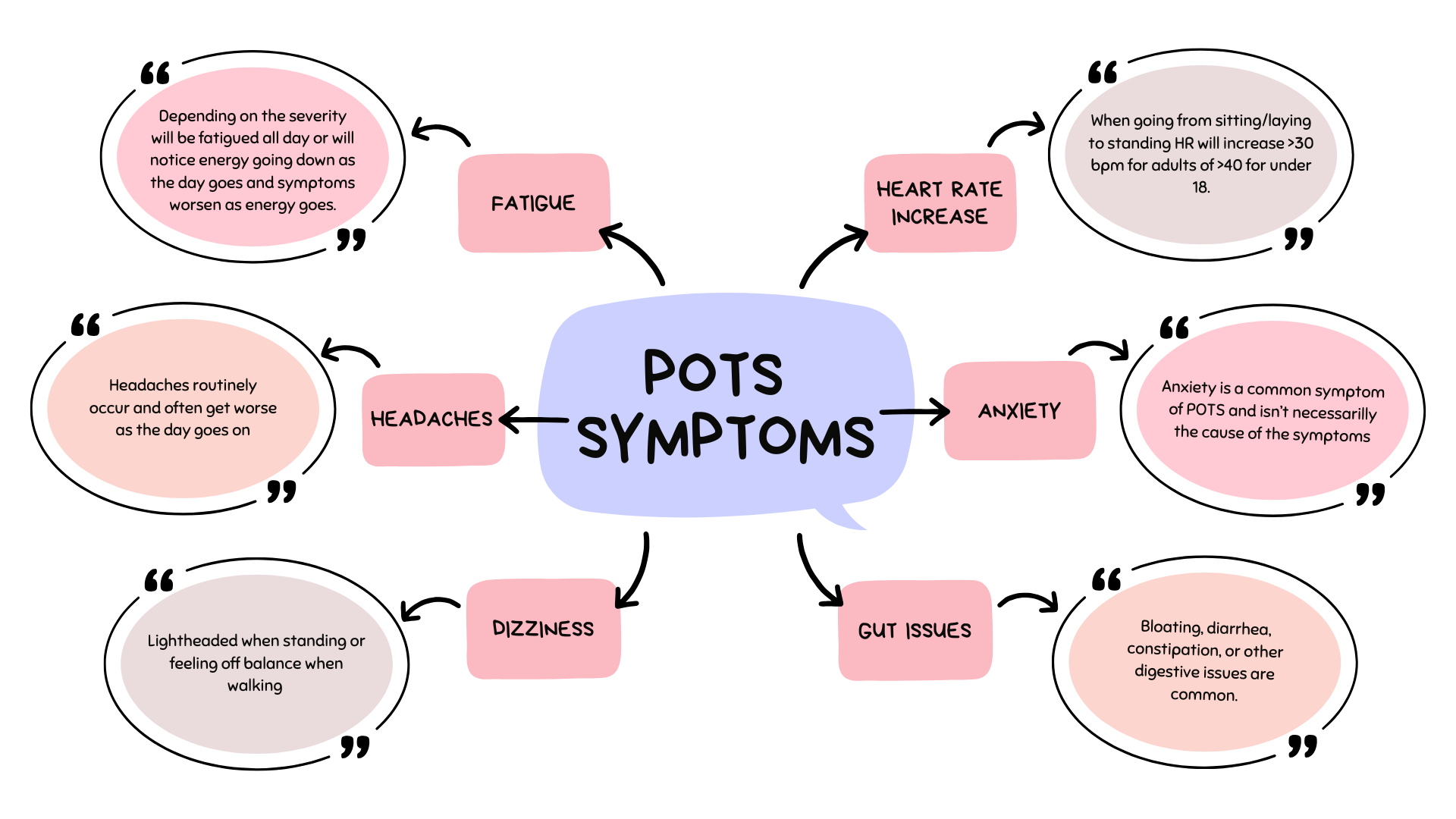
POTS is a form of dysautonomia, meaning it involves dysfunction in the autonomic nervous system—the system responsible for controlling involuntary functions like heart rate, blood pressure, digestion, and temperature regulation. It primarily affects women, with an estimated 80% of cases occurring in females.

The defining characteristic of POTS is an excessive increase in heart rate (by 30 beats per minute for adults, or 40 beats per minute for teens) within 10 minutes of standing, without a significant drop in blood pressure. If blood pressure does drop significantly, then it falls under broader dysautonomia causes rather than POTS specifically.

POTS vs. Dysautonomia: What’s the Difference?

Dysautonomia is a broader term referring to dysfunction in the autonomic nervous system. POTS is a specific subtype of dysautonomia, characterized by increased heart rate upon standing without major blood pressure drops. If blood pressure does drop significantly, then the condition falls under categories like orthostatic hypotension rather than POTS.

While all POTS patients have dysautonomia, not all dysautonomia patients have POTS. Think of it like this: If dysautonomia were a car brand, POTS would be one specific model. Understanding this distinction is crucial because treatment approaches will differ when you see a traditional medical provider. It doesn’t matter as much when we look at non-traditional approaches, which you’ll understand a lot more as you progress through this article.

Who Gets POTS and Why?

Over 3 million Americans are estimated to have dysautonomia POTS, and cases have skyrocketed, especially following COVID-19. It is important to note that it existed before COVID-19, but it wasn’t a routinely accepted diagnosis. This led to many individuals who’ve dealt with it in the past not receiving a diagnosis. While COVID-19 infection is known to cause POTS or dysautonomia, it’s not the only thing. Other known triggers include:

  • Viral infections (including flu and COVID-19)
  • Concussions and brain injuries (including mild concussions that were dismissed)
  • Autoimmune conditions (POTS can be an autoimmune-driven disorder)
  • Chronic migraines (which can be both a cause and an effect of POTS)
  • Surgery and prolonged bed rest
  • Mast cell activation syndrome (MCAS)
  • Vaccine side effects
  • Hormonal shifts (such as menstruation and perimenopause)
  • Genetic disorders like Ehlers-Danlos Syndrome (EDS) (particularly hypermobile EDS)

Symptoms of POTS: More Than Just Dizziness

POTS affects multiple body systems, making it difficult to diagnose and manage. Common symptoms include:

  • Cardiovascular: Palpitations, fainting, feeling lightheaded, Raynaud’s syndrome (cold, discolored hands and feet)
  • Neurological: Brain fog, headaches, dizziness, blurry vision, vertigo, ADHD-like symptoms, anxiety
  • Gastrointestinal: Nausea, bloating, constipation, diarrhea, irritable bowel syndrome (IBS)
  • Musculoskeletal: Weakness, joint pain, hypermobility, muscle fatigue
  • Endocrine: Menstrual cycle irregularities, extreme fatigue, heat intolerance

pots symptoms in tampa and wesley chapel FL

Many POTS patients find themselves visiting multiple specialists—cardiologists, neurologists, endocrinologists—who only focus on one system. The issue? POTS impacts multiple systems at once. The symptoms above may be associated with the system above, but this is not the underlying reason for the array of symptoms that individuals have. Without a whole-body approach, treatment often falls short, and many are left frustrated.

Why Standard Medical Approaches Fall Short

Most POTS patients are given five main recommendations:

  1. Increase salt intake
  2. Wear compression stockings
  3. Take beta-blockers (like propranolol) to lower heart rate
  4. If there is a blood pressure drop, which, as we noted this wouldn’t be true POTS, then individuals are given a medication to increase blood pressure.
  5. Cardiology and neurology often try to work together to send the individual to do physical therapy with a focus on building back up strength and endurance.

While these can help some symptoms, they fail to address the root cause. Many patients feel frustrated when medications like propranolol leave them with brain fog and fatigue, but don’t actually fix what’s causing their POTS in the first place.

Physical therapy, in our experience, often makes these individuals worse as it’s not done at the right time. It’s not as simple as just building up physical endurance; you must identify what is driving the POTS to begin with. After that is treated, then physical therapy or simply going to a gym and working up can go well.

A Smarter Approach to Treating POTS

To understand what to look for in treatment, it’s important to understand that even though it’s often treated as a cardiovascular condition, it’s not for many. It is a neurological and immune-based issue that manifests with a variety of symptoms, with the hallmark feature being heart rate.

To truly improve, you need a comprehensive plan that evaluates:

  1. Neurological function – Brain imbalances can lead to autonomic dysfunction. Testing eye movements and balance can provide crucial insights into nervous system health.
  2. Immune system health – Autoimmune issues and chronic inflammation are major drivers of POTS.
  3. Gut health – IBS and leaky gut can worsen POTS symptoms due to their connection with the nervous and immune systems.
  4. Mast cell activation & histamine response – Many POTS patients also experience extreme reactions to foods, environmental triggers, and stress.
  5. Hormonal balance – Menstrual cycles, adrenal dysfunction, and thyroid disorders all influence POTS symptoms.

We will briefly discuss how to evaluate the nervous and immune system in POTS and dysautonomia.

Many people will naturally think they need an MRI or a CT scan due to the headaches, dizziness, and nausea. They are routinely disappointed if they do get one, as this does not provide any information for someone with POTS and chronic fatigue. It should be done if there is a worry of something like a tumor or a brain bleed. It is essential to look at nervous system function.

The eyes are known as the windows into the health of the brain. A comprehensive eye movement assessment should be done using computerized technology known as videooculography. This allows for the highest level of evaluation and is very educational, as it allows you to see where you did well and did not. Components of an eye movement examination should include: vergence, fixation, pursuits, saccades, and optokinetics.

The other side of the neurological evaluation is balance. Balance testing is routinely off with many POTS patients. What we’ve found is that if it’s only balance, then it’s not necessarily something that is treated. If both eye movements and balance are off, then neurological rehab does really well. You may be wondering why it’s not necessarily appropriate to treat poor balance. As you’ve experienced, you notice fatigue, weakness, and an inability to be on your feet too long. When balance is off, it could be due to neurological dysfunction or simply related to the fatigue and weakness many have.

The immune system is initially evaluated by looking at triggers that impact symptoms. What happens when you get stressed, sick, have menses, make food choices, or experience sleep changes? Based on this, it gives the provider a good idea of where to start. Beyond this, it is often beneficial to evaluate immune system markers, gut health, and reactions to mycotoxins from molds.

How We Help People with POTS Recover and Feel Better

At Peak Brain and Body, we take a root-cause approach to POTS and chronic fatigue treatment, using advanced neurological testing, brain function assessments, immune system evaluations, and metabolic panels to uncover hidden triggers. This isn’t just another evaluation or brief visit; this is the most in-depth evaluation most of our patients have ever had.

Here’s what makes our approach different:

  • We connect the dots between your brain, nervous system, and immune function.
  • We perform in-depth testing beyond standard labs to find hidden infections, gut imbalances, or underlying concussions that may be contributing to your symptoms.
  • We use targeted therapies like eye movement therapy, balance retraining, cognitive therapy, low-level laser, hyperbaric oxygen therapy, and functional medicine interventions to restore nervous system balance.

Based on your testing, a customized care plan is created. It’s not just about finding out what is wrong, but knowing the order things should be addressed.

The Path to Healing From POTS and Dysautonomia

Healing from POTS isn’t about finding a magic pill—it’s about finding the right roadmap for your unique body. While no two POTS cases are identical, addressing neurological health, immune balance, and gut function can make a world of difference.

If you’re tired of bouncing from doctor to doctor without answers, it’s time for a different approach. You deserve to work with someone who understands the bigger picture and has the tools to help you get your life back.

At the end of the day, knowledge is power. You don’t have to live with POTS controlling your life. With the right approach, individuals routinely find healing is possible even if they’ve been told nothing else can be done.

Next Steps

  • Looking for answers? Schedule a consultation with Peak Brain and Body to start uncovering the root cause of your symptoms.


Brain Fog Treatment

Brain Fog Treatment | Peak Brain and Body | Tampa and Wesley Chapel, FL.

Finding the right brain fog treatment is often frustrating. If you go to a doctor and complain of brain fog symptoms, they’ll often tell you it’s not a big deal, labs are normal, or it’s related to mental health. But, is that really all there is when it comes to brain fog cause? First, let’s establish some basics. 

When you hear the term brain fog, what do you think of?

  • Your brain is running slow and feel like you are in a haze.
  • When having conversations with friends and co-workers you seem to struggle to find the word even though it is right at the tip of your tongue.
  • Maybe you just feel off and not yourself.
  • You catch yourself walking into the kitchen to grab something but when you get there you forget why you went in there to start.

If so, you might be experiencing brain fog, which is a term that refers to the inability to think clearly or you just feel off.

It may persist days, months, or even years until the underlying cause has been identified. Some of these causes occur in an instant, but others you may not think of. Before we dive into what can cause brain fog, I want you to think of brain fog as inflammation, impaired connections or reduced oxygen in the brain impacting function.


HERE ARE FIVE REASONS WHY YOU ARE SUFFERING FROM BRAIN FOG

1. FOOD INTAKE

Have you ever noticed feeling tired and unable to think after eating a meal that contains gluten or dairy? Or You sit down to enjoy a big chicken sandwich and fries at lunch to only want to take a nap 30 minutes later as your brain starts shutting down.

This occurs because eating certain foods creates inflammation. Inflammatory foods lack nutrients we need to be healthy but also may block the absorption of nutrients that your brain needs to function at its best.

Research shows that lack of the following nutrients may result in brain fog : 1

  • Omega 3 fatty acids (DHA)
  • Flavonoids
  • Curcumin
  • B vitamins
  • Vitamin D
  • Choline
  • Vitamins A, C, and E
  • Zinc
  • Selenium
  • Copper
  • Iron
  • Magnesium

While saturated fat has been shown to promote cognitive decline, omega 3 fatty acids help prevent it. So, try eating more fish and less processed red meat.

Here are some other foods to add to your diet to reduce brain fog:

  • Fatty fish
  • Flax seeds
  • Krill
  • Chia seeds
  • Walnuts
  • Unprocessed cocoa
  • Green tea
  • Kiwi
  • Avocado
  • Asparagus
  • Mushrooms
  • Green, leafy vegetables
  • Citrus fruits
  • Oysters

2. GUT INFLAMMATION.

Is your brain fog accompanied by digestive problems like constipation, bloating, diarrhea, or gas? How about dry skin, bad breath, acne, and weight gain around your waist and hips?

If so, that’s a sign of gut inflammation and it’s likely the reason why you are unable to think after eating certain inflammatory foods, such as crackers, pasta, or cheese.

So, why and how does this happen?

It’s because your gut and brain are connected by the vagus nerve, which runs from your brain to the stomach. It brings information to your stomach, but also brings information back to the brain.

When you eat inflammatory foods (gluten, dairy, refined sugars, processed grains, or candy), it causes your gut to send “distress” signals to your brain, affecting your thought process.

However, when your gut is healthy and working properly, it allows you to think more clearly and have better memory recall by properly stimulating the vagus nerve.

Additionally, your gut produces many hormones and neurotransmitters that control weight, appetite, and mood.

  • 85% of serotonin is produced in the gut and is important for happiness
  • Dopamine is responsible for reward and motivation

Here’s how to restore gut health:

  • Eliminate refined sugars and processed foods from your diet (pretzels, crackers candy, soda, packaged snacks, and bread)
  • Avoid gluten, dairy, refined sugars, and grains
  • Supplement with probiotics
  • Eat more fresh fruits and vegetables
  • Focus on eating minimally processed foods
  • Get regular exercise
  • Focus on getting eight hours of sleep each night

3. STRESS

Has a highly stressful conversation with someone immediately made you feel like you forgot how to speak mid-conversation? That’s stress.

Maybe the stress carries with you the rest of the day and you develop a headache, dizziness, or poor concentration.

Research shows that high cortisol, stress chemical, levels shrink parts of the brain that are responsible for learning and memory . It’s also linked to premature brain aging. 2

Having a healthy outlet for stress is important for proper brain function. The old mindset of grin and bear it is detrimental to our brain health.

Here are some ways help with stress and bring down cortisol levels:

  • Exercise regularly
  • Practice breathing exercises
  • Try yoga or meditation
  • Focus on improving your quality of sleep
  • Eat an anti-inflammatory diet
  • Avoid refined sugar and processed foods
  • Use your vacation days

4. INSUFFICIENT QUANTITY OR QUALITY OF SLEEP

Do you feel like you can’t think at all in the morning after a restless night of sleep? Do you find that easy tasks like getting your kid’s backpack ready is impossible?

Maybe when you try to go sleep your mind starts racing and you need Benadryl or melatonin to fall asleep an hour or two later.

Sleep is essential for brain function. During sleep, your brain “cleans” itself by removing toxins and waste that negatively impact cognitive function and help make morning tasks easier. If you don’t sleep this is like the garbage truck not showing up and no one wants that.

Here are some tips for getting better sleep:

  • Set a bedtime routine
  • Sun exposure
  • Go to bed and wake up at the same time daily
  • Reduce exposure to light before bed
  • Keep your room cool and dark
  • Eat a light dinner based around fats and proteins with low carbs
  • Avoid drinking too close to bedtime
  • Limit screen time
  • Blue light filter

5. CONCUSSION

You may think a concussion isn’t a big deal, but did you know that 50 percent of people who suffer a concussion have brain fog years later, even if you don’t have it right away ? 3

A concussion is the most common form of traumatic brain injury. Unfortunately many suffer a concussion but never receive a proper diagnosis or do not know that it can impact them years later.

You can suffer a concussion without hitting your head even from a rapid movement of your head forward and back. Common causes of concussion are car accidents, sports injuries, slips and falls, and blows to the head.

Although the incident might not seem a big deal at the time, some research suggests that nearly 50% will have long-lasting symptoms due to inflammatory changes that occurred when you became injured. 4

Symptoms of a concussion impact cognition, physical, and emotions:

  • Feeling like you’re moving slowly
  • Difficulty concentrating and remembering things
  • Inability to focus
  • Frequent headaches
  • Sensitivity to light and noise
  • Sleep disturbances
  • Balance problems
  • Fatigue
  • Vision changes, fuzzy or blurry vision
  • Anxiety or mood fluctuations

LAST THOUGHTS

So what exactly is brain fog, well it is a description that individuals use when their brain isn’t processing correctly or they are in a haze. At a cellular level this can occur due to inflammation, reduced oxygen, or impaired connections in the brain.

There are many causes of brain fog and we didn’t even cover them all. For beginners, don’t look past the role of nutrition, gut health, stress, sleep, and concussions as contributing factors to brain fog.

It is okay, you are likely overwhelmed at the thought of how many different things may contribute to your brain fog and would like expert help.

You may be wondering how we evaluate and address the cause of your brain fog. We utilize The BMB Method (Brain, Mind, & Body) that has been refined over the past 9 years. This allows us to look where others aren’t, as well as view each person as an individual by:

  • Evaluating the brain looking at function using eye movements, balance, and brain waves.
  • Evaluating the mind reviewing past traumas and the subconscious programming that prevents you from success in life.
  • Identifying how the different systems in the body are functioning using symptoms and lab testing.

By using The BMB Method we are able to provide answers and solutions when other programs have failed. If you are ready to try a new approach to these symptoms that are robbing you of your life then request your health strategy session today.


CITATIONS

  1. Gómez-Pinilla F. (2008). Brain foods: the effects of nutrients on brain function. Nature reviews. Neuroscience, 9(7), 568–578. https://doi.org/10.1038/nrn2421
  2. Hiploylee, C., Dufort, P. A., Davis, H. S., Wennberg, R. A., Tartaglia, M. C., Mikulis, D., Hazrati, L. N., & Tator, C. H. (2017). Longitudinal Study of Postconcussion Syndrome: Not Everyone Recovers. Journal of Neurotrauma, 34(8), 1511–1523. https://doi.org/10.1089/neu.2016.4677
  3. Theadom, A., Parag, V., Dowell, T., McPherson, K., Starkey, N., Barker-Collo, S., … BIONIC Research Group (2016). Persistent problems 1 year after mild traumatic brain injury: a longitudinal population study in New Zealand. The British journal of general practice : the journal of the Royal College of General Practitioners, 66(642), e16–e23. https://doi:10.3399/bjgp16X683161


Brain fog is not a medical diagnosis but a term used to describe feeling mentally cloudy, forgetful, or unable to concentrate. It often feels like your brain is “running slow” and can affect memory, focus, and daily performance.

Brain fog symptoms may include poor concentration, slow thinking, forgetfulness, difficulty finding words, fatigue, headaches, and lack of mental clarity. These symptoms can vary in intensity and duration.

There are several brain fog causes, including:

  • Nutrient deficiencies
  • Gut inflammation
  • High stress and elevated cortisol
  • Poor sleep quality
  • Concussion or head trauma
    Underlying health conditions such as thyroid problems, autoimmune disorders, or chronic inflammation may also contribute.

The best brain fog treatment is to find out what’s driving it in the first place. For some, that means improving diet and gut health. For others, it might be better stress management, better sleep, or targeted therapies after a concussion. A personalized approach works best, since brain fog can have several underlying causes.

Yes. Many people develop long-term brain fog symptoms after a concussion, which is why proper concussion treatment is important.

Our brain fog treatment center in Tampa and Wesley Chapel helps people identify what’s behind their symptoms and create a personalized recovery plan.

Understanding POTS Syndrome and Its Symptoms

What Is POTS Syndrome? Tampa | Wesley Chapel FL

Could you have Postural Orthostatic Tachycardia Syndrome (POTS)? 

  • Do you or someone you know often feel dizzy, especially when standing up?
  • Have you experienced a foggy feeling in your brain, making it hard to think or concentrate?
  • Are you dealing with constant fatigue, no matter how much you rest?
  • Do these symptoms seem to come and go, without any clear reason?
  • Are you wondering if these could be signs of a condition like POTS syndrome?
  • Do you know someone who’s struggling with similar symptoms and looking for answers?

If these questions sound familiar, then it’s important to learn about POTS as it may be impacting you. We will discuss the connection between brain fog, dizziness, chronic fatigue, and POTS syndrome.


WHAT IS POTS SYNDROME?

POTS, or Postural Orthostatic Tachycardia Syndrome, is a condition related to the autonomic nervous system, which controls functions like heart rate and blood pressure. The hallmark feature of POTS is an increase of heart rate >30 bpm in adults and >40 in children when going from a sitting to standing position without having a notable drop in blood pressure. POTS affects a range of systems in the body including: immune, nervous, cardiovascular, and gastrointestinal. This leads to a wide rage of symptoms that individuals will experience.


CAN POTS SYNDROME CAUSE BRAIN FOG, DIZZINESS, AND CHRONIC FATIGUE?

Yes, it can. Here’s why:

  • Blood Flow Issues: POTS affects how blood flows in the body, which can lead to dizziness when standing.
  • Brain Fog: Due to blood flow irregularities, the brain might not get enough oxygen, leading to a feeling of mental cloudiness or brain fog.
  • Chronic Fatigue: Constant strain on the body from trying to manage blood flow can result in ongoing tiredness.

WHAT ARE SYMPTOMS OF POTS SYNDROME?

There are many symptoms that an individual may experience with POTS, but you don’t have to have all of them. 


HOW DO THESE SYMPTOMS MANIFEST IN POTS SYNDROME?

The symptoms of brain fog, dizziness, and fatigue in POTS syndrome are very common. This usually manifests in certain ways for individuals:

  • Feeling lightheaded or dizzy when initially standing up or being on your feet for even 5-10 minutes.
  • Difficulty concentrating or remembering things. This may be an ongoing issue or you may notice it gets worse as the day goes on.
  • Constant tiredness, even after getting enough sleep. You may feel the need for naps even if you get great sleep at night. Going through life is draining and most have pulled back substantially from what they’d normally do as a result.

WHO GETS POTS SYNDROME?

POTS is estimated to impact nearly 3 million Americans, but which ones are more likely:

  • Nearly 80% of those diagnosed with POTS syndrome are female.
  • Predominantly impacts teenagers and adults.
  • Those with hypermobility, specifically with Ehlers-Danlos Syndrome are at higher rate.
  • May develop after an infection including flu and covid-19
  • May develop after a vaccine
  • May develop after exposure to mold 
  • May develop after a concussion

MANAGING SYMPTOMS OF POTS SYNDROME

While battling symptoms of POTS is frustrating, it doesn’t have to be. We’ll first cover what traditional medicine does for POTS before talking about how we approach it. Traditional medical approaches are about managing the symptoms of POTS. 

  • Initial evaluation: Will include a tilt table test or doing orthostatic testing. Basically this involves having an individual go from lying to standing and measuring the changes in blood pressure and heart rate.
  • Medication Management: As long as blood pressure isn’t too low many are prescribed a beta blocker to control the heart rate. Some are even trying different corticosteroids to try and reduce inflammation, but this isn’t a widely accepted approach at this time.
  • Lifestyle Adjustments: Increase salt intake or take salt tablets. Wear compression stockings to help promote blood flow.
  • Physical Therapy: In some cases individuals are sent to physical therapy to help build up strength and endurance. 

PEAK BRAIN AND BODY TREATMENT FOR POTS SYNDROME

We believe in a holistic approach to managing POTS syndrome. As noted previously, POTS impacts multiple systems of the body. We’ve found that the two things that matter most in POTS recovery are the nervous and immune systems. We evaluate and treat both the nervous and immune system. 

How We Evaluate Nervous System Function For POTS Syndrome

The nervous system is best evaluated by looking at function, not through imaging. If you’ve had imaging and were told it’s normal that is okay, but it doesn’t mean everything is fine. It just means the imaging can’t pick up what is needed. That is where testing that evaluates nervous system function comes in. There are 3 ways we evaluate the nervous system:

  • Videooculography (Eye Movement): Eyes are considered the windows into the health of the brain. With this testing we are able to map out which parts of the brain are healthy or not. This testing provides tremendous insights and answers.
  • Computerized Balance Posturography: Dizziness is a common symptom with POTS and can be due to impairment in vestibular function as a result. When balance testing is used as part of an evaluation we can distinguish between vestibular issues or weakness that impacts balance.
  • QEEG Brainmapping: This allows us to evaluate brain waves including delta, theta, alpha, beta, and gamma waves. Imbalances in these could help explain brain fog, concentration, memory, and anxiety based symptoms.

How We Evaluate the Immune Symptoms in POTS Syndrome

Most are frustrated when they get their labs done. They get a basic CBC, CMP, and maybe a little more; but they are routinely told their labs are normal. Most labs will not pick up immune system dysfunction. If you know what to look for there are clues along the way. We look for patterns of symptoms increasing due to: stress, menses, infection, poor sleep, and nutrition choices.

We can also perform labs that looks at inflammation, iron deficiency, immune system dysfunction, and even stool testing. When it comes to evaluating immune system dysfunction we are able to do an in-depth panel that goes far beyond what a CBC provides. 

It is worth mentioning that we are finding a group of individuals who are dealing with issues related to mycotoxins which are produced by mold. There is specific testing that we do to evaluate for that. 


NEED HELP OR MORE INFORMATION?

If you or someone you know is experiencing symptoms like brain fog, dizziness, and chronic fatigue and suspect it could be related to POTS syndrome then it’s time for a full evaluation. It doesn’t matter if you’ve been diagnosed or have had symptoms for 6 months or 5 years. 

At Peak Brain and Body we’ve helped individuals who’ve tried numerous other treatments and didn’t see progress until taking an approach that focuses on both nervous and immune system function. 

Request a Free Discovery Consult with our team today.

POTS (Postural Orthostatic Tachycardia Syndrome) is a condition where your heart rate rises abnormally when you stand. It can cause dizziness, tiredness, brain fog, and other symptoms that affect daily life.

Mostly women, teens, and adults. It can happen after illness, a concussion, or other health issues.

A doctor can check your heart rate and blood pressure when you change positions to see if it matches POTS patterns.

Brain fog means feeling confused, forgetful, or unable to concentrate. Many people with POTS experience it because their brain isn’t getting enough oxygen due to blood flow changes.

Can A Low Thyroid Impact Brain Health? A Functional Medicine Analysis

Do you suspect or know you have low thyroid? Or wondering, can a low thyroid cause headaches? Living with a low functioning thyroid can be a very difficult thing to deal with. Not only may you feel completely wiped out all the time, but you also might be noticing that it’s starting to affect your brain with symptoms such as brain fog, fatigue, fb-depression-lp, and even problems finding words.

If you don’t have to imagine these scenarios, because it is your daily life then you may have a low thyroid.

  • Fall asleep at 10 pm and get up at 8 am hoping that sleeping 10 hours will give you the energy to chase your little one around at the park?
  • Find yourself trying the latest diet fad hoping to shed a few pounds but it seems no matter how little you eat and how much you try to workout at the gym the scale just doesn’t ever seem to budge?
  • You have to keep your hands in your pockets and wear two pairs of socks as it always feels like the tips of your fingers and toes are ice cold.
  • You feel that your hair is starting to come out in clumps everytime you take a shower and if it continues you likely won’t have any hair left in a few months.
  • You are at work in a meeting and you feel everything around you is happening so fast as it seems your brain is running in slow motion.

If you said yes to any of these, especially more than one. It is likely you may be suffering from a low thyroid, which is called hypothyroidism.


WHAT IS HYPOTHYROIDISM?

Hypothyroidism is when your thyroid isn’t producing enough thyroid hormones into the bloodstream. The thyroid gland’s main function is to control the rate at which each cell in the body functions by releasing two hormones: T4 and T3. The pituitary gland, which is part of your brain releases TSH which tells the thyroid gland to produce the hormones. T3 is the main hormone our body uses while T4 has to be converted to T3 within our gut and liver.

Because the thyroid hormones influence the rate at which every cell in the body functions it can cause symptoms with nearly every organ from your gut, liver, skin, and brain.

Common symptoms of hypothyroidism:

  • Fatigue
  • Weight gain
  • Depression
  • Brain Fog
  • Headaches
  • Hair Loss
  • Dizziness
  • Cold fingers and toes
  • Constipation
  • Problems with memory formation and finding words

Have you gone to your computer to complete a task only to find yourself staring blankly at the computer screen, unsure where to start as it seems you all of a sudden forgot why you went there to begin with?

Maybe you’ve had the experience of trying to do simple math, and you’re surprised at how your brain seems to trip over basic addition that you could previously rattle off in your sleep?

These are examples of brain fog, which is a common symptom of a low functioning thyroid.

Hypothyroidism can greatly affect the function of the brain by causing memory loss, mental fatigue, dizziness and headaches.

As if those symptoms aren’t bad enough, you have likely felt you are merely existing and noticing less motivation instead of the previous enjoyment you received on a daily basis.

Depression is just another symptom to the many that occur with hypothyroidism.

As you can see, an underactive thyroid can lead to a variety of symptoms. But can a low thyroid cause headaches?


HOW CAN A LOW THYROID CAUSE HEADACHES?

If you’ve noticed an increase in headaches, your thyroid function could be a contributing factor. Can a low thyroid cause headaches? Yes—it’s well documented that people with hypothyroidism are more likely to experience tension headaches and even migraines. When the thyroid isn’t producing enough hormones, blood flow can decrease, leading to reduced oxygen levels in the brain. This, combined with inflammation and hormonal imbalances, can result in persistent headaches.

Additionally, hypothyroidism can lead to brain fog, dizziness, and fatigue, all of which can intensify the frequency and severity of headaches. If you have been struggling with unexplained headaches alongside other symptoms like sluggishness, memory issues, or cold extremities, it may be worth investigating your thyroid function.

It’s important to ask, can a low thyroid cause headaches that worsen over time? The answer is yes, especially if thyroid function remains unaddressed. When left untreated, the impact on circulation and neurotransmitter balance can make headaches more frequent and severe.


A DEEPER LOOK INTO THYROID FUNCTION

So let’s say you relate to all or most of the examples given, but when you had your thyroid tested by your doctor, your tests came back normal and are told nothing is wrong. You start to doubt yourself and wonder if maybe you really are just depressed and that is causing everything else.

But you know something isn’t right and you’re tired of feeling fatigued all the time and the mental fog is starting to seriously affect your job and relationships – you just want answers and relief.

Here’s the thing, just because your tests came back normal, that doesn’t mean that you’re not experiencing the impacts of a low functioning thyroid. Unfortunately, there’s a deficiency in current testing where thyroid function isn’t looked at in a more detailed or deeper way.

For example, in school medical providers are taught to perform two main markers: TSH and T4. TSH is what tells the thyroid to produce T4. If TSH is elevated with T4 going low then you’d be diagnosed with hypothyroidism, but if that didn’t occur you’d be told nothing is wrong. T4 isn’t even the form the body uses the most, it is actually T3 which isn’t routinely evaluated..

The problem is that there are more values that can be obtained which provides much more insight, especially those which show an autoimmune response. Autoimmunity is when your body is attacking itself and it is responsible for 50-90% of all low thyroid cases.

With autoimmunity the type of thyroid you take can actually be making you feel worse and it isn’t as simple as getting your labs to be considered normal.

As you can see only running 2 lab markers can lead you astray. And here’s another thing, it’s possible that you’re experiencing symptoms of a low functioning thyroid not because of the thyroid itself, but because of an imbalance in the brain.

Remember, the brain is what tells the thyroid to produce hormones. If the brain is unhealthy and not able to properly communicate to the thyroid, then the thyroid will not produce the hormones appropriately. By taking a deeper look at the function of the brain and the pathways of communication, we can determine if your brain is affecting the release of thyroid hormones.

Imagine only having your thyroid labs evaluated without your brain being looked at, it will provide an incomplete picture. It should come as no surprise that a comprehensive evaluationshould be performed to best help you to identify what is causing your symptoms.

For these reasons nearly 30-50% of our patients who come in for thyroid concerns actually have no thyroid issues at all. For almost 25%, the thyroid is the main culprit of their symptoms.


HOW TO IMPROVE THYROID HEALTH

Luckily, there are things you can do to help improve thyroid health. Let’s take a look:

  • Eating a healthy, balanced diet will provide your body with the nutrients to make thyroid hormones and promote a healthy gut..
  • Limit the use of plastics and avoid using herbicides, pesticides, and commercial cleaning products to reduce your exposure to environmental toxins. Exposure to these toxins has a negative effect on hormones.
  • Include iodine, selenium, and zinc in your diet. These trace elements improve thyroid function and can be found in seafood, walnuts, mushrooms, fish, and red meat. If you have autoimmunity you may need to be careful with iodine based products or food as it can make it worse.
  • Exercise or have physical activity on a daily basis. We understand this may be the last thing you feel like doing, but losing excess weight helps to improve thyroid function.
  • Take time for yourself and reduce stress. When your body is in a survival state this will impact your ability to produce thyroid hormones.

It’s essential to explore all factors when wondering, can a low thyroid cause headaches that persist despite medication? If your symptoms remain despite treatment, it could indicate an underlying imbalance that needs to be addressed.

HOW OUR BRAIN, MIND, & BODY METHOD CAN PROVIDE YOU WITH THE ANSWERS YOU SEEK

If you’re still reading, it is because you are looking for help and want answers.

  • With our BMB method you can experience:
  • Waking up feeling well-rested and excited for the day ahead.
  • Move throughout your day with a clear mind, staying focused and confident in the tasks before you.
  • Exercise without feeling completely weakened and drained.
  • Able to fully listen and carry a conversation with a loved one. Listening will no longer feel strained and you won’t have to have the embarrassing moment of forgetting what you were going to say!
  • Go on a walk with your friend or spouse after a workday because you finally have the energy to.

So how does our BMB method help you to get to the bottom of your symptoms and be able to live life again?

We start by evaluating you as a whole person as we understand how a dysfunction in one area can impact another. For this reason we start with a comprehensive evaluation with allows us to identify what is preventing you from living the life you want by:

  • Evaluating brain function by studying brain waves, balance, and eye movements.
  • Looking at the function of each body system by studying symptoms and lab results.
  • Looking at past traumas, both physical and emotional, and how they may be affecting you today.

If you’re still asking, can a low thyroid cause headaches that interfere with daily life? then it’s time to take action. Request your free health strategy session today, and we will help you get the answers you need!