Integrated Brain & Body Care in Wesley Chapel, serving the greater Tampa area

Preventing Vascular Dementia: What You Must Know Before It’s Too Late

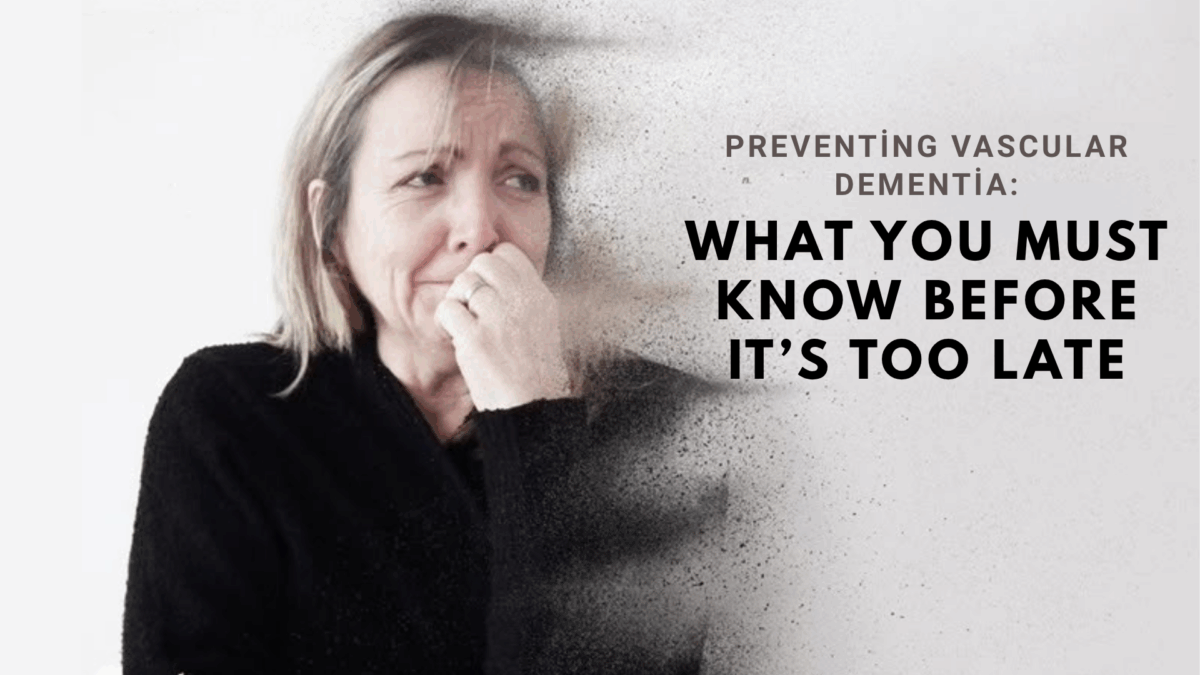
Worried about dementia? You’re not alone. Whether you’re noticing early warning signs in yourself or watching a loved one struggle with memory loss and confusion, it’s natural to fear what might come next. But here’s the truth most people never hear: vascular dementia is largely preventable—if you know what to look for and take action early. Taking action early is essential. If you wait for the diagnosis, the process has already been going on for 10-20 years.

In this comprehensive guide, we’ll walk you through:

  • What causes vascular dementia and how it different from Alzheimer’s
  • The silent warning signs you must not ignore
  • The critical lab markers and imaging tests you should be getting
  • Why your blood sugar, insulin, gut health, and sleep quality matter more than you think
  • A practical, proactive roadmap to reduce your risk of dementia starting now

What Is Vascular Dementia?

Vascular dementia is the second most common type of dementia, just behind Alzheimer’s. Unlike Alzheimer’s, which primarily involves beta-amyloid plaques, vascular dementia is caused by poor blood flow to the brain—often due to cardiovascular issues like high blood pressure, diabetes, or stroke.

And here’s the shocking part: up to 44% of dementia cases in people over 80 are directly linked to vascular problems. That means nearly half of those cases might have been avoided.

It should be noted that you can have both vascular and Alzheimer’s at the same time; it doesn’t have to be one or the other. Understanding the difference between vascular dementia and Alzheimer’s can help with more targeted treatment.

Why Neuroplasticity Matters in POTS Recovery

Neuroplasticity is your brain’s ability to change, adapt, and form new connections based on the information it receives. And it can go one of two ways:

  • Positive neuroplasticity creates new, healthy patterns.
  • Negative neuroplasticity reinforces dysfunctional loops that keep your symptoms alive.

When you’re living with POTS, your brain and nervous system have learned to operate in a dysregulated state. You didn’t choose this, but the longer it goes on, the more deeply those patterns get wired in.

This is why surface-level treatments often fail. They don’t address the why. They don’t rewire the brain. And they don’t promote positive neuroplasticity, which is the only way real, long-term healing happens.

The Most Common Misconception: “It’s Just Genetics”

Many people believe that if dementia runs in their family, it’s only a matter of time. But genetics is not destiny. Lifestyle factors like diet, blood sugar stability, inflammation, sleep quality, and gut health can play a much bigger role in your actual risk.

Yes, having a parent or sibling with dementia increases your risk—but the majority of people with dementia do not have a strong genetic predisposition. You often share lifestyle habits, exposures, and diet with family, which makes those elements key targets for vascular dementia prevention.

Early Signs of Vascular Dementia (and When to Worry)
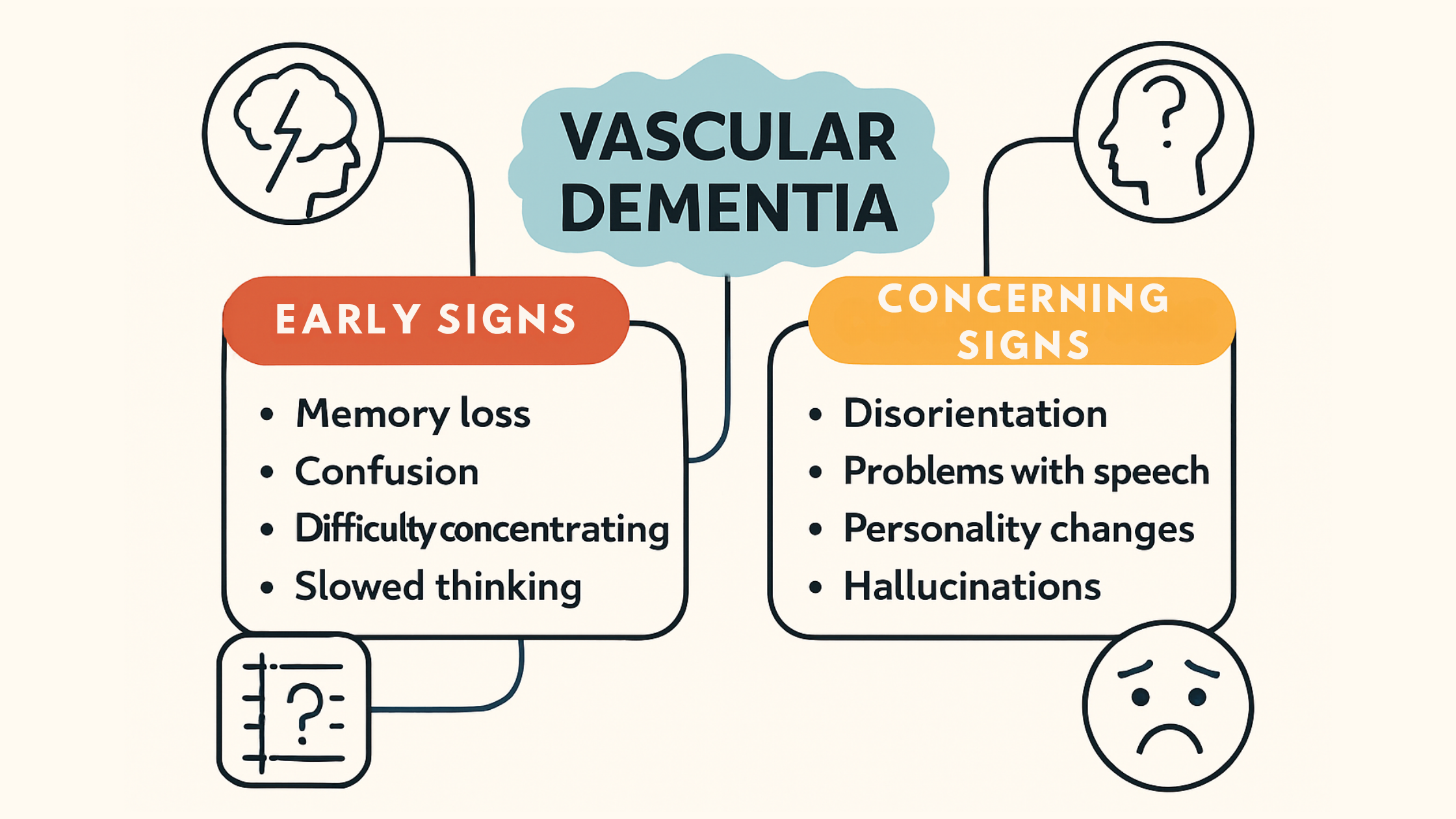
Infographic showing early and concerning signs of vascular dementia, including memory loss, confusion, speech problems, and hallucinations.

Know the signs of vascular dementia

Waiting until dementia symptoms are “bad enough” to take action is a dangerous gamble. The reality is, physiological changes in the brain start 10–20 years before diagnosis.

Subtle early signs of vascular dementia to watch for:

  • Misplacing items more frequently
  • Walking into rooms and forgetting why
  • Trouble recalling recent events or conversations
  • Struggling to follow multi-step instructions
  • Word-finding difficulties in conversation
  • Mild depression, anxiety, or new mood changes

More Concerning Signs (Often Seen Later):

  • Getting lost while driving familiar routes
  • Inability to manage finances or household tasks
  • Hallucinations or delusions
  • Asking the same question repeatedly

The Vascular-Dementia Connection: Why Cardiovascular Health Is Brain Health


Think of your brain like a high-performance engine. It needs optimal blood, oxygen, and nutrients to function. When your heart and blood vessels are compromised, your brain suffers. When everything is firing optimally, you feel sharp and clear, and your memory will outlast your physical body. In order to do this the brain needs blood, oxygen, and nutrients to function properly. When your heart and blood vessels are compromised, your brain suffers—slowly and silently.

Vascular dementia risk factors include:

  • High blood pressure
  • Obesity
  • Insulin resistance
  • Diabetes or prediabetes
  • Heart Disease or Coronary Artery Disease
  • Stroke
  • Sleep apnea
  • Sedentary lifestyle

For each risk factor that someone has, the likelihood of developing vascular dementia goes up. 

The Most Overlooked Lab Tests That Predict Your Brain’s Future
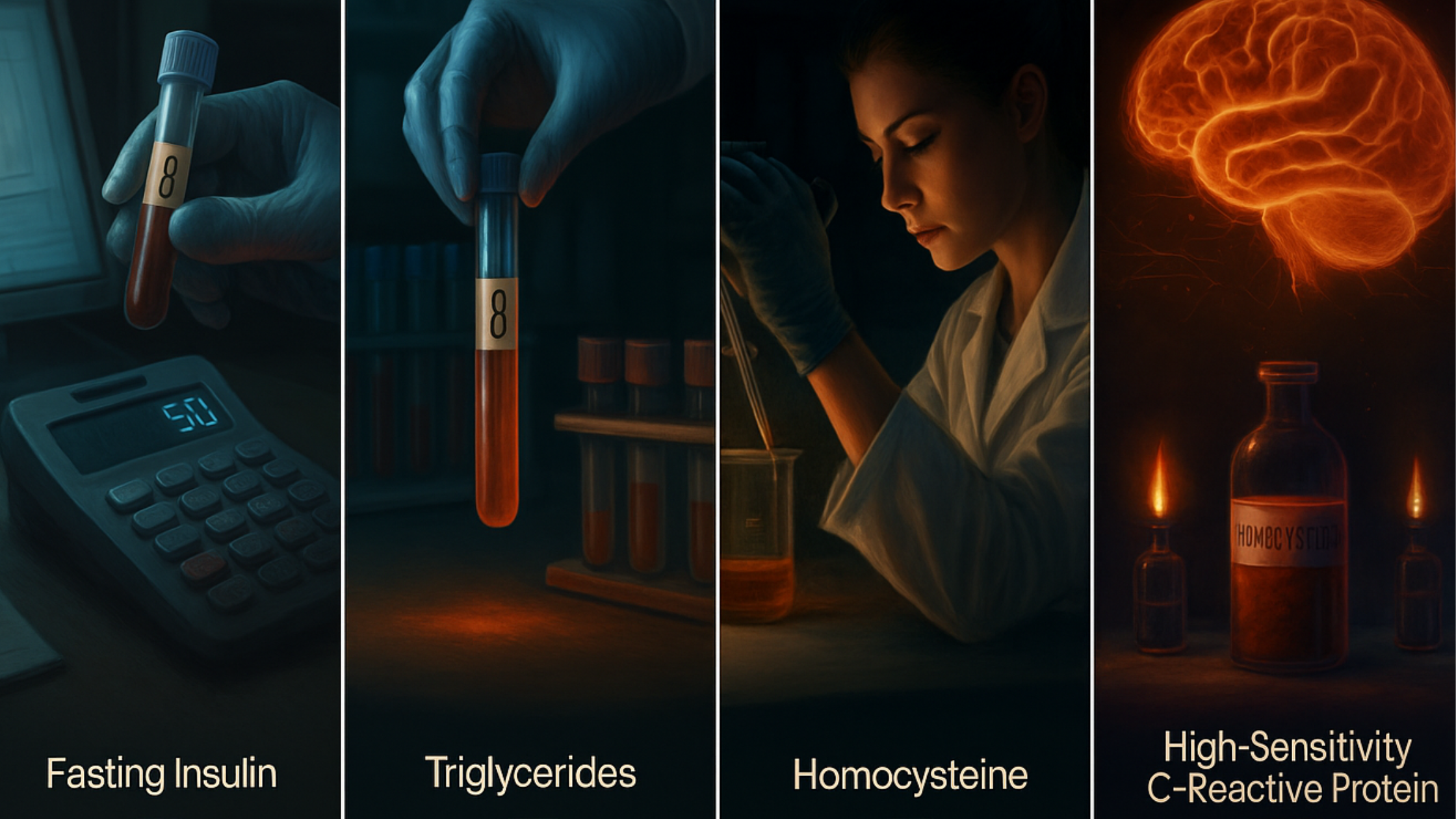
 

A visual showing lab tests for fasting insulin, triglycerides, homocysteine, and high-sensitivity C-reactive protein related to brain and inflammation health.

Essential lab markers for understanding metabolic and brain health

If you only rely on basic annual checkups, you’re likely missing critical data that could help you prevent cognitive decline. While there are numerous tests and studies that could be performed, here are the lab markers that matter most:

1. Fasting Blood Sugar

  • Ideal: In the 80s
  • Even “normal” results in the 90s can increase your dementia risk over time.

2. Hemoglobin A1c (HbA1c)

  • Ideal: Around 5.0%
  • “Normal” is often considered anything under 5.7%, but the lower the better. There is no harm in having the number lower, but the higher it is, the greater the risk.

3. Fasting Insulin

  • Ideal: Under 8 (some experts prefer under 5)
  • High fasting insulin is an early sign of insulin resistance. This will usually be off before blood sugar changes.

4. C-Peptide

  • Ideal: Under 2.5
  • Stable marker that reflects insulin sensitivity. The higher the number, the more likely there is insulin resistance.

5. Triglycerides

  • Ideal: Under 75
  • Triglycerides store unused sugar as fat—a hidden marker of metabolic imbalance.

6. Homocysteine

  • Ideal: Between 5 and 8
  • Levels over 10 are associated with vascular damage and higher dementia risk.

7. High-Sensitivity C-Reactive Protein (hs-CRP)

  • Indicates systemic inflammation, a key driver of both heart disease and brain decline.

You may have noticed that many of these recommended lab values are different from what a standard lab considers normal. Remember, standard lab ranges include a lot of sick people and don’t reflect a healthy population.

Don’t Ignore Gut Health: The Brain-Gut Connection Is Real

How does gut health affect the brain? Did you know your gut microbiome can influence your brain health? is a growing area of research. Imbalances in gut bacteria can drive inflammation and cognitive issues, even if digestion feels fine.

What to look for:

  • Gut diversity, beneficial metabolites like butyrate
  • Inflammatory markers like lipopolysaccharide

Can poor sleep cause dementia? Absolutely.

Pro tip: You don’t need diarrhea or constipation to have gut dysfunction. Fatigue, brain fog, anxiety, and autoimmunity are often tied to hidden gut issues.

Imaging: What Your Heart and Brain Are Trying to Tell You


1. Coronary Artery Calcium Score (CAC)

  • A CT scan that measures calcified plaque in your arteries
  • Reveals early signs of cardiovascular disease before symptoms appear
  • Suggested starting around age 30 and every 5 years thereafteras long as it’s normal.

2. MRI Brain Scan

  • Look for phrases like

    • “White matter hyperintensities”
    • “Chronic microvascular ischemia”
  • These indicate compromised blood flow to the brain—but are often dismissed as “normal aging.”
  • Even normal imaging doesn’t mean everything is fine; it simply means it didn’t detect what the imaging is made to detect.

Tip: Always ask for a copy of your imaging report—and read it yourself or review it with a specialist. We routinely see these findings on MRIs that other providers have ordered, and patients state no one has ever told them about the findings.

Sleep: The Hidden Key to Preventing Dementia

If you snore, wake up unrefreshed, or feel tired during the day—you might have obstructive sleep apnea. Left untreated, this can raise blood pressure, worsen insulin resistance, and skyrocket your dementia risk.

Why Sleep Matters:
  • It’s when your brain flushes out toxins via the glymphatic system
  • Poor sleep = more inflammation = more cognitive decline

Move More, Think Better: Exercise and Brain Health

Physical activity is one of the most well-researched tools for reducing the risk of all types of dementia—including vascular dementia.

Aim for:
  • 150 minutes per week of moderate cardio
  • Strength training 2-3x/week.
  • Daily walking and stretching to reduce sedentary time

You won’t always feel like exercising, and that’s okay, but keep your focus on why you are doing it. You are doing it to prevent dementia and not necessarily to become insanely ripped. 

Diet and Lifestyle: What You Eat Today Shapes Your Brain Tomorrow
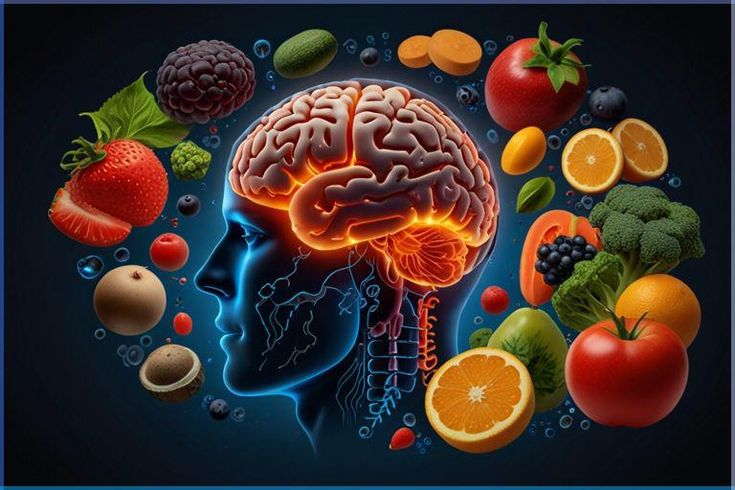
Healthy VS Unhealty Diet

Ultra-processed foods inflame your gut, spike your blood sugar, and damage your cardiovascular system. It’s a recipe for brain decline.

Build Your Plate With:
  • 50% colorful, fiber-rich vegetables
  • 30–35% healthy proteins and fats (grass-fed beef, wild-caught fish, avocado, nuts)
  • 10–15% low-glycemic carbs (berries, legumes)
Avoid:
  • Packaged, processed, microwaveable meals
  • Sugary snacks, sodas, and refined carbs
  • Chronic blood sugar spikes and crashes
  • Fruit juices

Hormones and Stress: The Silent Saboteurs

Low testosterone or estrogen? Chronically stressed? Both of these increase your risk.

  • Hormones play a role in maintaining blood vessel health and brain resilience.
  • Stress, whether emotional or physiological, activates inflammatory responses in the brain, damaging key memory centers like the hippocampus.
  • Chronic stress can also prevent your body from producing sex hormones—testosterone, estrogen, and progesterone—in the appropriate amounts. 

Stress management is not optional—it’s brain-saving.

When was the last time you did something you truly enjoyed? Optimizing health involves getting off the hamster wheel of life and allowing the brain and body time to heal and recover. 

Final Thoughts: It’s Not Just About Getting Old

Watching someone forget your name… forgetting how to drive… or struggling to finish a sentence—these things don’t have to be your future.

Yes, some risk factors are out of your control. But the majority of vascular dementia risk comes from lifestyle choices made day in and day out.

You can start now by asking yourself:
  • How well am I sleeping?
  • Am I eating for blood sugar stability and gut health?
  • When was my last in-depth lab work or brain scan?
  • How often do I move, socialize, laugh, and learn?

The best time to start preventing dementia was 10 years ago. The second best time is today.

Ready to Take Control of Your Brain Health?

At our Peak Brain and Body Concussion treatment center located at 2404 Creel Ln, Suite 101, Wesley Chapel, FL 33544, we specialize in early detection and proactive prevention.

We use advanced diagnostics including laser therapy for brain injury to help support recovery and brain function. Led by Dr. Spencer Zimmerman, also known as Dr. Zimmerman, our team delivers personalized protocols tailored to your unique needs.

Looking for a new treatment for vascular dementia? You don’t have to wait for symptoms to worsen.

👉 Schedule your Brain-Body Insight Session today and take the first step toward preserving your memory and vitality.

ICD-10 Code Note: The vascular dementia ICD 10 code is F01.50 (without behavioral disturbance) and F01.51 (with behavioral disturbance) for clinical reference.

Concussions and Mental Health in Children and Teens: What Every Parent Must Know

At Peak Brain and Body, we see the impact of concussions every single day. And yet, despite all the headlines, medical advancements, and increasing awareness, too many children and teenagers are still suffering in silence—misdiagnosed, misunderstood, or completely missed altogether.

This blog is for the parents who feel something isn’t right. This isn’t just your children, but it may explain some of the issues you’ve had since you were a teen that you didn’t know were linked. For the young adults who can’t explain why they feel different. For the healthcare professionals who want to understand what the research says.

We’re going deep into the connection between concussions and mental health, specifically in children and adolescents. And we’re doing it from an evidence-based perspective, so we can shine a light on what’s going wrong… and what can be done about it.

When you understand the evidence, you’ll understand what is truly happening and know that it’s much more than a mental health issue — especially when considering the mental health after concussion.

Concussions Are Not Just a Sports Problem

Every year, millions of concussions go undiagnosed.
Yes, we hear about sports-related concussions—football, soccer, hockey, and gymnastics. But guess what? More concussions occur from car accidents and slip-and-falls than from sports. Yet, if you don’t play sports, you might never get evaluated. That’s a massive issue. Even if you do play sports, many are never evaluated, or they are brushed away because the athlete only cares about returning to the game.

  • Parents often miss it.
  • Coaches brush it off.
  • Even providers cling to outdated thinking from their own childhood experiences and are not up to date or even set up to properly evaluate concussions.

And that bias? It’s ruining lives for not just weeks, but decades. Often, families are unsure how to tell if my child has a concussion, which leads to missed diagnoses.

Lingering Symptoms Aren’t Rare—They’re the Norm

If you think everyone just “bounces back” from a concussion, the research says otherwise:

  • 70% still suffer from headaches post-concussion
  • 70% report difficulty concentrating
  • Over 50% still feel fatigued
  • Brain fog, head pressure, mood swings, light sensitivity, memory issues—these are not rare symptoms
  • Nearly 50% of individuals still deal with significant symptoms 6–12 months later

Many of these persistent issues point to the long-term effects of concussion, which can affect multiple areas of life — school, work, relationships, and emotional health.

The Link Between Concussions and Mental Health

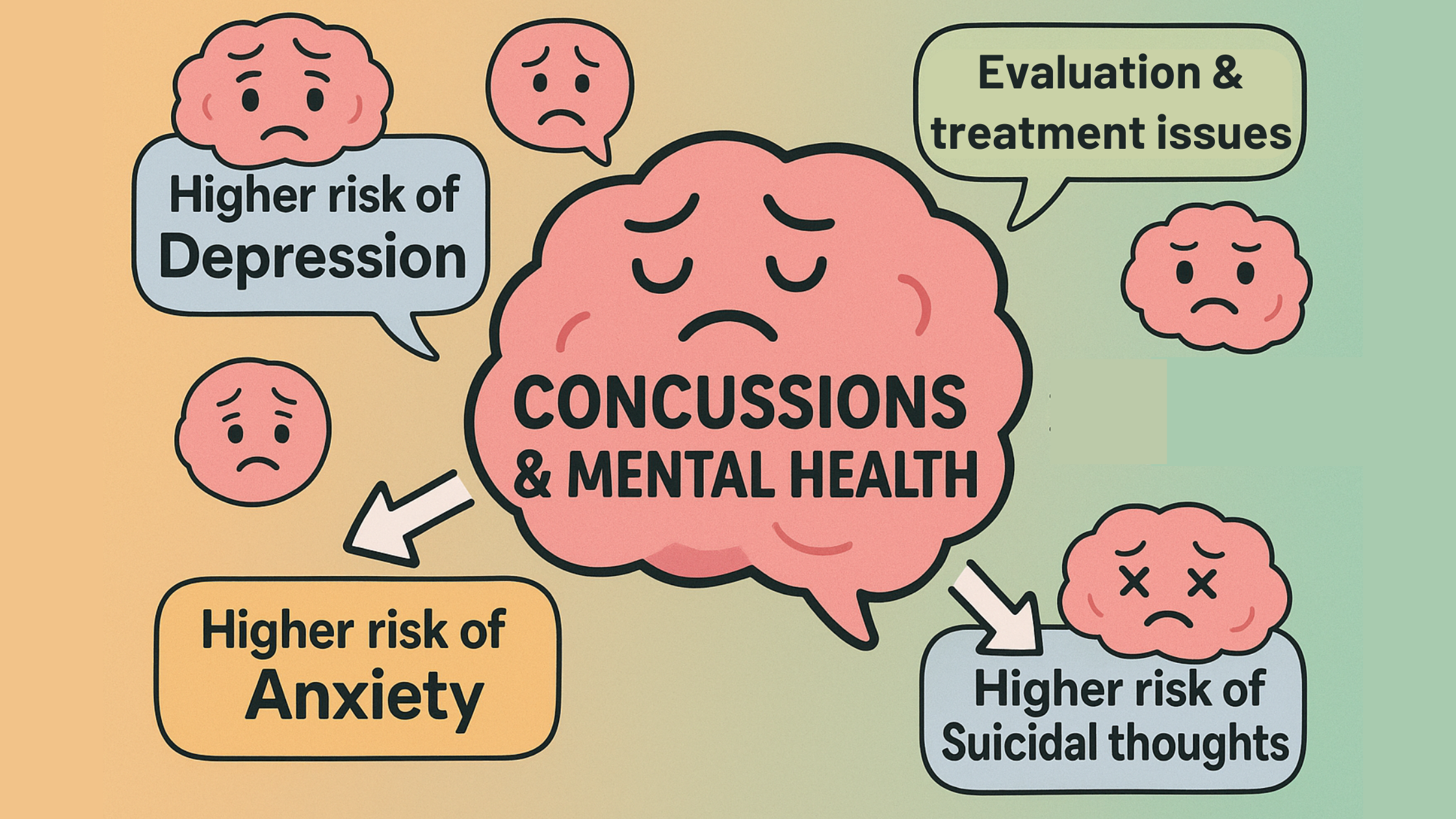
Illustration showing the mental health risks linked to concussions, including depression, anxiety, suicidal thoughts, and treatment issues.

Concussions can significantly affect mental health, increasing the risk of anxiety

Research continues to show staggering associations between concussions and mental health conditions:

  • 3.3x greater risk for depression diagnosis in adolescents with concussion history
  • 2x higher risk of suicide ideation and attempts after mild TBI
  • Increased anxiety, social withdrawal, loneliness, and even substance abuse
  • Children discharged from ERs with a head injury were misdiagnosed up to 25% of the time—sometimes labeled with ADHD, sleep disorders, or behavioral issues instead of properly identifying the concussion

In fact, many parents report later, “my child was misdiagnosed with ADHD,” only to realize the real issue stemmed from a brain injury. Some of these cases also develop into concussion-related depression that isn’t caught in time.

And here’s the kicker: many of these kids were never evaluated appropriately. They didn’t get a full neurological workup. For those who were diagnosed, they routinely aren’t even educated on the significance of their injury.

Misdiagnosis = Mistreatment = Prolonged Suffering

Imagine this scenario:

Your child has trouble focusing after a bike crash. The doctor prescribes Ritalin because the teachers and you have noticed a difference in their school performance.

But they don’t have ADHD. They have a concussion that hasn’t healed and is leading to brain dysfunction, which manifests as easily distractible, zoning out, and behavior changes.

Now, their lives have become harder. The medication doesn’t help. They’re still foggy, moody, withdrawn. And because the real issue wasn’t treated, they continue to suffer needlessly for months or years.

That’s not just poor care. That’s dangerous as it ruins what those individuals should have become.

It’s Not “Just Puberty.” It Might Be a Concussion.

Another thing that often gets blamed for these symptoms, is puberty. A teenager who becomes more withdrawn, anxious, irritable, or tired isn’t just “being a teenager.”

Too many families are told their kid is “just hormonal.” But when you dig into their history you discover falling off a bike, a rough tackle in soccer, a fender-bender. They had a clear mechanism of injury that was never evaluated.

If you treat them for anxiety but ignore the neurological root, they don’t get better. They just become another statistic of untreated concussion symptoms in children.

Brain Injury Changes the Brain—Literally

What happens to the brain after a concussion?
Advanced imaging and research studies are showing:

  • Changes in brain connectivity—especially in areas tied to attention, emotion, and executive function
  • Increased connectivity in the default mode network (often linked with depression and anxiety)
  • Persistent alterations in cerebral blood flow and white matter integrity that persists a year after the injury, even in the absence of symptoms

This neurological dysregulation is a major driver of mental health after concussion, contributing to lasting emotional and cognitive issues.

But here’s the problem: most of this testing isn’t available in routine clinical care. That’s why it’s so important that your provider is highly trained and uses the best tools available to evaluate function, not just symptoms.

Most Concussion Evaluations Are Incomplete

Let’s get this straight. A proper concussion evaluation is not just asking, “Did you hit your head?” and “Do you have a headache?”

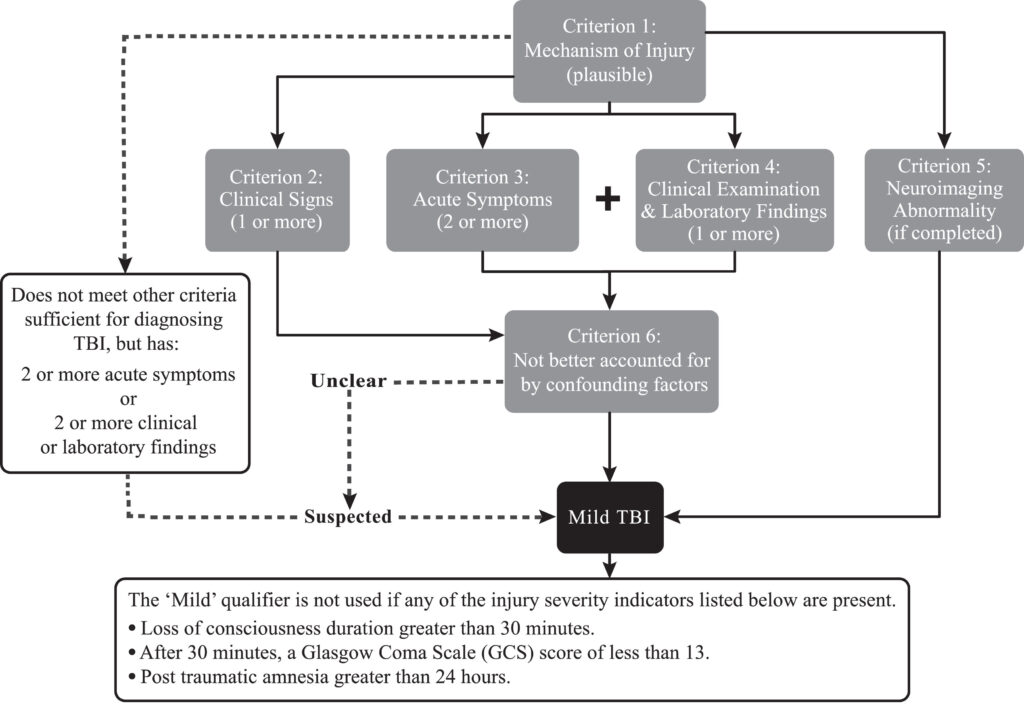
At Peak Brain and Body, we follow the American Congress of Physical Medicine and Rehabilitation’s criteria, which includes:

  • A clear mechanism of injury (car accident, whiplash, sports hit, etc.)
  • At least two or more symptoms within 48 hours
  • Clinical examination findings such as:
    • Cognitive impairment
    • Balance impairment
    • Oculomotor impairment (eye movements and visual tracking)

Unfortunately, many providers rely only on cognitive testing. But cognitive testing alone is not enough. A full workup should include:

  • Computerized balance testing
  • Video oculography (eye movement and visual processing testing)
  • Neurological examination
  • Metabolic and laboratory evaluations

Because here’s the truth: if you don’t ask the right questions, you don’t get the right diagnosis, which means you certainly don’t get the right treatment.

What About Imaging?

CTs and MRIs are typically normal in concussion cases. We understand how frustrating it is when you are told that your imaging is normal. Just because imaging is normal, doesn’t mean that everything is normal. It means that it’s not the best way to assess a concussion. The testing is as we discussed above. If there was imaging that could be done, it’d be functional imaging.

Functional imaging like SPECT or advanced MRI sequences can show changes, but they’re rarely done outside research settings as it’s very expensive. That’s why we use objective clinical testing to measure recovery and guide care, not just rely on standard imaging.

Why Standard Treatments Fall Short

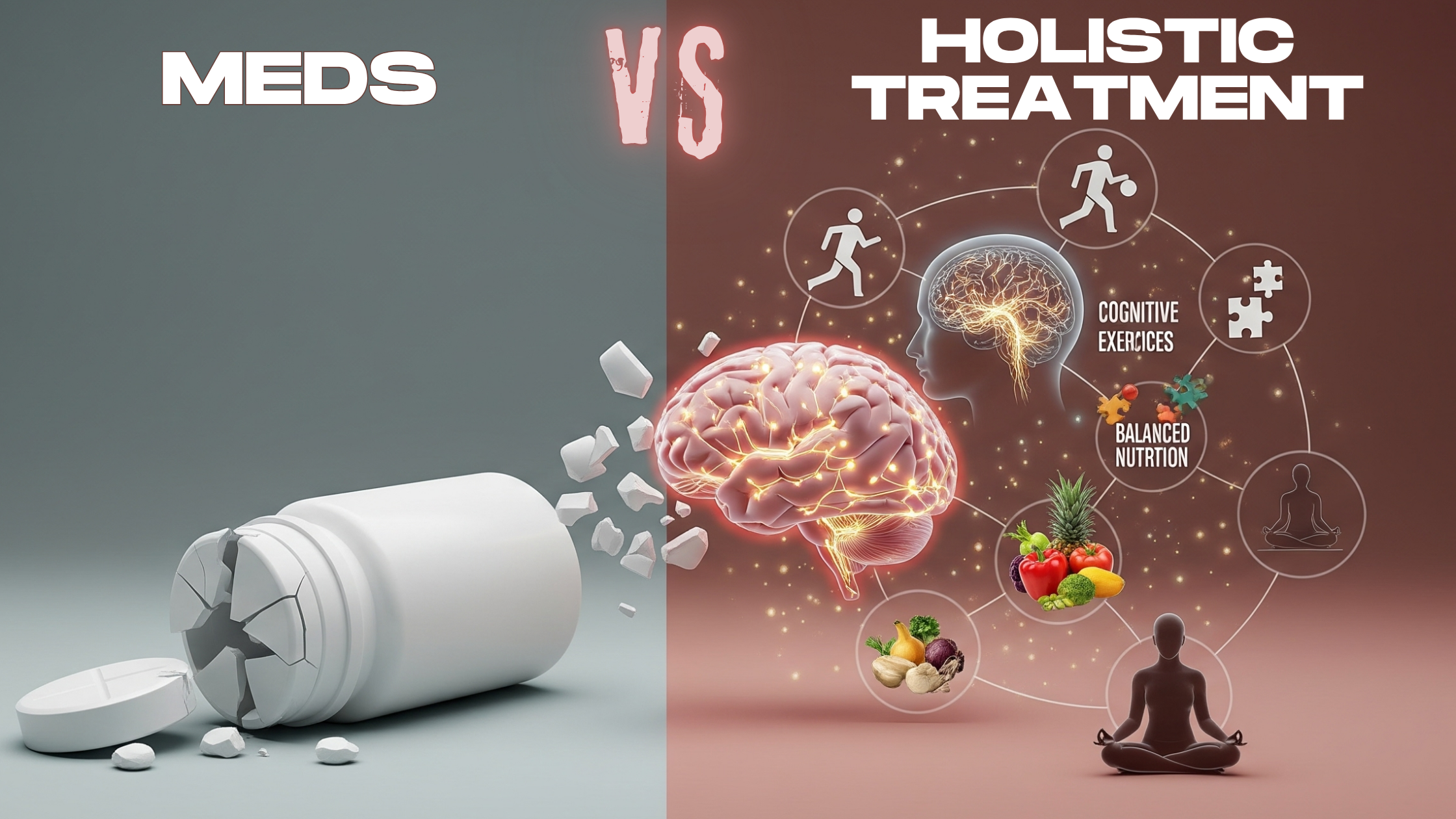
comparing traditional medication with holistic treatment for brain health

A visual comparison between medication and holistic approaches to mental wellness

The journey that most individuals go through following a concussion diagnosis should sound very familiar.

You will see a primary care provider who will tell them this is something that you should recover from in a couple of weeks. If after a couple of weeks you are still struggling, you will be sent to a neurologist to see if there is anything else that should have been addressed. If you have severe enough symptoms, specifically migraines, then a neurologist will prescribe you medication for it. But if you have mental health symptoms, you will then be sent to a psychiatrist, where you’ll be recommended additional medications.

Because you’ve been going to your primary care provider and you are complaining of neck pain, headaches, and maybe some dizziness, they will send you to physical therapy. Most physical therapy places use a very generic treatment program that is going to help some, but because it’s not tailored to your needs, you will not get the results you want. This is going to lead to frustration, and you are going to go to the internet (via social media and web browsing) out of desperation and pick a lot of things that may sound good.

Many people come to us after trying hyperbaric oxygen, neurofeedback, chiropractic, acupuncture, or IV therapy.

Let me be clear: NONE of these treatments fix every concussion.

They may be helpful as part of a plan—but if someone tells you their one tool is the magic bullet for concussions, you need to run the other direction.

Recovery requires stacking therapies strategically. At Peak Brain and Body, we tailor combinations like:

  • Vestibular rehabilitation
  • Eye movement therapy
  • Hand-eye coordination exercises
  • Cognitive retraining
  • Laser therapy for brain injury
  • Mild hyperbaric oxygen
  • Nutritional and peptide support
  • Lifestyle and metabolic optimization

This integrated approach is where people get results—especially when they’ve failed elsewhere. We also follow the 6 stages of concussion recovery to ensure no step is missed.

The Brain Doesn’t Heal in Isolation

Don’t forget: brain health is body health.

If someone has low iron, blood sugar issues, autoimmunity, poor thyroid function, hormone imbalances, chronic infections, or extreme stress—it’s going to interfere with brain healing.

That’s why every new patient at Peak Brain and Body gets an in-depth history and lab workup. Because if we don’t know what’s sabotaging recovery, we can’t fix it.

We are routinely told from individuals that their labs are normal, but with more advanced testing we often find pivotal information that impacts recovery.

Final Thoughts: Rethink Mental Health and Concussions

Mental health struggles, especially in children and teens, are often not what they seem. Depression, anxiety, behavioral issues… they may be symptoms of an unhealed brain injury.

At Peak Brain and Body, we don’t chase symptoms. We investigate root causes.

If your child, your teen, or even you have unexplained mental health challenges and a remote history of a possible head injury, even without a formal concussion diagnosis, you deserve a proper evaluation.

Because until we stop blaming mental health as a standalone issue and start asking what’s driving it, people will continue to suffer.

It’s time to do better.

If you’re ready to uncover the real reason behind lingering symptoms, or help your child finally feel like themselves again, reach out. We’re here to help.

______________________________________________________________________________________

Located in Wesley Chapel, FL, Peak Brain and Body is a destination for individuals seeking world-class care for concussions, brain fog, POTS, and complex neurological conditions. 

Patients travel from across the U.S. for our cutting-edge diagnostics and integrated recovery programs.

Call us today or schedule your Health Strategy Session to get started.

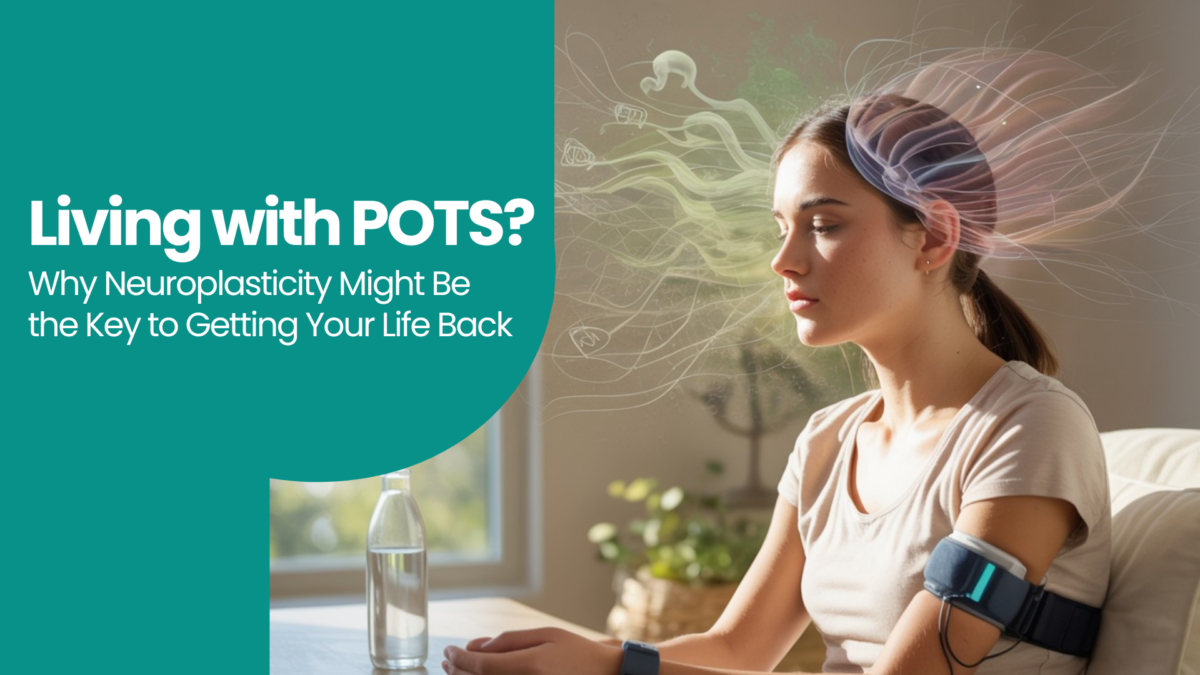
Living with POTS? Why Neuroplasticity Might Be the Key to Getting Your Life Back

If you’ve been diagnosed with Postural Orthostatic Tachycardia Syndrome (POTS), chances are you’ve spent years bouncing between specialists, wearing compression socks, increasing salt, and trying prescription after prescription. And despite doing “all the right things,” you’re still exhausted. Still dizzy. Still feeling like your body is out of sync.

Then, out of frustration and desperation, you started looking outside the box: chiropractic, supplements, upper cervical, acupuncture, and more; yet you still aren’t getting better. 

You’re not alone. You’re not crazy. It’s not just in your head as a mental health disorder, even though you may have depression and anxiety, but who wouldn’t after struggling for years and being misunderstood.

The reason you haven’t gotten better isn’t because POTS is untreatable—it’s because POTS has been fundamentally misunderstood.

You’ve been told it’s a cardiovascular issue, which is why you keep seeing cardiology. But here’s the reality: POTS is not a cardiovascular disorder. The cardiovascular symptoms are manifestations of dysfunction within your autonomic nervous system. That distinction changes everything. And when you start approaching POTS from the lens of neuroplasticity, you open the door to real, lasting recovery.

What Is POTS…Really?

Let’s get the technical stuff out of the way. 

  • POTS is diagnosed when your heart rate increases by more than 30 beats per minute (or 40 if you’re a teenager) within 10 minutes of standing up, without a significant drop in blood pressure.
  • POTS is diagnosed after multiple symptoms and vital sign changes have persisted for at least 3 months.
  • POTS is considered an appropriate diagnosis if there isn’t a better explanation for the symptoms and findings. 

But let’s go deeper.

POTS lives under the umbrella of dysautonomia—dysfunction of the autonomic nervous system (ANS), which controls involuntary functions like heart rate, blood pressure, digestion, and temperature regulation.

So while your cardiologist may look at POTS as a heart rate problem, and your neurologist may say, “Not my lane,” the truth is: POTS is a nervous system issue that manifests as symptoms in your cardiovascular, respiratory, and gastrointestinal systems.

That’s why treatments like beta blockers, IV fluids, or Midodrine might reduce your heart rate or help you not feel faint, but they don’t fix the underlying issue. They’re managing symptoms, not creating healing.

What we’ve found in helping individuals for over 10 years and looking at the research, it’s clear that POTS is a nervous system issue that is influenced by impaired neurological and immune function.

Why Neuroplasticity Matters in POTS Recovery

Neuroplasticity is your brain’s ability to change, adapt, and form new connections based on the information it receives. And it can go one of two ways:

  • Positive neuroplasticity creates new, healthy patterns.
  • Negative neuroplasticity reinforces dysfunctional loops that keep your symptoms alive.

When you’re living with POTS, your brain and nervous system have learned to operate in a dysregulated state. You didn’t choose this, but the longer it goes on, the more deeply those patterns get wired in.

This is why surface-level treatments often fail. They don’t address the why. They don’t rewire the brain. And they don’t promote positive neuroplasticity, which is the only way real, long-term healing happens.

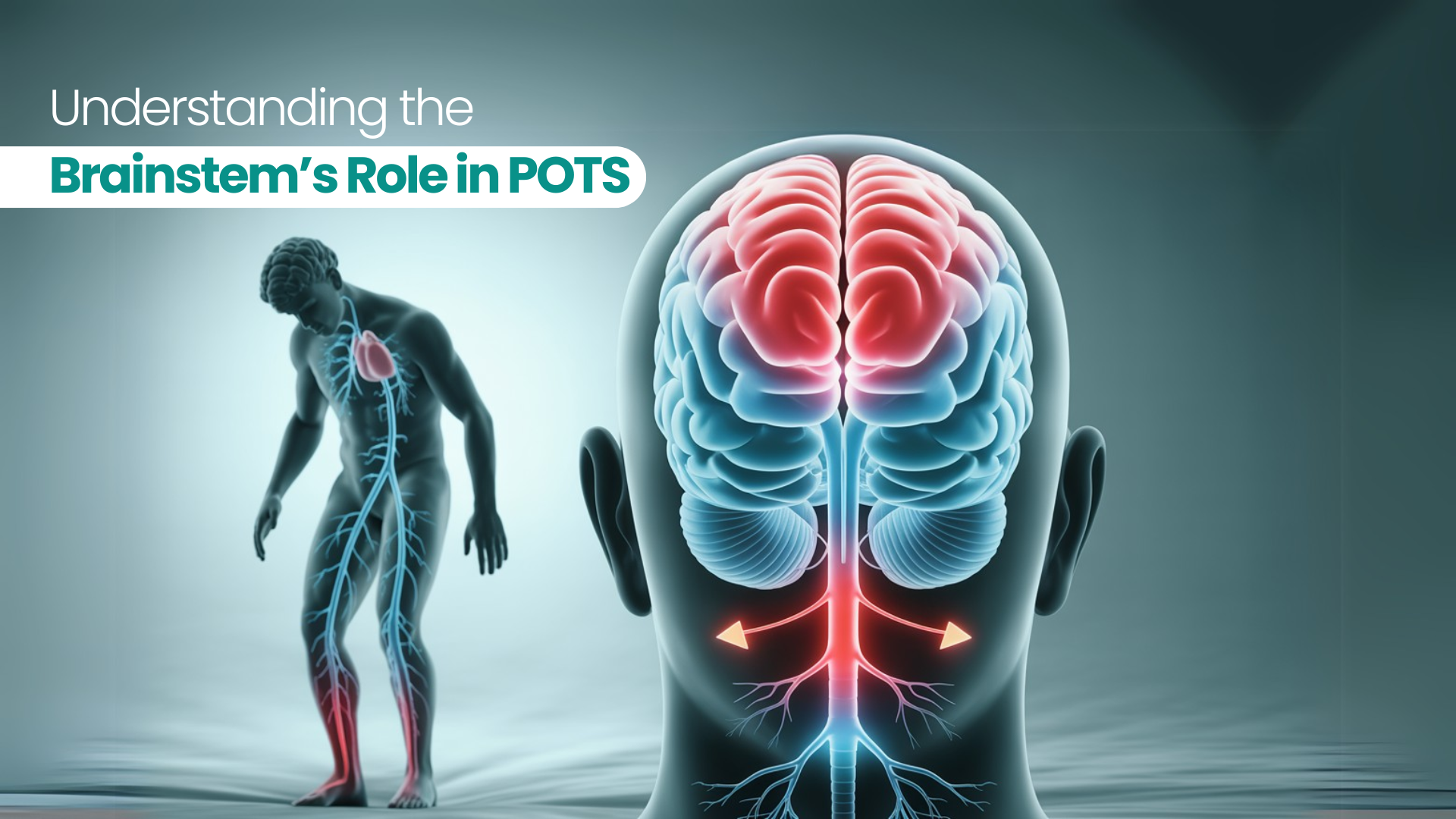
Understanding the Brainstem’s Role in POTS

Understanding the Brainstem’s Role in POTS

To understand where POTS comes from, we need to look at the brainstem. The brainstem is the lower part of the brain with the lobes of the brain on top of it. When we look at the brainstem, there are 3 parts, but for simplicity, we are going to separate it into 2. The upper half, mesencephalon, is responsible for what’s known as the sympathetic nervous system. The lower half, the pons and medulla, is responsible for what’s known as the parasympathetic nervous system. This area is routinely called the pontomedullary region and is where we are going to focus. It’s the hub for the vagus nerve and integration of a variety of sensory inputs into the brainstem that will impact autonomic function.

The vagus nerve is crucial—it controls heart rate, digestion, blood pressure, and even inflammation. It’s been a hot topic in health circles lately, but we’ve been working with it long before it was trendy.

The vagus nerve is a two-way communication highway. It sends information from the body to the brain, and from the brain back to the body. If that feedback loop is disrupted, your body can’t regulate itself the way it’s supposed to.

For example, when you stand up, baroreceptors (pressure sensors in your arteries) should detect the drop in blood pressure, and this reduces the signals being sent to the brainstem and should result in increased sympathetic outflow to maintain blood pressure. 

If this system isn’t working, blood pools in your lower body, your brain gets less oxygen, and you feel faint, dizzy, or like your heart is pounding out of your chest.

Why Treating the Vagus Nerve Alone Isn’t Enough

A lot of people get excited about vagus nerve stimulation, and there’s a place for that. We use tools that target it, and they can help.

But let’s be clear: stimulating the vagus nerve alone is like trying to fix a car by polishing the headlights.

POTS isn’t a “one-nerve” problem. The vagus nerve is just one player in a much larger system. Your brainstem, cortex, cranial nerves, cervical spine, and vestibular system all work together to regulate your autonomic function.

If you’re only targeting one piece of the puzzle, you’re going to keep missing the full picture and won’t get better.

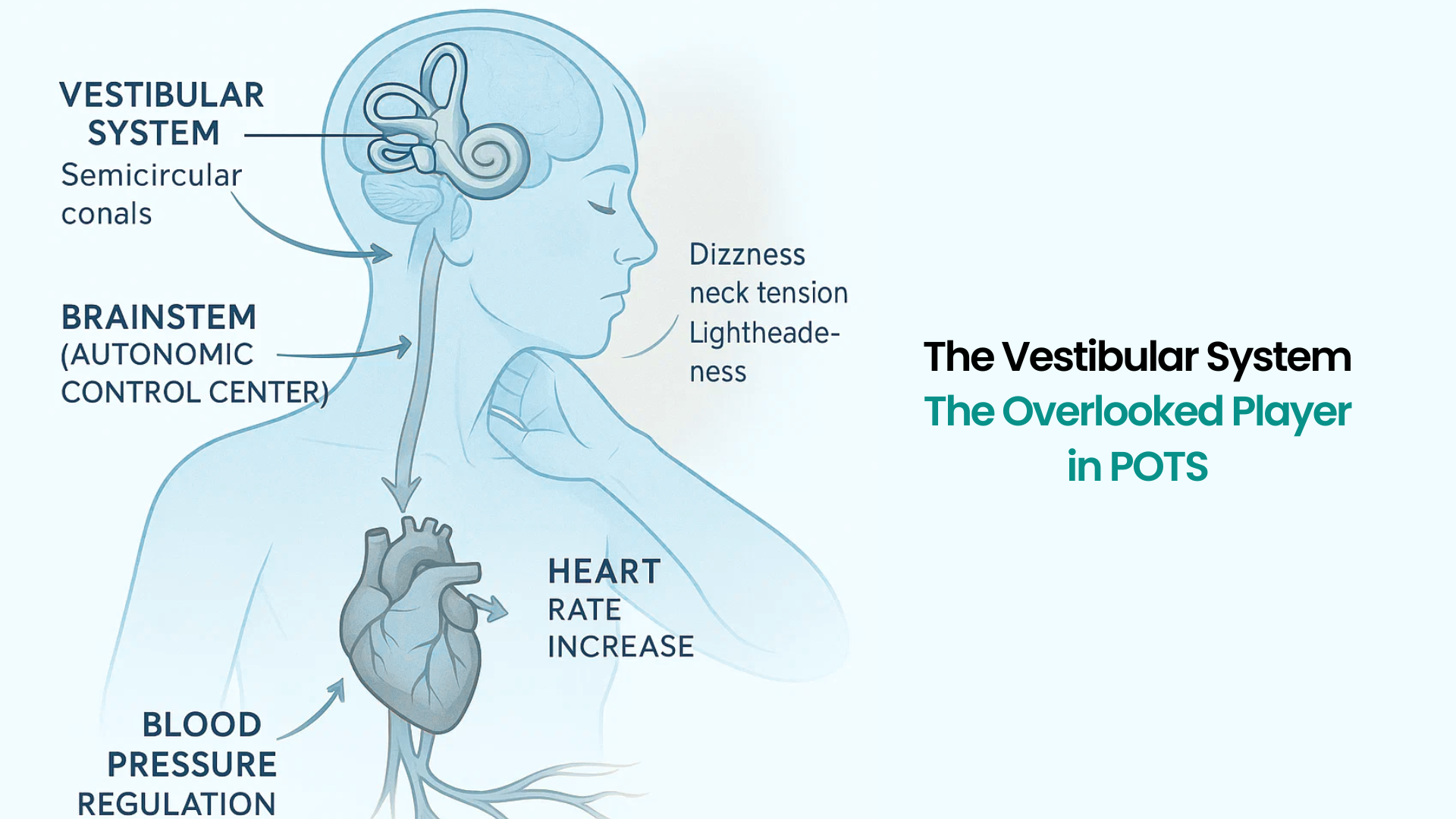
The Vestibular System: The Overlooked Player in POTS

The Vestibular System: The Overlooked Player in POTS

Your vestibular system, which controls balance and spatial orientation, is deeply intertwined with your autonomic function.

When you move your head, bend over, or shift positions, your vestibular system helps regulate blood pressure and heart rate through vestibulo-autonomic reflexes known as the vestibular sympathetic reflex.

If your vestibular system is out of sync, your blood pressure can crash when you move, and your heart rate can spike inappropriately. This is especially true if you have orthostatic hypotension, as impairments in the vestibular sympathetic reflex is the major contributor to this process.

Unfortunately, most with POTS, orthostatic hypotension, or other forms of dysautonomia will never have a vestibular evaluation. When people think of vestibular issues, they often think about issues with the inner ear resulting in vertigo.

In fact, many people with POTS don’t even have classic vertigo, but they still have vestibular dysfunction. That’s why dizziness, lightheadedness, neck pain, and motion sensitivity are so common.

We run computerized vestibular testing and eye movement tracking (video-oculography) on every patient, and over 75% show abnormalities. If your provider isn’t testing this, they’re missing one of the biggest drivers of your symptoms. In our experience, if this isn’t done, then you won’t get better if it was something that should have been treated.

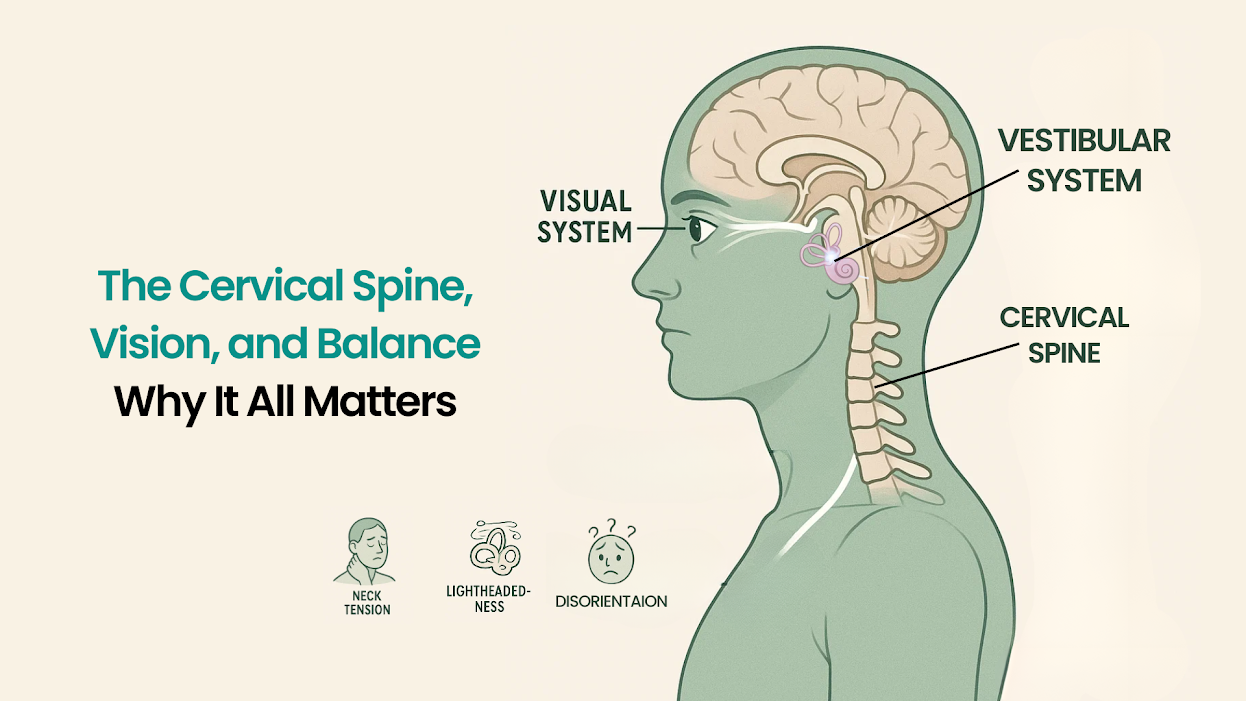
The Cervical Spine, Vision, and Balance: Why It All Matters

The Cervical Spine, Vision, and Balance: Why It All Matters

Your neck (cervical spine) contains joints and muscles that feed into your vestibular system. When this information is good, it helps to stabilize the vestibular system, but when it’s bad, it can contribute to issues with the vestibular system. Problems here can mess with your balance, your blood pressure regulation, and your brain’s ability to orient in space.

But again, adjusting the neck alone won’t fix POTS. I’ve been in this field for over a decade. I’m a chiropractor and a nurse practitioner. I’ve seen neck adjustments help, but rarely do they solve the problem. I know you’ve likely heard in groups that some miracle happened with regular chiropractic, upper cervical, or yucca-based approach. Yes, some individuals do get better with it, but it’s not many, and we are about predictable results, which is why stopping with the cervical spine isn’t enough. 

That’s because your visual system plays a role too. Your eyes work in tandem with your vestibular system to stabilize your vision and sense of movement. If your eye movements are off, even just slightly, it creates chaos for your brain and nervous system.

If scrolling your phone, driving, or being in crowds makes you feel “off,” that’s your oculomotor system screaming for help.

That’s why we test it. Every patient. Every time.

Immune and Inflammatory Triggers

Now, let’s discuss what exacerbates the situation: inflammation and immune dysfunction.

If you notice your POTS symptoms flare up during:

  • Menstrual cycles
  • Seasonal allergies
  • Illness or infections
  • After eating certain foods

…it’s likely because of neuroinflammation. Inflammation disrupts neuroplasticity and puts your nervous system on high alert. It changes how your brain processes signals, making symptoms feel more intense and harder to recover from.

This is where comprehensive lab testing becomes critical.

I’m not talking about basic panels, 3-5 vials, that come back “normal.” I’m talking about in-depth panels that look at gut health, nutrient deficiencies, autoimmune markers, and mitochondrial function.

Because if your body doesn’t have the fuel due to metabolic issues, or the immune system has shifted in the wrong direction, no amount of physical therapy or salt loading will move the needle.

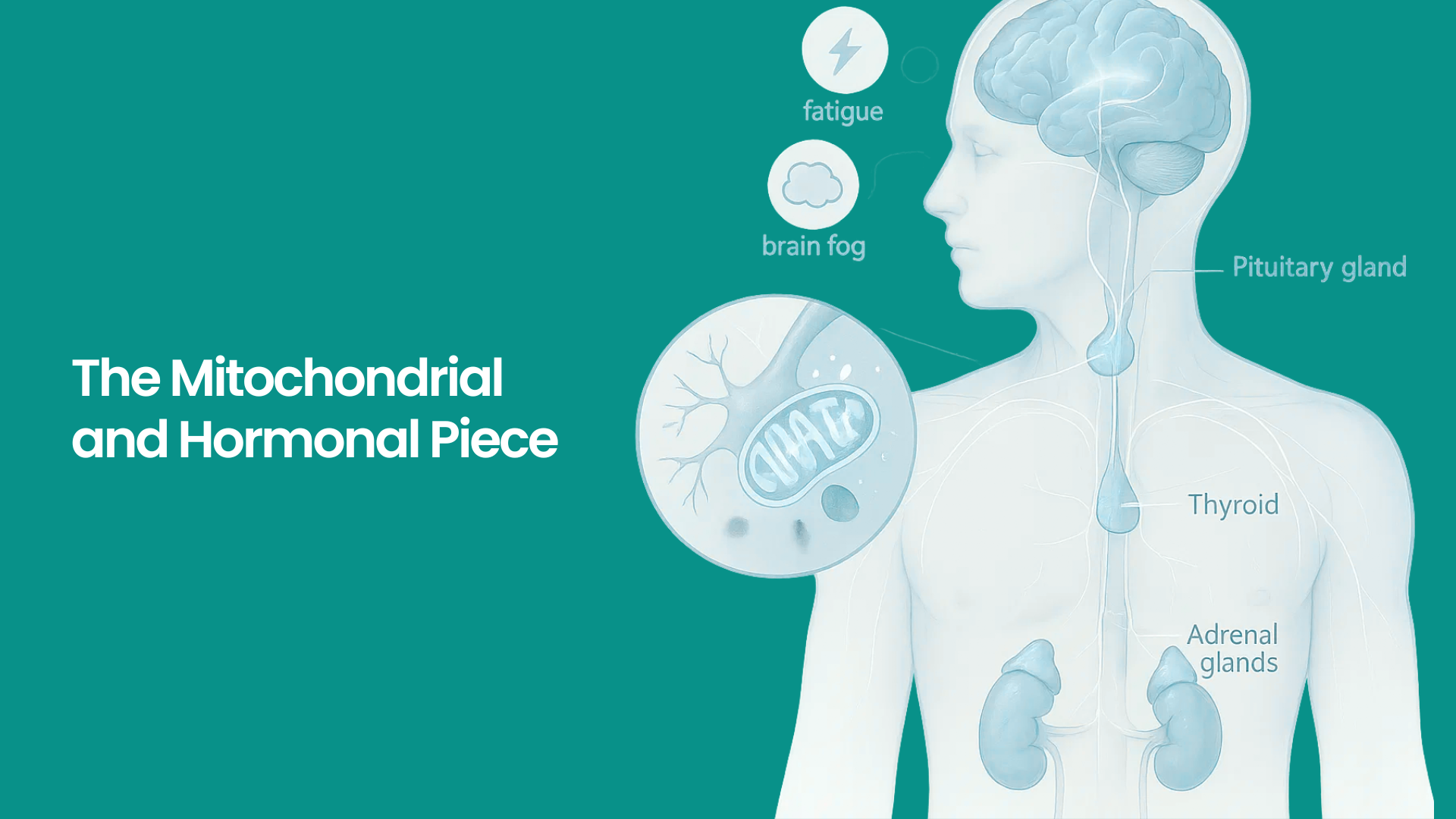
The Mitochondrial and Hormonal Piece

There’s another layer most clinics skip: cellular energy.

Your nervous system runs on ATP—energy made by your mitochondria. If your mitochondria are sluggish (due to infections, toxins, stress, nutrient issues, or hormone imbalances), your brain can’t regulate itself. Did you know your brain uses 25% of the entire bodies energy supply when you are at rest? 

Now, what happens when you have an unhealthy nervous system that is burning fuel inefficiently? Everything only gets worse. There are also a variety of factors that contribute to the energy capacity of the brain beyond neurological connections.

You may also have:

  • Thyroid issues (especially missed subclinical hypothyroidism)
  • Anemia
  • Adrenal dysregulation
  • Sex hormone imbalances

All of these affect how your brain functions—and whether your nervous system can rewire itself properly.

So… What Actually Works?

Here’s the framework we follow at Peak Brain and Body:

  1. Comprehensive Evaluation

We run tests that others skip:

  • Computerized vestibular and balance testing
  • Video eye movement analysis
  • In-depth neurological examination
  • Expanded lab panels to identify immune and metabolic patterns
  1. Multisystem Treatment Plan

We don’t throw darts in the dark. With the amount of data we gathered, we confidently tailor your treatment to what your body is telling us. That might include:

  • Neuroplasticity exercises targeting visual, vestibular, and motor systems
  • Brainstem and cerebellar retraining
  • Vagus nerve modulation
  • Cervical spine rehabilitation (if appropriate)
  • Mitochondrial and hormone support
  • Immune modulation and gut healing
  1. Pattern-Based Progress

We don’t chase symptoms—we follow patterns. The more patterns we identify, the more accurately we can target treatment. It’s like studying the whole textbook before the test, not just one chapter.

This is where patience has to come in, just because we find something, it doesn’t mean it’s the first thing we have to address. If we address the wrong thing at the wrong time, you won’t get the results you want. We’ll guide you based on the patterns and testing to identify what should be addressed when.

Why You’re Still Stuck (And How to Change That)

If you’ve tried supplements, hyperbaric therapy, IVs, chiropractic, or functional medicine, but never got real traction, it’s not because you’re broken.

It’s because your care has been fragmented.

You’ve done bits and pieces. But this is like trying to bake a cake by only using flour. You need all the ingredients, and you need them in the right order.

When we bring all the systems together—neurology, cardiology, immunology, endocrinology, and gut health—we see people get their lives back.

Most of our POTS patients improve by 70-80% or more. The time to achieve those results is dependent on the underlying reasons why POTS is an issue for you. Some need additional support beyond the initial plan. But when you work through this framework systematically, the body starts to heal.


Final Thoughts: You’re Not Crazy. You’re Just Misunderstood.

If you’re reading this and thinking, “Why hasn’t anyone explained this to me before?”—that’s exactly why I created this blog.

Most providers weren’t trained to think this way. But this is the future of care for complex neurological conditions like POTS.

At Peak Brain and Body, we see patients from all over the country—people who’ve seen 10+ doctors and still didn’t have answers. But when you finally look at the full picture, things start to make sense.

Concussion and Sleep: What You Should Know

A concussion (medically known as a mild traumatic brain injury, mTBI) results from a forceful blow or jolt that causes the brain to shake inside the skull. This disrupts normal brain function, leading to symptoms like headaches, nausea, dizziness, memory issues, fatigue, and emotional disturbances. One of the major challenges is trouble sleeping after a concussion, which can significantly hinder post-concussion recovery.

It was once thought that most concussions heal on their own, but research shows nearly 50% of individuals may not fully recover even a year later. That’s due to how concussions disrupt brain connections, promote inflammation, alter vascular supply, and interfere with your body’s circadian rhythm after brain injury and sleep quality.

Why Sleep Matters in Concussion Recovery

After a concussion, the brain goes through a vulnerable and energy-demanding healing process. Amid this disruption, sleep after concussion becomes not just essential, but critical. Sleep, particularly during the deep sleep stage, plays a key role in neurological restoration. During this time, the brain engages in a natural detoxification process, clearing out cellular waste and neurotoxins that can accumulate post-injury.

Moreover, sleep disturbances after concussion are common, yet restoring healthy sleep cycles can significantly influence your recovery speed. Trouble sleeping after a concussion may delay the brain’s ability to rebuild neural pathways, regulate emotions, and regain cognitive clarity.

Can You Sleep Right After a Concussion?

Yet, sleep after a concussion hasn’t always been well understood. Many of us grew up hearing the advice: “Don’t let someone with a concussion fall asleep.” 

For decades, the standard recommendation was to wake someone every hour after a head injury. The fear was that they might “slip into a coma” or have suffered a brain bleed that gradually over the next few hours, would be detrimental and you wouldn’t know if the individual was sleeping. However, we now understand that it’s not the sleep that’s dangerous—it’s the potential for a more serious underlying injury.

Currently, most concussion experts agree that sleep is fine. There is no need for monitoring someone while they are sleeping. Depending on the time of day the injury occurred, it is unlikely the individual will go right to sleep. During this window, you can assess for red flags—signs of more serious brain trauma such as slurred speech, worsening headache, repeated vomiting, or unresponsiveness. If any of these are present, then going to the emergency room is usually needed.

For those who want to be cautious, light overnight monitoring is fine and doesn’t harm recovery, even though it’s not needed. But in most straightforward cases, uninterrupted sleep is both safe and beneficial. For more clarity, talk with our doctors at 813-838-4005.

Why Sleep Matters So Much After a Concussion

Sleep is a powerful tool for brain healing. During sleep—especially deep sleep—the brain repairs damaged cells, flushes out toxins, and resets critical neural functions. For someone recovering from a concussion, these processes are even more vital.

According to various studies and research, sleep supports:

  • Neuroplasticity – The brain’s ability to rewire and adapt post-injury.
  • Cognitive recovery – Rest helps rebuild attention, memory, and executive function.
  • Mood stability – Sleep regulates stress hormones and emotional reactivity.
  • Symptom management – Proper rest helps reduce headaches, fatigue, and light sensitivity.
  • Shortens Recovery Time: Better sleep is associated with a shorter duration of symptoms and a quicker return to normal activities.

Without enough sleep, your symptoms can worsen. The result is a vicious cycle where poor sleep causes increased symptoms, which in turn make it even harder to sleep. Breaking this cycle with quality rest is vital, and can also enhance the effects of complementary therapies like low-level laser therapy for concussion, which shows promise in supporting brain recovery.

Is It Easy to Sleep After a Concussion?

Well, not for all. Many people struggle to get the rest they need after a concussion. Roughly 70% of individuals with a concussion report sleep-related difficulty during their recovery with most having too little sleep versus oversleeping. It’s a frustrating cycle: concussion symptoms interfere with sleep, and poor sleep worsens those same symptoms.

These challenges can include:

  • Insomnia – Trouble falling or staying asleep
  • Hypersomnia – Sleeping too much during the day
  • Nightmares or vivid dreams – Disturbing dreams that disrupt the rest
  • Sleep apnea – Interrupted breathing during sleep
  • Restless legs syndrome (RLS) – Uncomfortable sensations leading to constant movement
  • Poor sleep quality – You sleep, but still feel exhausted
  • Difficulty Waking: Some individuals report feeling groggy and having difficulty getting out of bed, even after a full night’s rest.

It should be noted that if you have any pre-existing issues with sleep this will impact your recovery even though previously you got away with 4-5 hours of sleep.

Is It Easy to Sleep After a Concussion? Sleep quality concussion

When to See a Doctor

It’s normal to experience some sleep disturbances after a concussion, but if you’re consistently struggling with trouble sleeping after a concussion, or if your symptoms are worsening, such as frequent waking, difficulty falling asleep, or feeling exhausted even after rest, it’s time to seek professional help.

That’s where Dr. Spencer Zimmerman, founder of Peak Brain and Body, can play a vital role in your recovery. With years of clinical experience in neuroplasticity-based concussion treatment, Dr. Zimmerman understands the complex relationship between brain injury and sleep. His unique approach focuses not only on symptom relief but also on long-term neural recovery and sleep regulation.

Depending on your condition, Dr. Zimmerman may recommend:

  • A comprehensive neurological evaluation

  • A sleep study to assess your sleep quality after a concussion

  • Personalized therapies like Cognitive Behavioral Therapy for Insomnia (CBT-I)

  • Natural, non-invasive methods to reset your circadian rhythm and support brain healing and sleep

If you’re wondering, “Why do I sleep more after a concussion?” or “Why can’t I sleep at all?”, don’t ignore these signs. These could indicate deeper disruptions in your brain’s ability to self-regulate—something that requires expert guidance to resolve safely and effectively.

Book a consultation with Dr. Spencer Zimmerman (Brain Guy) today and take the first step toward full post-concussion sleep recovery. Your brain—and your sleep—deserve the best care available.

Tips for Promoting Healthy Sleep During Recovery

Given the importance of sleep, making it a priority during recovery is non-negotiable. Here’s how you can properly sleep:

  1. Stick to a Routine: Go to bed and wake up at the same time every day. This helps regulate your circadian rhythm. Yes, this includes even on the weekend, as your body doesn’t know that society created weekends.
  2. Create a Sleep-Friendly Environment: Use blackout curtains, white noise machines, and a cool room temperature to make your bedroom a calm, quiet refuge.
  3. Wind Down Without Screens: Avoid phones, tablets, and TVs at least an hour before bed. The blue light disrupts melatonin, the hormone that signals your body it’s time to sleep. 
  4. Avoid Stimulants: Skip caffeine and energy drinks, especially in the afternoon and evening. They can linger in your system and interfere with falling asleep.
  5. Try Relaxation Techniques: Deep breathing, meditation, or light stretching can ease anxiety and prepare your body for rest.
  6. Limit Long Naps: Naps are often needed during recovery, but try to keep them under 30 minutes and avoid napping too close to bedtime. If a nap doesn’t impact your nighttime sleep, then it’s okay, but if it does, then you need to avoid naps completely.

In addition to healthy sleep habits, consult a medical provider to explore post-concussion syndrome headache treatment options if headaches are interfering with sleep or daily function.

Why can’t I sleep after a concussion?

After a concussion, the brain may struggle to regulate melatonin production and circadian rhythm. This is why many people experience delayed sleep onset, light sleep, or fragmented rest. Anxiety and physical symptoms—such as headaches or dizziness—may also make sleep difficult. In some cases, individuals may develop post-concussion sleep apnea or insomnia, which requires targeted treatment.

How long does fatigue last after a concussion?

Fatigue can last for weeks or even months after a concussion. While many people begin to feel better within 7–10 days, others experience prolonged fatigue that lingers for several weeks. This is often a sign that the brain is still healing or that sleep quality is poor, even if total hours of sleep seem adequate.

Can poor sleep delay concussion recovery?

Yes. Without high-quality sleep, the brain can’t fully recover. Poor sleep increases stress hormones, disrupts hormone regulation, and interferes with memory and mood. People who experience post-concussion insomnia often report longer recovery times and more severe symptoms.

Final Thoughts

The brain is a miraculous organ, capable of healing and adapting—but it needs your help to do so. Sleep is one of the most powerful, accessible tools we have for recovery. It clears toxins, repairs cells, balances mood, and rebuilds damaged neural pathways. Whether you’re supporting a loved one through a concussion or recovering from one yourself, don’t underestimate the role of rest.

If you’ve ruled out serious complications and there are no red flags, get a restful sleep. However, talking with a doctor first is mandatory. 

While sleep is an important part of concussion recovery, it is only one part. Addressing the complexity of a concussion is what we find helps individuals finally get their lives back after they’ve tried other treatments with little to no results.

To get a personalized consultation, you can connect with Dr. Spencer Zimmerman, who has a great reputation in treating concussions and brain injuries for over 10 years at Peak Brain and Body in Wesley Chapel, FL.

How Can I Improve My Brain Function?

As a trusted clinic for brain health in Tampa, we meet patients every day who are dealing with various neurological issues.

Maybe you’re waking up exhausted, forgetting where you left your keys (again), or struggling to find the right words in conversation. Maybe brain fog symptoms, dizziness, or chronic fatigue have become so common that they’re your new normal.

If that sounds familiar, you’re not alone—and more importantly, you’re not stuck. There are ways to improve brain function, and we’re here to help you uncover what’s missing.

7 Ways To Improve Brain Function

Here are some of the foundational steps you can take:

1. Get Curious About Your Symptoms

The first step toward improving brain function is recognizing that persistent symptoms like:

  • Brain fog

  • Trouble focusing

  • Poor memory

  • Mood swings or irritability

  • Low energy

…can be a result of poor brain health, not necessarily just thyroid, hormones, or gut health. These signals from your brain and body may indicate something deeper impacting cognitive function.

If you’re wondering, “What are the symptoms of poor brain function?”, we offer neurological testing for brain fog at our clinic to help identify the root cause of brain fog and other cognitive challenges.

  • 2. Prioritize Sleep 

Better sleep = better brain. Your brain is constantly working, even while you sleep. In fact, during deep sleep, your brain is busy clearing out waste, consolidating memories, and recharging for the next day.

If you’re not sleeping well, your brain can’t repair, detoxify, or reset. Poor sleep affects memory, focus, and mental clarity.

Here’s how to improve brain function through better sleep:

  • Aim for 7–9 hours per night.

  • Keep a consistent bedtime—even on weekends.

  • Limit screens and blue light at least an hour before bed.

  • Try magnesium or melatonin supplements for brain health under professional guidance.

If you sleep enough but still wake up tired, you’re not alone. We help patients overcome this every day.

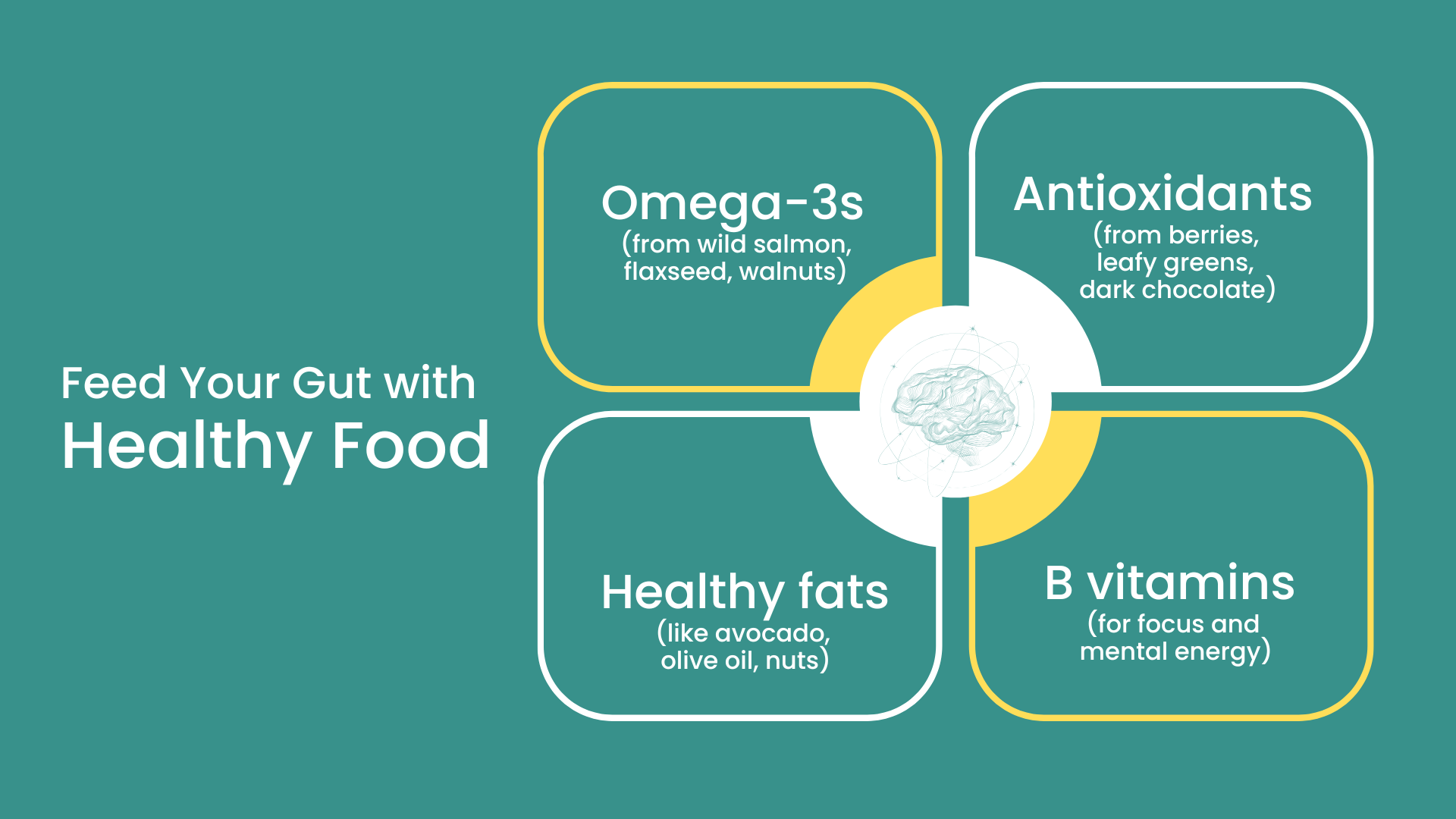
3. Feed Your Gut with Healthy Food

If you’re thinking of how to improve brain function naturally, focus on your gut. The food you eat directly impacts cognitive performance and memory.

Reduce or eliminate:

  • Processed foods

  • Excessive sugar

  • Artificial sweeteners

  • Alcohol (especially in the evening)

Feed Your Gut with Healthy Food- peak brain and body

Instead, load up on:

  • Omega-3 for brain health from salmon, flaxseed, walnuts
  • Antioxidants from berries and leafy greens
  • Healthy fats like avocado and olive oil
  • B vitamins for mental energy and focus
  •  

4. Address the Root Causes of Brain Fog

Doing everything right, but still feel foggy? Ask yourself:
“Why is my brain not working properly?”

At Peak Brain and Body, we often uncover hidden causes of decreased brain performance:

  • Past head injuries or concussions

  • Hormonal imbalances

  • Vitamin B12 and D deficiencies

  • Gut issues like dysbiosis

  • Chronic inflammation or autoimmune conditions

We use advanced diagnostics to create a personalized plan for clarity and focus, combining natural brain fog treatment methods with functional neurology to tackle the root cause of brain fog.

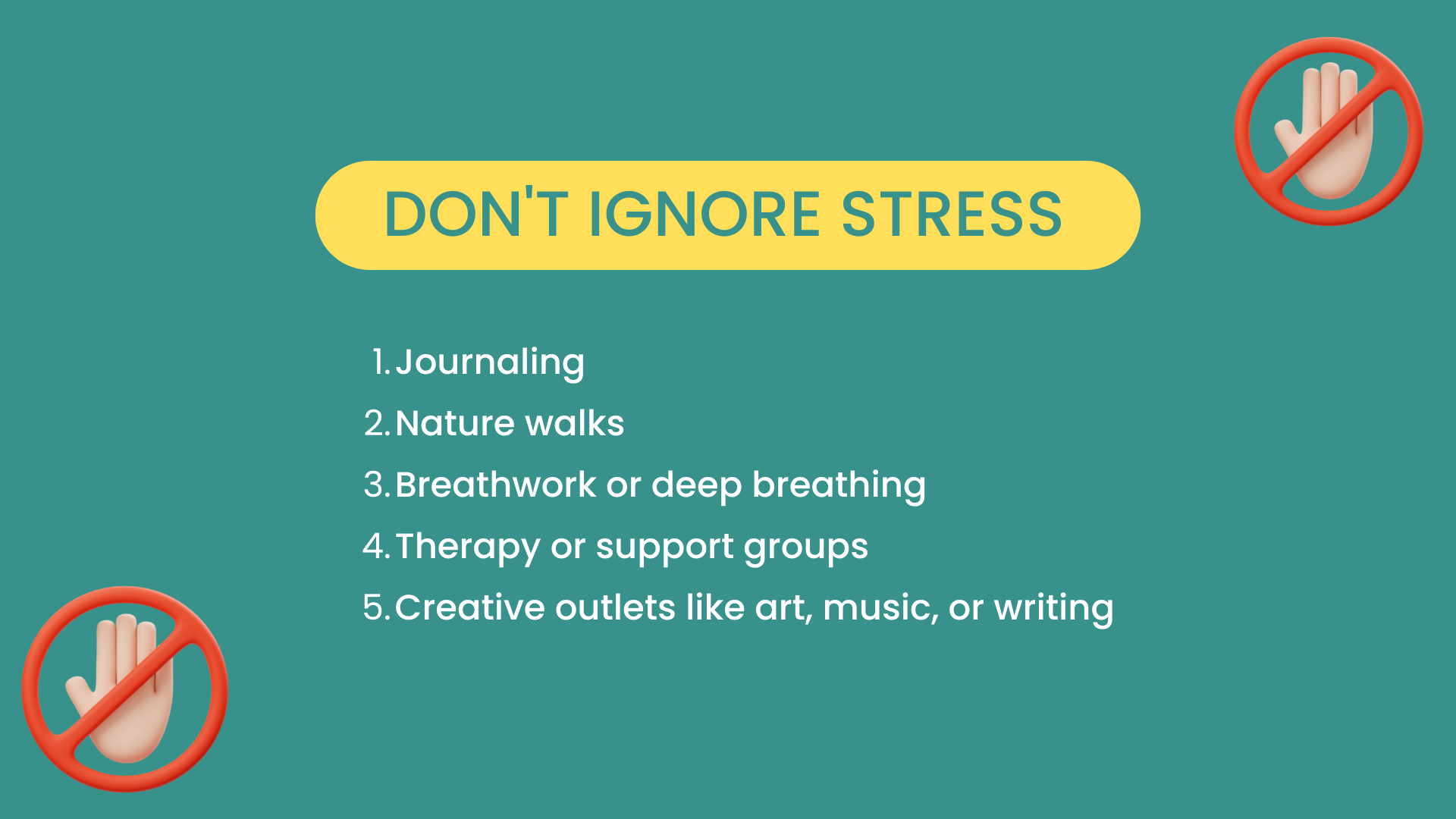
5. Don’t Ignore Stress

Chronic stress shrinks the hippocampus, increases inflammation, and disrupts sleep and concentration.

You can’t eliminate all stress, but you can develop healthy stress management for brain health:

  • Breathwork or deep breathing

  • Journaling

  • Support groups

  • Nature walks

  • Art, music, or creative hobbies

Don't Ignore Stress-peak brain and body

Even five minutes a day of intentional stress relief can calm the nervous system and improve brain performance.

6. Movement & Exercises 

How can physical activity improve brain function? By increasing blood flow, supporting neural connections, and releasing dopamine and serotonin.

Simple and effective:

  • Cardio (walking, swimming)

  • Strength training

  • Yoga, dance, or tai chi for coordination

Consistency is key — even 30 minutes a few times a week can significantly enhance mental clarity and energy.

7. Train Your Brain 

Looking for activities that improve brain function? You don’t need apps — your daily habits can sharpen focus.

Try:

  • Learning new skills

  • Crossword puzzles

  • Reading complex material

  • Playing strategy games

  • Socializing and mindfulness

These activities are scientifically proven to boost cognitive health naturally.

In the End: Get the Right Support

At Peak Brain and Body, we believe you. And we believe you can get better.

We’ve helped thousands of patients who had lost hope. People with lingering concussion symptoms, POTS/dysautonomia, autoimmune flares, chronic fatigue, and brain fog symptoms finally found answers when we looked beyond basic labs and connected the dots between the brain and body.

At our clinic, we specialize in complex cases—people who’ve seen multiple doctors, tried every supplement, and still feel off. Through natural brain fog treatment, functional neurology, functional medicine, and peptide therapy, we help our patients get to the root cause of brain fog and reclaim their lives.

Whether you’re struggling with fatigue, memory loss, mood changes, or post-concussion symptoms, know this:

You’re not broken. You’re not imagining it. And you can get better.

If you’re in the Tampa/Wesley Chapel area, we’d love to help. Call 813-838-4005 or request an appointment on our website.

Eat a balanced diet, engage in regular aerobic exercise, sleep well, reduce stress, and stay mentally active. These natural methods promote neurogenesis and boost mental performance over time.

Chronic stress increases cortisol, which can shrink the prefrontal cortex, impairing decision-making and memory. Managing stress is crucial for optimal brain performance.

Yes, certain supplements like omega-3s, vitamin D, and magnesium can support cognitive enhancement, but they should be taken under professional guidance.

Yes, our clinic provides specialized care for patients experiencing brain fog linked to type 2 diabetes or POTS, using a combination of functional medicine and peptide therapy

Tools like Lumosity, Elevate, and BrainHQ use AI-driven training programs to enhance focus, processing speed, and working memory.

Why Your Post Concussion Syndrome Symptoms Haven’t Gone Away—And What You Can Do

If you’ve had post concussion syndrome symptoms and still feel “off” weeks, months, or even years later, you’re not alone. Many of our patients come to Peak Brain and Body after trying everything—neurologists, medications, chiropractic adjustments, even years of rest—with little or no relief. They’re exhausted, foggy, dizzy, and frustrated.

You may feel like you’re walking through life with your brain in a cloud. Tasks that used to be second nature—focusing at work, remembering a word, getting through the day without a nap—now feel nearly impossible. If you aren’t able to take naps, then you probably wish you had the time to. And perhaps worst of all, you’ve been told that your symptoms are “normal,” or worse, “in your head.”

We hear you. And we’re here to tell you: there’s more to the story—and more that can be done.

Why Do Concussion Symptoms Sometimes Linger?

Most people are told that concussion symptoms resolve in 7 to 14 days. But that’s not always the case, as more and more research shows a large percentage actually don’t recover.

If your symptoms haven’t gone away, you may be dealing with what’s called post-concussion syndrome—and understanding the post-concussion syndrome symptoms timeline can help you see why recovery isn’t the same for everyone. In many cases, it’s a mild traumatic brain injury (mTBI) that never fully healed. Yes, this can be present 5, 10, and even 30 years down the road. In reality, the brain’s recovery depends on more than time—it depends on how the injury is managed, whether deeper systems are disrupted, and how the brain and body interact during healing.

Here are a few of the most common reasons symptoms persist:

1. The Root Cause Was Never Identified

Concussions are more than a bump on the head—they’re a disruption to how the brain processes information. That means you can have perfectly normal scans and still struggle with:

At Peak Brain and Body, we use advanced neurological diagnostics to look deeper than conventional imaging. We assess brain function utilizing video oculography, computerized balance posturography, and, for some, we do brain mapping—so we don’t miss what others might.

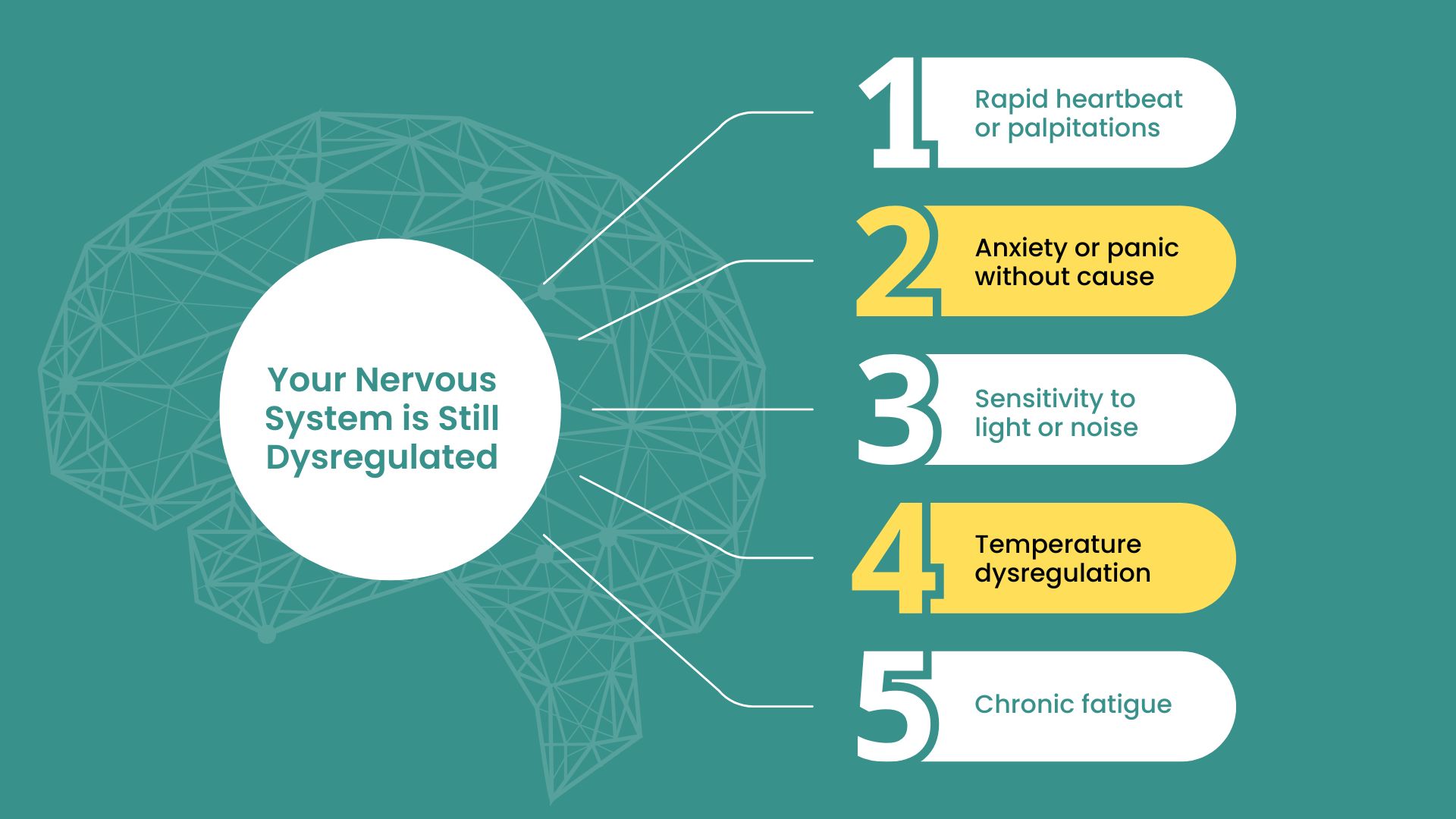
2. Your Nervous System is Still Dysregulated

The brain controls everything—including your autonomic nervous system, which regulates sleep, digestion, heart rate, and blood pressure. After a concussion, this system can become imbalanced, leading to symptoms like

  • Rapid heartbeat or palpitations

  • Anxiety or panic without cause

  • Sensitivity to light or noise

  • Temperature dysregulation

  • Chronic fatigue

Infographic on nervous system dysregulation symptoms after concussion by Peak Brain and Body, including rapid heartbeat, anxiety, light sensitivity, temperature dysregulation, and chronic fatigue.

Your Nervous System is Still Dysregulated—Peak brain and body

We often find that concussion patients are dealing with dysautonomia or even conditions like POTS (Postural Orthostatic Tachycardia Syndrome)—but no one has put the pieces together. This is where neurotherapy for concussion recovery can help restore optimal brain function.

3. Inflammation is Keeping Your Brain Foggy

Your brain and immune system are deeply connected. After an injury, inflammation is a normal part of healing, but in some people, it never turns off. If you have underlying autoimmune conditions, gut dysfunction, or chronic stress, your inflammation can linger and impact your brain’s ability to recover.

This is why our approach includes functional medicine—we explore the whole-body contributors to lingering brain symptoms, including hormones, gut health, immune triggers, and nutrient deficiencies. As part of this, we may recommend a peptide therapy concussion recovery plan to support brain healing and cellular repair.

4. Your Recovery Plan Was Incomplete

Standard concussion advice—rest, avoid screens, and wait—isn’t enough for everyone. Medications may only mask symptoms without addressing the root causes. Generic therapy isn’t specific to what you need and, in many instances, will make you worse.

At Peak Brain and Body, we create customized recovery plans that go beyond rest, using:

  • Functional Neurology: Brain-based therapies tailored to your unique brain patterning

  • Peptide Therapy: Cutting-edge support for brain healing and cellular repair

  • Targeted Nutrition: Identifying deficiencies and supporting brain function

  • Vestibular Rehab for Post-Concussion Dizziness: Restoring balance and reducing vertigo

  • Oculomotor Therapy After Concussion: Improving visual tracking and coordination

  • Multimodal Physical Therapy Post Concussion: Combining multiple approaches for better outcomes

  • Autonomic Regulation Training: To calm an overactive nervous system

We may also incorporate light cardio exercises during concussion recovery and sleep hygiene concussion recovery tips to optimize healing speed and long-term outcomes.

So, What Can You Do Now?

If you’re still struggling with post-concussion symptoms, here’s what we recommend:

Stop Accepting “It’s All in Your Head”
You know something’s wrong. And you deserve answers. Don’t settle for being told your labs are “normal” when you feel anything but. Your experience is valid.

Seek a Provider Who Looks at the Whole Picture
Dr. Spencer Zimmerman is Florida’s only dual-licensed Doctor of Chiropractic and Nurse Practitioner specializing in Functional Neurology, Functional Medicine, and Peptide Therapy. He’s walked this road with his own family and has helped thousands who felt like lost causes.

Get Evaluated with Advanced Testing
Your brain is not a one-size-fits-all organ. We perform in-depth assessments to map how your brain is communicating, regulating, and processing information. This helps us create a treatment plan that’s unique to your physiology, not just your diagnosis.

Start a Personalized Healing Protocol
Our patients often say, “I wish I’d found you sooner.” That’s because we offer a level of care that goes far beyond the traditional route. Whether it’s optimizing sleep, balancing your nervous system, reducing inflammation, or retraining your brain’s pathways, our protocols are designed for long-term recovery, not short-term symptom suppression.

Conclusion

You’re not broken. You just haven’t had the right method—yet.

At Peak Brain and Body, we believe in restoring hope through thoughtful, integrative care. We understand the frustration of feeling dismissed and the exhaustion of trying everything without results. That’s why we created a center where your story matters and your healing is possible.

Whether you’re local to Tampa or traveling from out of town, we’re here to help you. Request an appointment today!

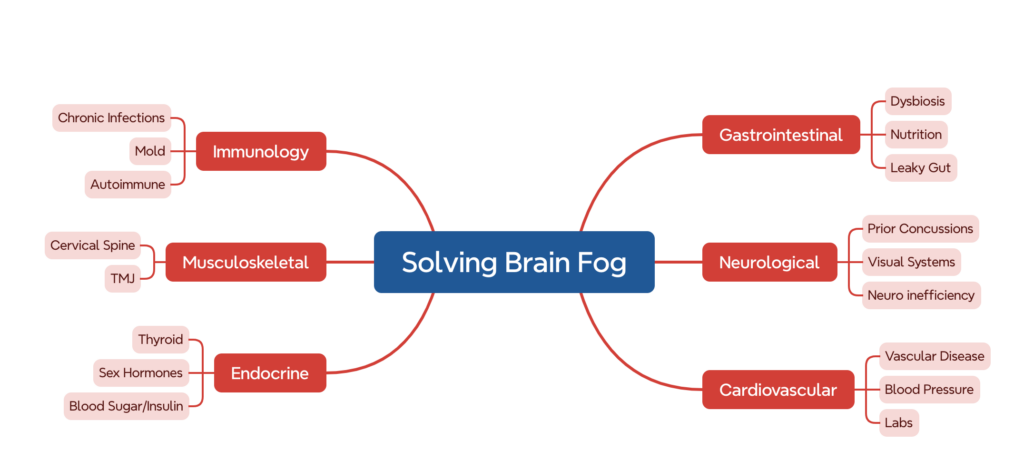
What Causes Brain Fog? A Systems-Based Look at the 6 Root Causes

If you’ve ever found yourself walking into a room and forgetting why, struggling to find the right words during a conversation, or feeling like your brain is stuck in a haze—you’re not alone.

You are likely dealing with brain fog and have probably thought what causes brain fog causes?

“Brain fog” is one of the most common complaints we hear in our clinic, Peak Brain and Body—a functional medicine and functional neurology clinic in Wesley Chapel. Some know it’s an issue they want addressed, but others aren’t sure if it’s just a normal part of aging. Yet despite how widespread it is, it’s often dismissed, misunderstood, or chalked up to aging, stress, or hormones. But here’s the truth:

Brain fog is not “just in your head.” It’s your body’s way of telling you that something deeper is off, but it’s non-specific.

In this article, we’re going to explore six major systems in the body that can cause or contribute to brain fog—many of which are often overlooked by conventional healthcare. If you’re someone who’s tried supplements, changed your diet, and still feels “off,” this deep dive is for you.

You may also watch it here: https://www.youtube.com/live/YDeuV-rS8I0

What Is Brain Fog?

First things first: brain fog isn’t a diagnosis. It’s a symptom – a signal that something in your body is out of balance. It might show up as:

  • Difficulty focusing or concentrating

  • Forgetting common words or losing your train of thought mid-sentence

  • Feeling mentally fatigued even after sleeping well (especially if you experience sleep deprivation)

  • Zoning out or spacing out during the day

  • A sense that your brain is “in a cloud”

And while it’s common, it’s not always normal – especially when it starts affecting your daily life, your relationships, and your ability to work and connect with others.

Now let’s look at why brain fog happens and what your body may be trying to tell you. Remember, brain fog is always a neurological symptom, but it may not always be due to poor brain health and may be the result of problems in other parts of the body like Gut Health, thyroid imbalance brain fog, insulin resistance brain fog symptoms, or even post-COVID gut brain fog.

So, what causes brain fog?

The Six Body Systems That Can Cause Brain Fog

Functional Neurology for What Causes Brain Fog

Graphic Representation of Brain Fog

1. Gastrointestinal (Gut) Health and Brain Fog

Your Gut Health and your brain are intimately connected through what scientists call the gut-brain axis. The bacteria in your gut produce neurotransmitters, influence inflammation levels through metabolites known as short chain fatty acids, and communicate directly with your nervous system.

When something is off in the gut, your brain may be impacted.

Common gut-related contributors to brain fog:

  • Dysbiosis: An imbalance in gut bacteria. You may have too many harmful bacteria or too few beneficial ones. This disrupts digestion, nutrient absorption, and produces inflammatory byproducts that can affect brain function.

  • Leaky Gut (Intestinal Permeability): When the gut lining becomes too porous, it allows toxins, food particles, and bacteria to enter the bloodstream and trigger systemic inflammation, including in the brain.

  • Processed Foods & Inflammatory Diets: Diets high in sugar, refined carbs, and additives fuel inflammation in both the gut and brain. For some, over time this leads to decreased mental clarity. For others, they may notice changes in brain function minutes or hours after eating foods or drinking certain things.

Some individuals experience post-COVID gut brain fog, where lingering gut inflammation and immune dysregulation cloud cognitive function.

How to address it:

  • Track your food intake for 7 days. Cut out ultra-processed foods and added sugars as a good starting point.

  • Consider an elimination diet or Paleo-style eating plan (vegetables, high-quality proteins, healthy fats). Track how you feel with the dietary changes. If you try to reintroduce foods and notice a negative shift, it’s best to avoid those items.

  • If you’ve cleaned up your nutrition and symptoms persist, stool testing can evaluate your microbiome and identify dysbiosis, pathogens, or leaky gut markers. This allows you to receive a specific treatment designed for you—often including psychobiotics for brain fog to support neuro-immune function.

2. Neurological Function and Brain Fog

Brain fog is a neurological symptom, meaning something is disrupting the way your brain functions. It could be:

  • Old concussions (even ones from years ago). In our experience 90% of individuals who are still struggling with concussion issues have no clue it’s what is keeping them stuck.

  • Neurological inefficiency (your brain is working too hard to complete simple tasks)

  • Visual processing—the brain has to take in an enormous amount of information, and this can be taxing on the brain. Problems with eye movement function, such as gaze fixation, pursuits, saccades, and vergence, can lead to brain fog.

Your brain uses more energy than any other organ. When it becomes inefficient—whether due to an old injury, eye strain, or abnormal sensory input—it starts to feel foggy.

Brain Testing & evaluation:

  • Computerized eye movement testing (video oculography) evaluates gaze fixation, saccades, and pursuits. Nearly 99% of our patients have never had this test performed. It’s off in upwards of 75% of the individuals we see and is a big piece of their inability to get the results they want until it gets addressed—highlighting the need for functional neurology treatment.

  • Balance testing and qEEG (quantitative EEG) identify areas of neurological inefficiency.

  • A thorough history can reveal concussions that may have been overlooked or dismissed.

Addressing neurological function isn’t just for athletes—it’s often the missing piece in brain fog recovery for those who have tried everything else, like hormones, B-vitamins, thyroid interventions, and other therapies.

3. Cardiovascular Health and Brain Fog

Your brain relies on constant, efficient blood flow to function. If your cardiovascular system isn’t working well, your brain may be under-supplied with oxygen and nutrients.

Subtle cardiovascular contributors to brain fog include:

  • High blood pressure or undiagnosed hypertension

  • Hypotension as seen in dysautonomia

  • Elevated triglycerides or cholesterol

  • Inflammatory markers like homocysteine

  • Lipoprotein(a) and ApoB (which increase your risk of plaque buildup)

  • Low omega-3 fatty acid intake

How to evaluate it:

  • Full lipid panel, including ApoB and Lipoprotein(a)

  • Homocysteine levels

  • Omega-3 to omega-6 ratio

  • Coronary artery calcium (CAC) scan to assess plaque buildup

Even if you feel “fine,” silent cardiovascular issues could be stealing your brain’s clarity. It takes years for cardiovascular trouble to show up. Prevention is key for lasting brain fog recovery.

4. Immune System & Chronic Inflammation Contributing to Brain Fog

Chronic Inflammation is one of the most common underlying causes of brain fog. When your immune system is out of balance, your brain function can suffer. Many factors already discussed—like gut dysfunction and hormonal shifts—also drive immune changes.

Major immune contributors to brain fog:

  • Chronic infections (Epstein-Barr virus, herpes virus, Candida, gut infections without fevers)

  • Mold exposure (inflammatory reactions in sensitive individuals)

  • Autoimmunity (Hashimoto’s, lupus, MS, rheumatoid arthritis, Crohn’s, ulcerative colitis—all associated with brain fog symptoms)

How to evaluate it:

  • Immune testing for mold (IgG, IgE to mycotoxins)

  • ANA panel and tissue-specific autoimmune markers based on symptoms/history

  • Lab testing for chronic infections via blood or stool

Autoimmunity is a spectrum. Early detection provides the best opportunity for healing. Identifying immune dysfunction early supports more effective brain fog recovery.

5. Musculoskeletal System and Brain Fog

Tension, misalignment, or dysfunction in the muscles and joints of your upper spine, neck, or jaw can contribute to pain and brain fog.

Key physical contributors:

  • TMJ dysfunction (tenderness or tightness in the jaw)

  • Neck misalignment or tension

  • Poor posture from screen use

While chiropractic care can help in some cases, musculoskeletal issues are rarely the only cause of brain fog. If you also have neck pain or headaches, it should be evaluated—especially during a brain fog recovery journey.

Self-check: Press gently where your jaw hinges, just below your temples. If it’s tender, you may benefit from TMJ therapy or manual work on those muscles.

6. Endocrine System (Hormones & Blood Sugar) and Brain Fog

Hormonal imbalances and blood sugar instability are major drivers of brain fog.

Top endocrine contributors:

  • Thyroid dysfunction—when slow, it often causes thyroid imbalance brain fog. The most common underlying cause is Hashimoto’s.

  • Sex hormone imbalance (estrogen, progesterone, testosterone)—these impact immune and brain health.

  • Insulin resistance brain fog symptoms—even if you’re not diabetic, blood sugar spikes or dips can cloud your brain.

Lab work to ask for:

  • Full thyroid panel (TSH, Free T3/T4, Total T3/T4, Thyroid antibodies)

  • Sex hormones (Free/total testosterone, estradiol, progesterone, total estrogen)

  • Blood sugar labs (Fasting glucose, insulin, C-peptide, triglycerides, OGTT)

If you feel tired or foggy after eating, your blood sugar may be on a roller coaster. Tracking how food affects energy is a key part of brain fog recovery.

Peak Brain and Body Treatment For Brain Fog

If you’ve seen multiple providers and still feel foggy, it’s not your fault. Most primary care visits are rushed. Most specialists only focus on one system.

The reality is: brain fog is usually not caused by just one thing. It’s a sign that your body is out of balance in multiple areas.

That’s why at Peak Brain and Body in Wesley Chapel, we use an integrated, systems-based approach to uncover the unique combination of factors affecting each patient—including Gut Health, immune, neurological, metabolic, and hormonal contributors—to guide your brain fog recovery.

We look at both brain and body health, not one or the other. This allows us to identify the pieces of your puzzle contributing to brain fog.

You Deserve to Feel Sharp Again

If brain fog is interfering with your work, your relationships, or your sense of self, don’t ignore it.

The earlier you uncover the root causes, the sooner you can start reversing the damage. And yes—for most people, brain fog recovery is possible. You won’t have to wonder any longer what causes brain fog.

Individuals routinely turn to Peak Brain and Body in Wesley Chapel as a trusted center for Functional Medicine and Functional Neurology to find answers to chronic and complex symptoms and conditions.

If you’re ready to stop guessing and start healing, we’re here to help.

About Dr. Spencer Zimmerman


Dr. Zimmerman is a dual-licensed Nurse Practitioner and Chiropractor—and is the only dual-licensed provider in Florida with advanced training in Functional Neurology, Functional Medicine, and Peptide Therapy. He is the best-selling author of Brain Reset: 7 Steps to a Healthier Brain and the founder of Peak Brain and Body in Wesley Chapel, FL.


Post-Concussion Symptoms Treatment: The Missing Link in Your Recovery

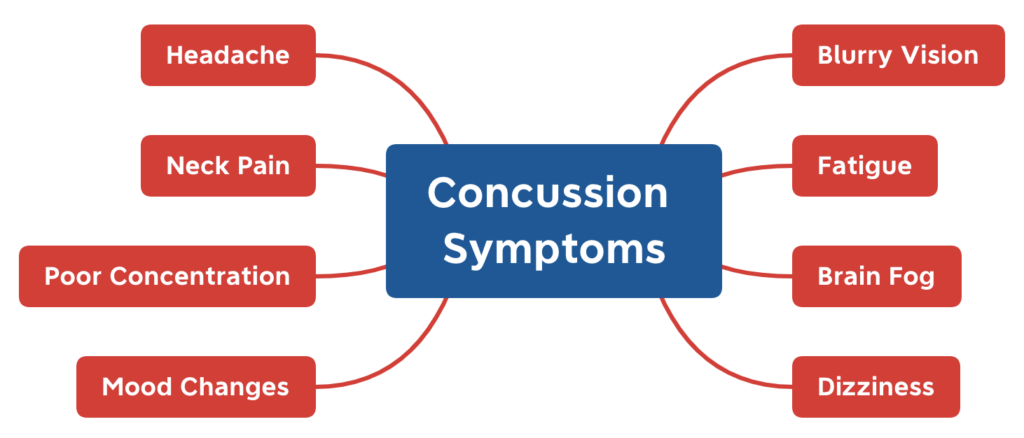
If you’re reading this, there’s a good chance you’re still living with the effects of a concussion—whether it happened recently or years ago. Maybe you’ve been struggling with concussion symptoms like brain fog, fatigue in concussion, dizziness, concussion headache, or mood changes. Maybe you’ve tried physical therapy, chiropractic, medications, or supplements, and yet… something still feels off.

You’re not alone—and it’s not in your head despite the likelihood you’ve been told multiple times it’s from anxiety, depression, or that a concussion can’t impact you for that long. Concussions are the most common type of traumatic brain injury and are often classified as mild traumatic brain injury.

In this post, I’m going to walk you through everything you need to know about post concussion syndrome treatment in Tampa—from how concussions are (often wrongly) diagnosed, to the most common concussion myths, and most importantly, what proper post concussion treatment should actually look like.

Because what most people are getting isn’t sufficient? It’s not the full picture. And that’s why Peak Brain and Body is a leader in post concussion recovery and post concussion clinic care in Tampa and beyond.

This is the information I wish someone had given my wife 15 years before we finally discovered the root cause of her daily symptoms. She shouldn’t have had to suffer with daily headaches amongst many other symptoms.

There is a video version here: https://youtube.com/live/zdA0fYzWMw4

Why I Care So Much About Concussions (And Why You Should Too)

This is personal for me.

My wife had three concussions in her younger years. For over a decade, she battled with brain fog, fatigue in concussion, dizziness, and mood swings. She went to a couple doctors and was told it was just hormones, puberty, or stress. Even if she brought it up to her parents, the reply was “you’ve already been to the doctor.” No one put the pieces together. No one ever said, “Hey—this might be from a brain injury.”

That changed when I was working in a brain injury clinic. She realized that the concussion symptoms that individuals were having resolved on a daily basis were part of her everyday life. They were so common that she didn’t even mention them, because weren’t those symptoms that most people had? We finally did the right evaluations, uncovered what was missed, and began treatment that actually addressed her brain function. It was the beginning of her healing—and it changed the trajectory of my career.

Since then, I’ve dedicated my life to helping people who’ve been struggling silently for far too long.

People like you.

People who know something’s wrong but can’t get clear answers or real solutions. People who’ve been dismissed or told “you’re fine” based on a 5-minute exam or a normal MRI. People who’ve been told to “just wait it out” or “it’s all anxiety.” People who’ve tried functional medicine and been told maybe it was their thyroid, hormones, or gut health when in reality it was an unresolved concussion. In my experience, nearly 90% of those still struggling with concussion symptoms have no clue that is the driving factor for the symptoms they have.

I see you—and I want you to know: there’s hope. And there’s help.

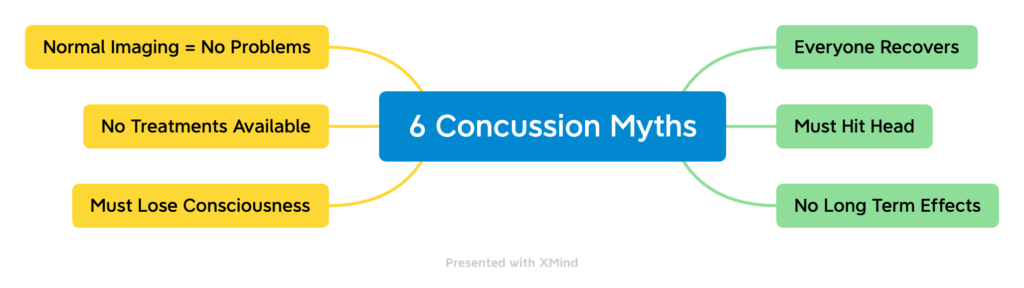
The Most Common Concussion Myths That Keep People From Healing

Let’s start with some hard truths—because these concussion myths are harming people every single day. You’ve been told these from family, friends, co-workers, and even worse other medical providers:

“You didn’t lose consciousness, so it can’t be a concussion.”

False. About 90% of concussions don’t involve loss of consciousness. That’s not a requirement.

“You didn’t hit your head.”

Also false. A whiplash injury—like in a car accident or fall—is more than enough to cause a concussion. You don’t need a visible bump or bruise on your head. In our experience, concussions are the most undiagnosed and untreated injuries that occur in a car accident.

“Your imaging came back normal.”

This one makes my blood boil. A normal CT or MRI just means there’s no bleed or fracture. It says nothing about brain function or about a possible concussion. Most concussions won’t show up on those scans as they aren’t made to detect it. That doesn’t mean you’re okay, even if a provider says your imaging looks good and you are fine. This isn’t true and don’t fall for it.

“You just need to rest and wait it out.”

Maybe that made sense 20 years ago based upon our limited understanding of the brain. But if you’re still being told to sit in a dark room and “wait it out,” you’re not being given current, science-backed guidance. In fact, that kind of advice has been shown to delay your recovery.

“You’re just anxious or depressed.”

Yes, concussions can affect mood—but brushing off your brain-based symptoms as “mental health” issues without evaluating your brain is a huge disservice. We know that it’s very common to develop depression or anxiety after a concussion. We also know that pre-existing depression prolongs concussion recovery and tends to worsen symptoms. That doesn’t mean it is all from depression, but the way these issues interact with concussion recovery.

Concussion myths

Post-Concussion Syndrome Symptoms

Maybe you’ve had a concussion and were told you’d bounce back in a few weeks—but here you are, months or years later, still not feeling like yourself.

Here are some of the concussion symptoms we commonly see in people with undiagnosed or untreated post concussion syndrome:

  • Brain fog that makes it hard to think clearly or find words

  • Fatigue in concussion cases that worsens throughout the day and doesn’t improve with rest

  • Concussion headache or pressure in your head

  • Concussion neck pain or stiffness

  • Difficulty focusing or remembering things

  • Light and sound sensitivity

  • Dizziness, motion sensitivity, or nausea

  • Irritability, anxiety, or mood swings

  • Sleep issues—either insomnia or waking up unrefreshed

concussion symptoms

If two or more of these symptoms got worse after your injury—or even if they were already present but intensified—your brain may be struggling to function normally. And you deserve to know why.

How Is a Concussion Diagnosed

Here’s how we determine whether your concussion symptoms are linked to a past injury:

1. A Clear Mechanism of Injury of Concussion

This could be a car accident, fall, sports collision, or any event involving a blow to the head or body that jolts the brain.

2. Clinical Signs of Concussion

Clinical signs would be findings that occur at the time of the concussion. This includes vomiting, loss of consciousness, confusion, and gross motor instability. You do not need to have these to be diagnosed if you have parts 1, 3 and 4.

3. New or Worsened Symptoms of Concussion

According to clinical guidelines, having two or more new or aggravated symptoms is enough to raise a red flag.

4. Objective Clinical Findings of Concussion

This includes eye movement testing, computerized balance assessments, and vestibular evaluations. (More on that in a second.)

5. No Better Explanation

If your symptoms don’t line up with another condition, and testing reveals brain dysfunction, a concussion diagnosis makes clinical sense—even without imaging abnormalities.

Here is a graphic from the American Congress of Physical Medicine and Rehabilitation for diagnostic criteria for MTBI. 

mTBI diagnosis criteria

The American Congress of Rehabilitation Medicine Diagnostic Criteria for Mild Traumatic Brain Injury
Silverberg, Noah D. et al.
Archives of Physical Medicine and Rehabilitation, Volume 104, Issue 8, 1343 – 1355

Why Most People Aren’t Diagnosed Properly For Concussion

Too often, people are told, “Your scans are normal. You’re fine.” They might get a quick check of reflexes and be sent on their way. It’s unfortunate that this happens, but most providers receive little to no training on concussions. 

Here’s what’s missing, objective testing:

Computerized Balance Testing

This shows how well your brain integrates signals from your eyes, vestibular system, and body. The platform measures how much you move on a firm and perturbed surface with eyes open and closed. Beyond this, evaluating tandem stance and one legged stance is also important.

Eye Movement Testing (Video Oculography)

We use specialized goggles to record your eye movements. Why? Because your eye movements are directly connected to brain function. It is important to measure gaze fixation, pursuits, saccades, anti-saccades, optokinetics, and spontaneous nystagmus. If you can’t smoothly follow a target, your brain isn’t processing information correctly and this will routinely cause a variety of symptoms. 

QEEG Brain Mapping

This measures your brainwave activity. While not diagnostic on its own, it’s a powerful way to measure progress and see how your brain is functioning. In the future, this testing will likely be more important as research will be able to correlate certain brainwave patterns with concussions.

Why Most Treatments Fail (And What You Actually Need)

Many try one therapy at a time—vision therapy, vestibular rehab, neurofeedback—yet still don’t recover. That’s because concussions affect multiple systems.

You need an integrated plan addressing:

  • Neurological dysfunction

  • Brain energy production

  • Vestibular & visual processing (concussion Oculomotor therapy, concussion Vestibular therapy)

  • Inflammatory & immune factors

  • Pre-existing health

Think of it like trying to play your favorite song—but each instrument is playing solo. You need them all working together in harmony as that is the only way you get the results you want.

Post-Concussion Syndrome Treatment in Tampa at Peak Brain and Body 

At our clinic, we go beyond checklists and guesswork. Every treatment plan is custom-built based on detailed testing. And instead of treating one system in isolation, we stack therapies together in a sequence that makes sense for your brain.

Our Treatment Toolbox Includes:

  • Oculomotor therapy is based on improving the brain’s ability to perform a variety of functions.
  • Vestibular therapy to integrate the function of vestibular, visual, and cervical spine.
  • Postural and neck retraining
  • Photobiomodulation (laser therapy) to reduce inflammation and support cellular energy
  • Brain-based cognitive training and hand-eye coordination drills
  • Targeted supplementation and peptide therapy
  • Functional medicine to address root issues like gut health, hormones, autoimmunity, or mold exposure

We do all of this in a way that’s dynamic—just like your brain. And it works.

Real Recovery Is Possible

If you’ve been told there’s nothing else you can do, I want to tell you this: That’s not true.

I’ve seen people who’ve been struggling for 5, 10, even 15 years start to recover—because someone finally asked the right questions and ran the right tests.

I’ve seen people go from canceling plans and calling off work… to being present with their families again. Getting their careers back. Enjoying life again.

And the best part? Most people don’t need lifetime care. They need the right care at the right time—tailored to their brain. The brain can change fast when it’s provided the right information and supported. 

You’re Not Broken. You’re Just Misunderstood.

If you’ve been told your symptoms are all in your head, or that you should have recovered by now—let me say this loud and clear:

You’re not crazy. You’re not lazy. And you’re not broken.

You’re dealing with a brain that hasn’t fully recovered. And once we understand where the disconnects are—we can start fixing them.

It doesn’t matter what you’ve tried in the past, our clinic is full of individuals who tried numerous other therapies before they finally came in and found answers and solutions. 

Ready to Take the Next Step?

If you’re in the Tampa area or are willing to fly in and you’re ready for real answers—and real progress—we’re here for you.

Peak Brain and Body, located in Wesley Chapel, FL, offers the most advanced post-concussion syndrome treatment in the Tampa metro area. It’s led by Dr. Zimmerman who is a best selling author and the only dual-licensed nurse practitioner and chiropractor integrating advanced neurological diagnostics, functional neurology, functional medicine, and peptide therapy in the state of Florida and one of a few in the entire United States.

Click below to schedule your comprehensive brain health evaluation and take the first step toward feeling like you again.

Yes. People with post-concussion syndrome symptoms timeline often notice that dizziness, headaches, or trouble concentrating may improve for a while and then return, especially if they overexert physically or mentally. Tracking your symptoms over weeks and months can help guide recovery strategies.

No. Vestibular rehab for post concussion dizziness can help even in mild cases. The therapy aims to retrain your brain and inner ear to work together, reducing imbalance and improving stability, regardless of symptom severity.

Oculomotor therapy after concussion focuses on restoring normal eye movement control, which is often disrupted. This can help reduce blurred vision, improve reading ability, and ease headaches linked to visual strain.

Neurotherapy for concussion recovery uses brainwave training to support cognitive function, mood regulation, and energy levels. It can be combined with physical therapy for a more comprehensive healing plan.

Good sleep hygiene concussion recovery tips—such as setting a regular sleep schedule, limiting screen time before bed, and creating a calm environment—are critical because the brain heals most effectively during deep rest.

Functional Neurology Tampa: The Future of Brain Health and Rehabilitation

In the ever-evolving landscape of healthcare, functional medicine has taken center stage in offering a more personalized, in-depth approach to wellness. But within this movement, one of the most transformative and underrecognized fields is Functional Neurology—a groundbreaking approach that holds the key to unlocking solutions for a vast array of neurological conditions and symptoms. You will learn there are many common symptoms that individuals don’t routinely associate with brain health but they actually are.

At Peak Brain and Body in Wesley Chapel, near Tampa Bay, Dr. Spencer Zimmerman stands at the forefront of this revolution. As one of the nation’s most sought-after practitioners who combines functional neurology chiropractic care with functional medicine, his expertise extends far beyond state lines—patients from across the country and even internationally travel to see him, seeking answers that conventional neurology has failed to provide. If you’ve ever searched for a “functional neurology center” or wondered about “functional neurology near me,” Peak Brain and Body is a destination that offers advanced answers and results.

Here is the video version: click here

What Is Functional Neurology?

Functional Neurology is an advanced, non-pharmaceutical approach to diagnosing and treating neurological dysfunctions. Unlike traditional neurology, which largely relies on MRIs, CT scans, and pathology-based diagnostics, functional neurology delves into how the brain is functioning rather than just identifying structural damage. By assessing eye movements, balance, coordination, cognitive function, and movement patterns, functional neurology evaluates the intricate connections within the brain to pinpoint dysfunction and develop targeted rehabilitation strategies.

Functional neurology is built on the foundation of neuroplasticity—the brain’s ability to adapt, reorganize, and heal itself based on stimulation. By leveraging precise rehabilitation techniques, functional neurology helps retrain the brain, optimize neural pathways, and restore lost function.

Who Can Functional Neurology Help?

Dr. Zimmerman and his team at Peak Brain and Body have treated thousands of patients suffering from a wide range of complex neurological conditions, including:

  • Long COVID & Dysautonomia (ICD10 classified disorder)

  • Postural Orthostatic Tachycardia Syndrome (Dysautonomia vs POTS)

  • Stroke Recovery

  • Concussions & Traumatic Brain Injuries (with specialized concussion therapy near me programs)

  • Chronic Fatigue & Brain Fog

  • Neurodegenerative Conditions (Parkinson’s, Early Dementia, Alzheimer’s)

  • Living with Chronic Migraine & severe headaches

  • Vertigo & Dizziness

  • Neurodevelopmental Disorders (ADHD, Autism Spectrum Disorders)

Diagram highlighting what functional neurology can help, including Long COVID, Dysautonomia/POTS, stroke, concussion therapy, traumatic brain injury treatment center care, migraines, vertigo, and neurodevelopmental disorders.

From Dysautonomia and POTS to concussions and chronic migraines, functional neurology chiropractic care offers solutions for a wide range of conditions

Even if those with the diagnoses and symptoms above are told what is wrong, they are often left frustrated that there isn’t a lot that can be done. On the other side, many of these individuals are told that their labs and imaging are normal, often leading to them being sent to a mental health provider.

If you’ve experienced this and have been told your tests are “normal” but you still struggle with symptoms, functional neurology may be the missing piece in your health journey.

How Does Functional Neurology Differ from Traditional Neurology?

One of the biggest misconceptions in healthcare is that there is only one approach to evaluating and treating the nervous system. In reality, traditional neurology and functional neurology take completely different approaches:

Traditional NeurologyFunctional Neurology
Focuses on disease pathology and structural damageFocuses on neurological function and performance
Relies on imaging (MRI, CT scans) and blood workUses in-depth neurological testing (eye movements, balance, cognitive function, QEEG)
Treatments focus on medications and surgeryTreatments involve targeted brain rehabilitation and neuroplasticity training
Often tells patients “there’s nothing wrong” if no pathology is foundIdentifies and corrects neurological dysfunctions even if imaging is normal

Both of these approaches to brain health and function have a place as neither one is equipped to handle all neurological-based symptoms and conditions.

Many patients leave traditional neurology appointments feeling unheard, frustrated, and stuck with no solutions. Functional neurology changes the game by addressing how the brain functions and finding ways to restore it. That’s why so many patients now seek out a dedicated center for community brain health like Peak Brain and Body.

What to Expect in a Functional Neurology Evaluation

At Peak Brain and Body, a functional neurology evaluation is a deep dive into your brain’s function, using the latest advanced neurological testing that most doctors don’t even know exist. These evaluations include:

1. Eye Movement Analysis (Video Oculography)

Your eye movements provide a direct window into your brain health. Using cutting-edge videooculography, we can detect dysfunctions in different areas of the brain, helping guide targeted rehabilitation.

2. Balance & Postural Testing (Computerized Balance Posturography)

A specialized computerized balance platform is used to assess postural stability and vestibular function. Poor balance can be an early indicator of neurodegenerative diseases and cognitive decline. Balance is also routinely off with long-covid, concussions, whiplash, strokes, dysautonomia, and postural orthostatic tachycardia syndrome. 

3. Quantitative EEG (QEEG) Brain Mapping

A QEEG measures brain wave activity to identify abnormalities in neural communication, helping tailor treatments for patients with conditions like brain fog, anxiety, PTSD, ADHD, and post-concussion syndrome.

4. Cognitive & Reaction Time Testing

By evaluating how quickly and accurately your brain processes information, we can detect subtle impairments in cognitive function before they become major issues.

5. Functional Neurological Exam

This involves assessing reflexes, coordination, dual-tasking abilities, and cranial nerve function, which reveals how different brain regions are communicating and working together.

Functional Neurology Treatments: Rewiring the Brain for Healing

Once dysfunctions are identified, the next step is highly targeted brain rehabilitation. Unlike protocol-based care, functional neurology chiropractic treatment at Peak Brain and Body is about precision—designing a program based on your brain’s unique weaknesses and strengths.

Common Functional Neurology Treatments Include:

  • Oculomotor Therapy – Strengthening brain function by using a specific combination of eye movements.
  • Vestibular & Balance Training – Restoring vestibular and cerebellar function to improve dizziness, vertigo, and coordination.
  • Hand-Eye Coordination & Reaction Time Exercises – Enhancing cognitive flexibility and neural processing speed.
  • Transcranial Magnetic Stimulation (TMS) – A non-invasive therapy that stimulates brain activity and helps depression, anxiety, insomnia, and much more.
  • Neuromodulation & Brainwave Training – Using neurofeedback and light therapy to retrain the brain.
  • Targeted Physical Exercise – Driving neurogenesis (new brain cell growth) and angiogenesis (new blood vessel formation) to optimize brain function to support treatments performed in the office.

The Evolution of Functional Neurology: Beyond Rehab

Early functional neurology focused primarily on rehabilitation, but the field has expanded to address the broader factors influencing brain health. At Peak Brain and Body, Dr. Zimmerman integrates functional medicine into his neurological treatments, ensuring that underlying factors such as gut health, inflammation, hormones, immune function, and metabolic issues are addressed alongside neurological rehabilitation.

This whole-body approach ensures that patients get the highest level of care and long-term success that functional neurology on its own may not achieve.

Why Patients Travel from Across the Country to See Dr. Zimmerman

Patients don’t just come from Tampa Bay—they fly in from all over the United States and beyond because of Dr. Zimmerman’s expertise, advanced diagnostic techniques, and groundbreaking treatment protocols. For those searching for a traumatic brain injury treatment center that looks beyond standard care, Peak Brain and Body stands out as a trusted leader.

Is Functional Neurology Right for You?

If you have been struggling with brain fog, dizziness, chronic fatigue, memory loss, headaches, concussions, or other neurological symptoms and have been told “everything is normal or nothing else can be done and you must wait it out,” functional neurology may be the answer you’ve been looking for.

At Peak Brain and Body, we go beyond symptom management—we uncover and correct the root cause of neurological dysfunction to help you regain control of your brain and body.

Schedule a consultation with our Peak Brain and Body team today. Don’t wait for answers—get the care you deserve at a leading Tampa Bay functional neurology center.


Is functional neurology the same as chiropractic care?

No, functional neurology is not the same as traditional chiropractic care. While both may address the nervous system, functional neurology focuses specifically on brain function, neuroplasticity, and customized neurological exercises, whereas chiropractic care primarily deals with spinal alignment and musculoskeletal adjustments.

Yes. Functional neurology is commonly used in concussion and traumatic brain injury (TBI) recovery. Through neuro-rehabilitation exercises, visual-vestibular therapy, and brain stimulation, patients often experience improvements in focus, balance, memory, and overall brain health.

Functional neurology can help with migraines, vertigo, balance disorders, concussions, ADHD, post-stroke rehabilitation, dysautonomia, POTS, brain fog, and many other neurological challenges.

Functional neurology is considered safe because it uses non-invasive, drug-free therapies. Treatments are customized for each patient and adjusted based on progress, making it a sustainable long-term approach to managing neurological conditions.

Functional Medicine Approach To Chronic Fatigue Syndrome

A Functional Medicine Approach to Chronic Fatigue Syndrome: Understanding the Root Cause

Chronic fatigue syndrome (CFS) is one of the most common reasons people seek medical care, yet traditional treatments often fall short. Many individuals feel dismissed or unheard after being diagnosed, with limited options for true recovery. Functional medicine, however, offers a root-cause approach, addressing the underlying drivers of CFS rather than just managing symptoms.

Dr. Zimmerman at Peak Brain and Body in Wesley Chapel is a leading expert in helping individuals find answers and solutions for chronic fatigue syndrome through a non-pharmaceutical approach. His patient-centered approach focuses on identifying triggers such as infections, gut health, neurological dysfunction, and lifestyle factors.

In this article, we’ll explore what actually causes chronic fatigue syndrome, why traditional medicine struggles to treat it effectively, and how a chronic fatigue syndrome holistic treatment plan in functional medicine can lead to better outcomes.

If you prefer a video version: Watch It Here

Audio version: Listen Now

Understanding Chronic Fatigue Syndrome in Tampa

What Is Chronic Fatigue Syndrome?

Chronic fatigue syndrome, also known as myalgic encephalomyelitis (ME/CFS), is a complex condition characterized by extreme fatigue that doesn’t improve with rest. It is classified as a syndrome, meaning it consists of a set of correlated medical signs and symptoms rather than a specific disease with one defined cause.

There are a variety of symptoms individuals may experience: fatigue, weakness, dizziness, lightheadedness, nausea, brain fog, headache, tachycardia, allergies, and frequently getting sick. A proper chronic fatigue syndrome test may include immune system evaluation, blood sugar analysis, neurological exams, and gut health assessments to determine contributing factors.

Chronic Fatigue Syndrome Symptoms

Arron HE, Marsh BD, Kell DB, Khan MA, Jaeger BR and Pretorius E (2024) Myalgic Encephalomyelitis/Chronic Fatigue Syndrome: the biology of a neglected disease. Front. Immunol. 15:1386607. doi: 10.3389/fimmu.2024.1386607

Chronic fatigue syndrome is more common in females than males and is typically diagnosed when symptoms persist for six months or longer after ruling out other conditions like iron deficiency, blood sugar imbalances, thyroid dysfunction, or diabetes as the sole cause. With that being said, these can co-exist and may play a role in chronic fatigue syndrome.

The Overlapping Conditions of Chronic Fatigue Syndrome

One of the key challenges in treating CFS is its overlap with other conditions. Postural orthostatic tachycardia syndrome specialists often point out that POTS has significant symptom similarities, including dizziness, fatigue, brain fog, and immune dysfunction. Research shows that 95% of CFS patients experience worsening symptoms when moving from a seated or lying position to standing.

Rather than viewing CFS as a single disease, it’s more helpful to see it as a multi-system dysfunction impacting neurological, immune, gastrointestinal, musculoskeletal, and cardiovascular systems. This is why individuals are sent to a variety of specialists, but also struggle to get better.

What Causes Chronic Fatigue Syndrome?

The functional medicine approach to chronic fatigue syndrome starts with a fundamental question: What is driving the condition? Several contributing factors can set off the cycle of chronic fatigue, including infections, neurological dysfunction disorders, gut health issues, and immune dysregulation.

1. Pathogens and Chronic Infections Role in Chronic Fatigue Syndrome

Pathogens—including viruses, bacteria, fungi, and parasites—can play a significant role in the development and persistence of chronic fatigue. Some of the most common infectious triggers include:

  • Epstein-Barr virus (EBV) – Often associated with reactivation in CFS patients. Note that most of the population has been exposed to EBV. The labs that would suggest an ongoing EBV issue include EBV early antigen IgG and EBV viral capsid antigen IgM.
  • SARS-CoV-2 (Long COVID) – Can lead to post-viral fatigue and brain inflammation. Numerous studies have shown that the immune response can create a brain injury which explains why so many struggle with neurological symptoms after COVID.
  • Herpes viruses – Including cytomegalovirus (CMV) and HHV-6.
  • Lyme disease and co-infections – Bartonella, Babesia, and Mycoplasma pneumonia.
  • Mold and mycotoxins – Often overlooked but significant in chronic fatigue cases.

Often, chronic infections and toxin exposure weaken the immune system, creating persistent fatigue. In some cases, mycotoxin testing is recommended to uncover mold exposure that may otherwise go undetected.

2. Neurological Dysfunction and Brain Inflammation

Chronic fatigue syndrome is often associated with neurological impairments, such as brain fog, dizziness, headaches, concentration, and word-finding difficulties. Research shows that inflammation in the body can cross the blood-brain barrier, triggering an immune response in the brain’s microglial cells. This leads to:

  • Cognitive dysfunction (memory issues, poor concentration).
  • Mood imbalances (anxiety, depression, irritability).
  • Dysautonomia (heart rate and blood pressure irregularities).

Targeted therapies, such as functional neurology and neurological exercises, can help improve brain connectivity and restore energy regulation.

3. Gut Health and Chronic Fatigue Syndrome

The gut plays a crucial role in immune function and inflammation. Many CFS patients have dysbiosis (an imbalance of gut bacteria), which contributes to:

  • Leaky gut (intestinal permeability) – Allowing inflammatory molecules to enter circulation.
  • Low butyrate production – Reducing the gut’s ability to regulate inflammation.
  • Inflammation spilling into the brain – Worsening cognitive symptoms and fatigue.

Addressing gut health through targeted nutrition, prebiotics, and probiotics can help improve overall energy levels and immune function.

Why Traditional Medicine Fails to Treat Chronic Fatigue Syndrome

In conventional medicine, treatment for CFS is typically symptom-based, often relying on stimulants or antidepressants for chronic fatigue syndrome. While these may provide temporary relief, they do not address underlying causes.

Symptom Traditional Treatment Functional Medicine Approach
Fatigue Stimulants (Adderall, Modafinil) Addressing infections, gut health, mitochondrial function
Brain Fog Antidepressants, stimulants Reducing neuroinflammation, improving brain connectivity
Pain NSAIDs, muscle relaxants Reducing systemic inflammation, targeted neurological exercises
Gut Issues Laxatives, antidiarrheals Restoring gut microbiome balance, healing leaky gut

Functional medicine, on the other hand, identifies and treats the drivers of CFS—whether they are pathogens, gut imbalances, brain inflammation, or environmental toxins. This difference explains why many patients feel more supported through a patient-centered approach in functional medicine.

A Functional Medicine Approach to Chronic Fatigue Syndrome in Wesley Chapel

Functional medicine goes beyond symptom management by performing in-depth testing to find the underlying factors driving the symptoms that make up this syndrome. We are going to explore some that that providers will often use when utilizing a functinal medicine approach to chronic fatigue syndrome. With this testing the provider is able to create personalized treatment plans. Here’s how it differs from conventional care:

1. Comprehensive Testing

A functional medicine provider will assess multiple body systems using tests such as:

  • Advanced stool testing – Identifies gut imbalances and infections.
  • Blood panels: to evaluate endocrine, metabolic, and vascular factors.
  • Mold and mycotoxin testing – Evaluates mold exposure’s impact on the immune system. There is a dispute on the best testing: urine vs blood. We utilize blood testing that measures the immune response to mycotoxins and believe it is superior to urine. Having mycotoxins in urine doesn’t mean it’s creating an issue for the individual.
  • Immune function panels – Measures inflammatory markers and immune imbalances.
  • Neurological testing – Includes video oculography to assess brain function. We will discuss this more below as over 95% of functional medicine providers do not measure brain health and function.

Based on results, treatment is focused on restoring balance and supporting natural healing. This might include gut repair, detoxification, brain connectivity therapies, mitochondrial support, and neurological exercises.

2. Targeted, Root-Cause Treatments For Chronic Fatigue Syndrome

Once underlying causes are identified, treatment focuses on restoring balance. This may include:

  • Mitochondrial support – Improving energy production with key nutrients like CoQ10, acetyl-L-carnitine, and B vitamins; but this is always done in conjunction with nutrition changes.
  • Brain connectivity therapy – Strengthening brain function through functional neurology techniques.
  • Gut repair protocols – Using dietary interventions and microbiome support. 
  • Detoxification support – Removing toxins that contribute to inflammation by avoiding exposure and using targeted nutrition to support detoxification pathways in the body.
  • Neuroinflammation reduction – Utilizing lifestyle strategies to calm the brain’s immune response.

Functional medicine approach to chronic fatigue syndrome

3. A Holistic, Patient-Centered Approach

Unlike traditional medicine, functional medicine providers take the time to listen, analyze the full history, and develop an individualized plan. Lifestyle changes such as nutrition, sleep optimization, movement, and stress reduction play a central role in recovery.

The Missing Link: Functional Neurology

While functional medicine addresses many underlying causes of chronic fatigue syndrome, brain connectivity remains an overlooked factor. Functional neurology bridges this gap by:

  • Evaluating eye movements to detect neurological dysfunction by using videooculography.
  • Using balance testing to assess brain-body communication through computerized balance posturography.
  • Providing targeted exercises to restore brain function and energy regulation.

In our experience, when these test results are off you can take all the supplements in the world but it’s not going to yield great results. The brain uses 25% of the entire body’s energy supply and to get someone out of a state of chronic fatigue by ignoring brain dysfunction is very hard. 

For the best results, working with a provider who combines functional medicine and functional neurology can provide a more complete approach to healing.

Final Thoughts

Chronic fatigue syndrome is a complex, multi-system condition that requires more than symptom suppression. A chronic fatigue syndrome holistic treatment through functional medicine provides long-term results by addressing root causes: chronic infections, leaky gut, neurological dysfunction disorders, pathogens, and blood sugar imbalances.

If you’re struggling with fatigue and conventional care hasn’t helped, our team at Peak Brain and Body offers a patient-centered approach that looks at the bigger picture.

Contact Dr. Zimmerman for Functional Medicine in Wesley Chapel and take the first step toward recovery today.

Ready to Take the Next Step?

If you’re looking for real answers to your chronic fatigue, reach out for a functional medicine consultation to start your path toward recovery today!