Integrated Brain & Body Care in Wesley Chapel, serving the greater Tampa area

Concussions and Mental Health in Children and Teens: What Every Parent Must Know


At Peak Brain and Body, we see the impact of concussions every single day. And yet, despite all the headlines, medical advancements, and increasing awareness, too many children and teenagers are still suffering in silence—misdiagnosed, misunderstood, or completely missed altogether.

This blog is for the parents who feel something isn’t right. This isn’t just your children, but it may explain some of the issues you’ve had since you were a teen that you didn’t know were linked. For the young adults who can’t explain why they feel different. For the healthcare professionals who want to understand what the research says.

We’re going deep into the connection between concussions and mental health, specifically in children and adolescents. And we’re doing it from an evidence-based perspective, so we can shine a light on what’s going wrong… and what can be done about it.

When you understand the evidence, you’ll understand what is truly happening and know that it’s much more than a mental health issue — especially when considering the mental health after concussion.

Concussions Are Not Just a Sports Problem

Every year, millions of concussions go undiagnosed.
Yes, we hear about sports-related concussions—football, soccer, hockey, and gymnastics. But guess what? More concussions occur from car accidents and slip-and-falls than from sports. Yet, if you don’t play sports, you might never get evaluated. That’s a massive issue. Even if you do play sports, many are never evaluated, or they are brushed away because the athlete only cares about returning to the game.

  • Parents often miss it.
  • Coaches brush it off.
  • Even providers cling to outdated thinking from their own childhood experiences and are not up to date or even set up to properly evaluate concussions.

And that bias? It’s ruining lives for not just weeks, but decades. Often, families are unsure how to tell if my child has a concussion, which leads to missed diagnoses.

Lingering Symptoms Aren’t Rare—They’re the Norm

If you think everyone just “bounces back” from a concussion, the research says otherwise:

  • 70% still suffer from headaches post-concussion
  • 70% report difficulty concentrating
  • Over 50% still feel fatigued
  • Brain fog, head pressure, mood swings, light sensitivity, memory issues—these are not rare symptoms
  • Nearly 50% of individuals still deal with significant symptoms 6–12 months later

Many of these persistent issues point to the long-term effects of concussion, which can affect multiple areas of life — school, work, relationships, and emotional health.

The Link Between Concussions and Mental Health
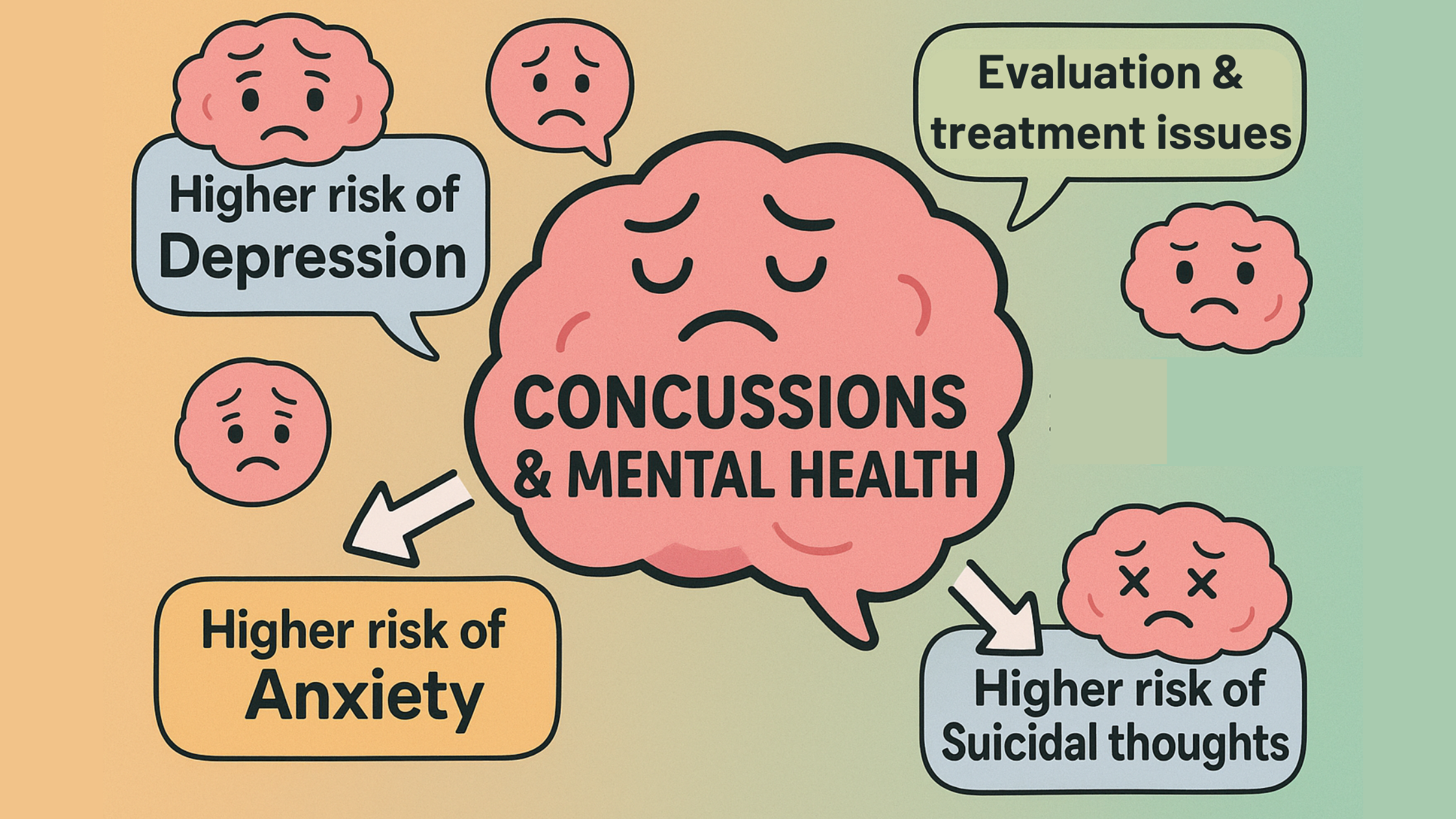
Illustration showing the mental health risks linked to concussions, including depression, anxiety, suicidal thoughts, and treatment issues.

Concussions can significantly affect mental health, increasing the risk of anxiety

Research continues to show staggering associations between concussions and mental health conditions:

  • 3.3x greater risk for depression diagnosis in adolescents with concussion history
  • 2x higher risk of suicide ideation and attempts after mild TBI
  • Increased anxiety, social withdrawal, loneliness, and even substance abuse
  • Children discharged from ERs with a head injury were misdiagnosed up to 25% of the time—sometimes labeled with ADHD, sleep disorders, or behavioral issues instead of properly identifying the concussion

In fact, many parents report later, “my child was misdiagnosed with ADHD,” only to realize the real issue stemmed from a brain injury. Some of these cases also develop into concussion-related depression that isn’t caught in time.

And here’s the kicker: many of these kids were never evaluated appropriately. They didn’t get a full neurological workup. For those who were diagnosed, they routinely aren’t even educated on the significance of their injury.

Misdiagnosis = Mistreatment = Prolonged Suffering

Imagine this scenario:

Your child has trouble focusing after a bike crash. The doctor prescribes Ritalin because the teachers and you have noticed a difference in their school performance.

But they don’t have ADHD. They have a concussion that hasn’t healed and is leading to brain dysfunction, which manifests as easily distractible, zoning out, and behavior changes.

Now, their lives have become harder. The medication doesn’t help. They’re still foggy, moody, withdrawn. And because the real issue wasn’t treated, they continue to suffer needlessly for months or years.

That’s not just poor care. That’s dangerous as it ruins what those individuals should have become.

It’s Not “Just Puberty.” It Might Be a Concussion.

Another thing that often gets blamed for these symptoms, is puberty. A teenager who becomes more withdrawn, anxious, irritable, or tired isn’t just “being a teenager.”

Too many families are told their kid is “just hormonal.” But when you dig into their history you discover falling off a bike, a rough tackle in soccer, a fender-bender. They had a clear mechanism of injury that was never evaluated.

If you treat them for anxiety but ignore the neurological root, they don’t get better. They just become another statistic of untreated concussion symptoms in children.

Brain Injury Changes the Brain—Literally

What happens to the brain after a concussion?
Advanced imaging and research studies are showing:

  • Changes in brain connectivity—especially in areas tied to attention, emotion, and executive function
  • Increased connectivity in the default mode network (often linked with depression and anxiety)
  • Persistent alterations in cerebral blood flow and white matter integrity that persists a year after the injury, even in the absence of symptoms

This neurological dysregulation is a major driver of mental health after concussion, contributing to lasting emotional and cognitive issues.

But here’s the problem: most of this testing isn’t available in routine clinical care. That’s why it’s so important that your provider is highly trained and uses the best tools available to evaluate function, not just symptoms.

Most Concussion Evaluations Are Incomplete

Let’s get this straight. A proper concussion evaluation is not just asking, “Did you hit your head?” and “Do you have a headache?”

At Peak Brain and Body, we follow the American Congress of Physical Medicine and Rehabilitation’s criteria, which includes:

  • A clear mechanism of injury (car accident, whiplash, sports hit, etc.)
  • At least two or more symptoms within 48 hours
  • Clinical examination findings such as:
    • Cognitive impairment
    • Balance impairment
    • Oculomotor impairment (eye movements and visual tracking)

Unfortunately, many providers rely only on cognitive testing. But cognitive testing alone is not enough. A full workup should include:

  • Computerized balance testing
  • Video oculography (eye movement and visual processing testing)
  • Neurological examination
  • Metabolic and laboratory evaluations

Because here’s the truth: if you don’t ask the right questions, you don’t get the right diagnosis, which means you certainly don’t get the right treatment.

What About Imaging?

CTs and MRIs are typically normal in concussion cases. We understand how frustrating it is when you are told that your imaging is normal. Just because imaging is normal, doesn’t mean that everything is normal. It means that it’s not the best way to assess a concussion. The testing is as we discussed above. If there was imaging that could be done, it’d be functional imaging.

Functional imaging like SPECT or advanced MRI sequences can show changes, but they’re rarely done outside research settings as it’s very expensive. That’s why we use objective clinical testing to measure recovery and guide care, not just rely on standard imaging.

Why Standard Treatments Fall Short
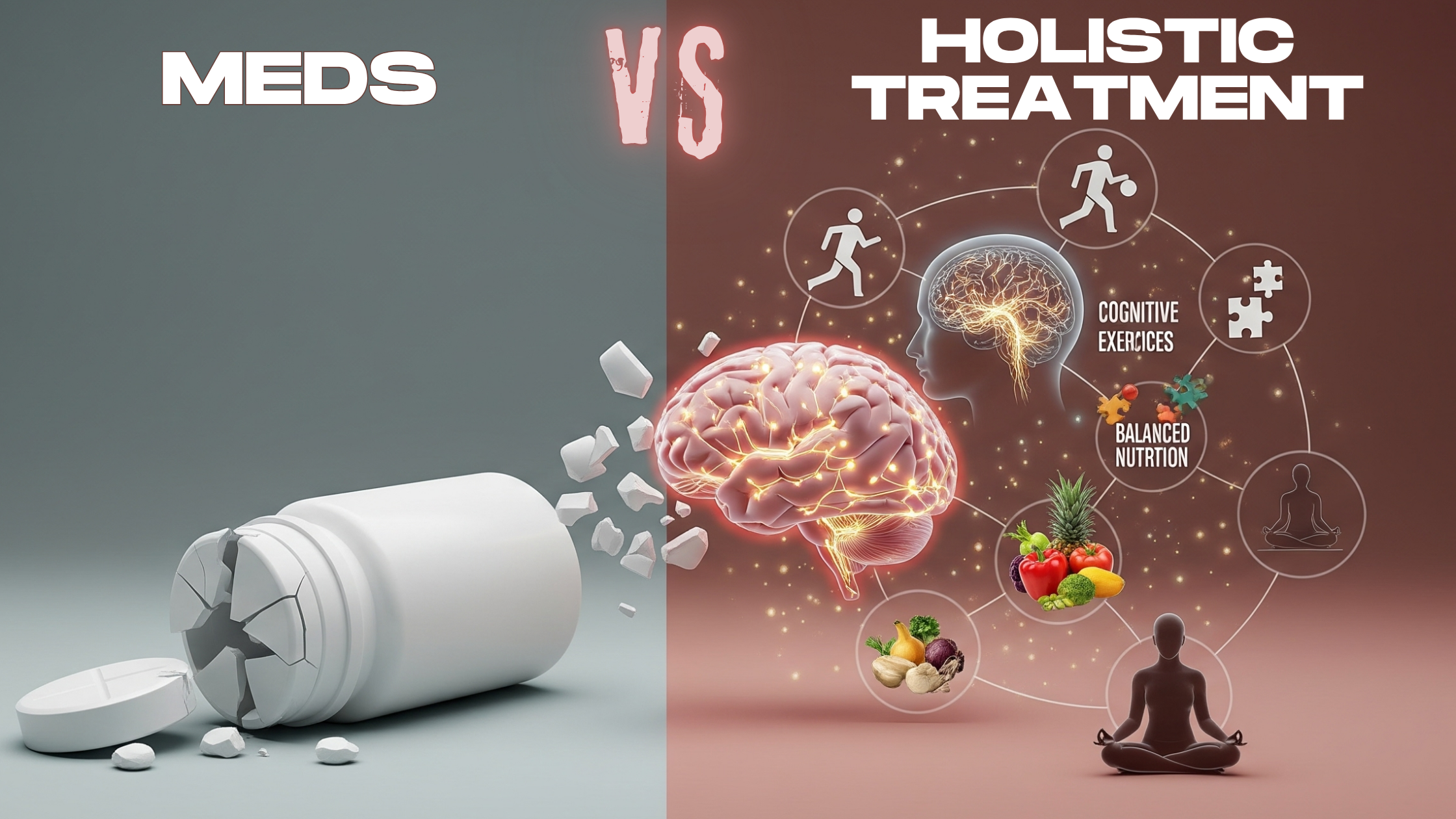
comparing traditional medication with holistic treatment for brain health

A visual comparison between medication and holistic approaches to mental wellness

The journey that most individuals go through following a concussion diagnosis should sound very familiar.

You will see a primary care provider who will tell them this is something that you should recover from in a couple of weeks. If after a couple of weeks you are still struggling, you will be sent to a neurologist to see if there is anything else that should have been addressed. If you have severe enough symptoms, specifically migraines, then a neurologist will prescribe you medication for it. But if you have mental health symptoms, you will then be sent to a psychiatrist, where you’ll be recommended additional medications.

Because you’ve been going to your primary care provider and you are complaining of neck pain, headaches, and maybe some dizziness, they will send you to physical therapy. Most physical therapy places use a very generic treatment program that is going to help some, but because it’s not tailored to your needs, you will not get the results you want. This is going to lead to frustration, and you are going to go to the internet (via social media and web browsing) out of desperation and pick a lot of things that may sound good.

Many people come to us after trying hyperbaric oxygen, neurofeedback, chiropractic, acupuncture, or IV therapy.

Let me be clear: NONE of these treatments fix every concussion.

They may be helpful as part of a plan—but if someone tells you their one tool is the magic bullet for concussions, you need to run the other direction.

Recovery requires stacking therapies strategically. At Peak Brain and Body, we tailor combinations like:

  • Vestibular rehabilitation
  • Eye movement therapy
  • Hand-eye coordination exercises
  • Cognitive retraining
  • Laser therapy for brain injury
  • Mild hyperbaric oxygen
  • Nutritional and peptide support
  • Lifestyle and metabolic optimization

This integrated approach is where people get results—especially when they’ve failed elsewhere. We also follow the 6 stages of concussion recovery to ensure no step is missed.

The Brain Doesn’t Heal in Isolation

Don’t forget: brain health is body health.

If someone has low iron, blood sugar issues, autoimmunity, poor thyroid function, hormone imbalances, chronic infections, or extreme stress—it’s going to interfere with brain healing.

That’s why every new patient at Peak Brain and Body gets an in-depth history and lab workup. Because if we don’t know what’s sabotaging recovery, we can’t fix it.

We are routinely told from individuals that their labs are normal, but with more advanced testing we often find pivotal information that impacts recovery.

Final Thoughts: Rethink Mental Health and Concussions

Mental health struggles, especially in children and teens, are often not what they seem. Depression, anxiety, behavioral issues… they may be symptoms of an unhealed brain injury.

At Peak Brain and Body, we don’t chase symptoms. We investigate root causes.

If your child, your teen, or even you have unexplained mental health challenges and a remote history of a possible head injury, even without a formal concussion diagnosis, you deserve a proper evaluation.

Because until we stop blaming mental health as a standalone issue and start asking what’s driving it, people will continue to suffer.

It’s time to do better.

If you’re ready to uncover the real reason behind lingering symptoms, or help your child finally feel like themselves again, reach out. We’re here to help.

______________________________________________________________________________________

Located in Wesley Chapel, FL, Peak Brain and Body is a destination for individuals seeking world-class care for concussions, brain fog, POTS, and complex neurological conditions. 

Patients travel from across the U.S. for our cutting-edge diagnostics and integrated recovery programs.

Call us today or schedule your Health Strategy Session to get started.
Concussion and Sleep: What You Should Know

A concussion (medically known as a mild traumatic brain injury, mTBI) results from a forceful blow or jolt that causes the brain to shake inside the skull. This disrupts normal brain function, leading to symptoms like headaches, nausea, dizziness, memory issues, fatigue, and emotional disturbances. One of the major challenges is trouble sleeping after a concussion, which can significantly hinder post-concussion recovery.

It was once thought that most concussions heal on their own, but research shows nearly 50% of individuals may not fully recover even a year later. That’s due to how concussions disrupt brain connections, promote inflammation, alter vascular supply, and interfere with your body’s circadian rhythm after brain injury and sleep quality.

Why Sleep Matters in Concussion Recovery

After a concussion, the brain goes through a vulnerable and energy-demanding healing process. Amid this disruption, sleep after concussion becomes not just essential, but critical. Sleep, particularly during the deep sleep stage, plays a key role in neurological restoration. During this time, the brain engages in a natural detoxification process, clearing out cellular waste and neurotoxins that can accumulate post-injury.

Moreover, sleep disturbances after concussion are common, yet restoring healthy sleep cycles can significantly influence your recovery speed. Trouble sleeping after a concussion may delay the brain’s ability to rebuild neural pathways, regulate emotions, and regain cognitive clarity.

Can You Sleep Right After a Concussion?

Yet, sleep after a concussion hasn’t always been well understood. Many of us grew up hearing the advice: “Don’t let someone with a concussion fall asleep.” 

For decades, the standard recommendation was to wake someone every hour after a head injury. The fear was that they might “slip into a coma” or have suffered a brain bleed that gradually over the next few hours, would be detrimental and you wouldn’t know if the individual was sleeping. However, we now understand that it’s not the sleep that’s dangerous—it’s the potential for a more serious underlying injury.

Currently, most concussion experts agree that sleep is fine. There is no need for monitoring someone while they are sleeping. Depending on the time of day the injury occurred, it is unlikely the individual will go right to sleep. During this window, you can assess for red flags—signs of more serious brain trauma such as slurred speech, worsening headache, repeated vomiting, or unresponsiveness. If any of these are present, then going to the emergency room is usually needed.

For those who want to be cautious, light overnight monitoring is fine and doesn’t harm recovery, even though it’s not needed. But in most straightforward cases, uninterrupted sleep is both safe and beneficial. For more clarity, talk with our doctors at 813-838-4005.

Why Sleep Matters So Much After a Concussion

Sleep is a powerful tool for brain healing. During sleep—especially deep sleep—the brain repairs damaged cells, flushes out toxins, and resets critical neural functions. For someone recovering from a concussion, these processes are even more vital.

According to various studies and research, sleep supports:

  • Neuroplasticity – The brain’s ability to rewire and adapt post-injury.
  • Cognitive recovery – Rest helps rebuild attention, memory, and executive function.
  • Mood stability – Sleep regulates stress hormones and emotional reactivity.
  • Symptom management – Proper rest helps reduce headaches, fatigue, and light sensitivity.
  • Shortens Recovery Time: Better sleep is associated with a shorter duration of symptoms and a quicker return to normal activities.

Without enough sleep, your symptoms can worsen. The result is a vicious cycle where poor sleep causes increased symptoms, which in turn make it even harder to sleep. Breaking this cycle with quality rest is vital, and can also enhance the effects of complementary therapies like low-level laser therapy for concussion, which shows promise in supporting brain recovery.

Is It Easy to Sleep After a Concussion?

Well, not for all. Many people struggle to get the rest they need after a concussion. Roughly 70% of individuals with a concussion report sleep-related difficulty during their recovery with most having too little sleep versus oversleeping. It’s a frustrating cycle: concussion symptoms interfere with sleep, and poor sleep worsens those same symptoms.

These challenges can include:

  • Insomnia – Trouble falling or staying asleep
  • Hypersomnia – Sleeping too much during the day
  • Nightmares or vivid dreams – Disturbing dreams that disrupt the rest
  • Sleep apnea – Interrupted breathing during sleep
  • Restless legs syndrome (RLS) – Uncomfortable sensations leading to constant movement
  • Poor sleep quality – You sleep, but still feel exhausted
  • Difficulty Waking: Some individuals report feeling groggy and having difficulty getting out of bed, even after a full night’s rest.

It should be noted that if you have any pre-existing issues with sleep this will impact your recovery even though previously you got away with 4-5 hours of sleep.

Is It Easy to Sleep After a Concussion? Sleep quality concussion

When to See a Doctor

It’s normal to experience some sleep disturbances after a concussion, but if you’re consistently struggling with trouble sleeping after a concussion, or if your symptoms are worsening, such as frequent waking, difficulty falling asleep, or feeling exhausted even after rest, it’s time to seek professional help.

That’s where Dr. Spencer Zimmerman, founder of Peak Brain and Body, can play a vital role in your recovery. With years of clinical experience in neuroplasticity-based concussion treatment, Dr. Zimmerman understands the complex relationship between brain injury and sleep. His unique approach focuses not only on symptom relief but also on long-term neural recovery and sleep regulation.

Depending on your condition, Dr. Zimmerman may recommend:

  • A comprehensive neurological evaluation

  • A sleep study to assess your sleep quality after a concussion

  • Personalized therapies like Cognitive Behavioral Therapy for Insomnia (CBT-I)

  • Natural, non-invasive methods to reset your circadian rhythm and support brain healing and sleep

If you’re wondering, “Why do I sleep more after a concussion?” or “Why can’t I sleep at all?”, don’t ignore these signs. These could indicate deeper disruptions in your brain’s ability to self-regulate—something that requires expert guidance to resolve safely and effectively.

Book a consultation with Dr. Spencer Zimmerman (Brain Guy) today and take the first step toward full post-concussion sleep recovery. Your brain—and your sleep—deserve the best care available.

Tips for Promoting Healthy Sleep During Recovery

Given the importance of sleep, making it a priority during recovery is non-negotiable. Here’s how you can properly sleep:

  1. Stick to a Routine: Go to bed and wake up at the same time every day. This helps regulate your circadian rhythm. Yes, this includes even on the weekend, as your body doesn’t know that society created weekends.
  2. Create a Sleep-Friendly Environment: Use blackout curtains, white noise machines, and a cool room temperature to make your bedroom a calm, quiet refuge.
  3. Wind Down Without Screens: Avoid phones, tablets, and TVs at least an hour before bed. The blue light disrupts melatonin, the hormone that signals your body it’s time to sleep. 
  4. Avoid Stimulants: Skip caffeine and energy drinks, especially in the afternoon and evening. They can linger in your system and interfere with falling asleep.
  5. Try Relaxation Techniques: Deep breathing, meditation, or light stretching can ease anxiety and prepare your body for rest.
  6. Limit Long Naps: Naps are often needed during recovery, but try to keep them under 30 minutes and avoid napping too close to bedtime. If a nap doesn’t impact your nighttime sleep, then it’s okay, but if it does, then you need to avoid naps completely.

In addition to healthy sleep habits, consult a medical provider to explore post-concussion syndrome headache treatment options if headaches are interfering with sleep or daily function.

Why can’t I sleep after a concussion?

After a concussion, the brain may struggle to regulate melatonin production and circadian rhythm. This is why many people experience delayed sleep onset, light sleep, or fragmented rest. Anxiety and physical symptoms—such as headaches or dizziness—may also make sleep difficult. In some cases, individuals may develop post-concussion sleep apnea or insomnia, which requires targeted treatment.

How long does fatigue last after a concussion?

Fatigue can last for weeks or even months after a concussion. While many people begin to feel better within 7–10 days, others experience prolonged fatigue that lingers for several weeks. This is often a sign that the brain is still healing or that sleep quality is poor, even if total hours of sleep seem adequate.

Can poor sleep delay concussion recovery?

Yes. Without high-quality sleep, the brain can’t fully recover. Poor sleep increases stress hormones, disrupts hormone regulation, and interferes with memory and mood. People who experience post-concussion insomnia often report longer recovery times and more severe symptoms.

Final Thoughts

The brain is a miraculous organ, capable of healing and adapting—but it needs your help to do so. Sleep is one of the most powerful, accessible tools we have for recovery. It clears toxins, repairs cells, balances mood, and rebuilds damaged neural pathways. Whether you’re supporting a loved one through a concussion or recovering from one yourself, don’t underestimate the role of rest.

If you’ve ruled out serious complications and there are no red flags, get a restful sleep. However, talking with a doctor first is mandatory. 

While sleep is an important part of concussion recovery, it is only one part. Addressing the complexity of a concussion is what we find helps individuals finally get their lives back after they’ve tried other treatments with little to no results.

To get a personalized consultation, you can connect with Dr. Spencer Zimmerman, who has a great reputation in treating concussions and brain injuries for over 10 years at Peak Brain and Body in Wesley Chapel, FL.

Why Your Post Concussion Syndrome Symptoms Haven’t Gone Away—And What You Can Do

If you’ve had post concussion syndrome symptoms and still feel “off” weeks, months, or even years later, you’re not alone. Many of our patients come to Peak Brain and Body after trying everything—neurologists, medications, chiropractic adjustments, even years of rest—with little or no relief. They’re exhausted, foggy, dizzy, and frustrated.

You may feel like you’re walking through life with your brain in a cloud. Tasks that used to be second nature—focusing at work, remembering a word, getting through the day without a nap—now feel nearly impossible. If you aren’t able to take naps, then you probably wish you had the time to. And perhaps worst of all, you’ve been told that your symptoms are “normal,” or worse, “in your head.”

We hear you. And we’re here to tell you: there’s more to the story—and more that can be done.

Why Do Concussion Symptoms Sometimes Linger?

Most people are told that concussion symptoms resolve in 7 to 14 days. But that’s not always the case, as more and more research shows a large percentage actually don’t recover.

If your symptoms haven’t gone away, you may be dealing with what’s called post-concussion syndrome—and understanding the post-concussion syndrome symptoms timeline can help you see why recovery isn’t the same for everyone. In many cases, it’s a mild traumatic brain injury (mTBI) that never fully healed. Yes, this can be present 5, 10, and even 30 years down the road. In reality, the brain’s recovery depends on more than time—it depends on how the injury is managed, whether deeper systems are disrupted, and how the brain and body interact during healing.

Here are a few of the most common reasons symptoms persist:

1. The Root Cause Was Never Identified

Concussions are more than a bump on the head—they’re a disruption to how the brain processes information. That means you can have perfectly normal scans and still struggle with:

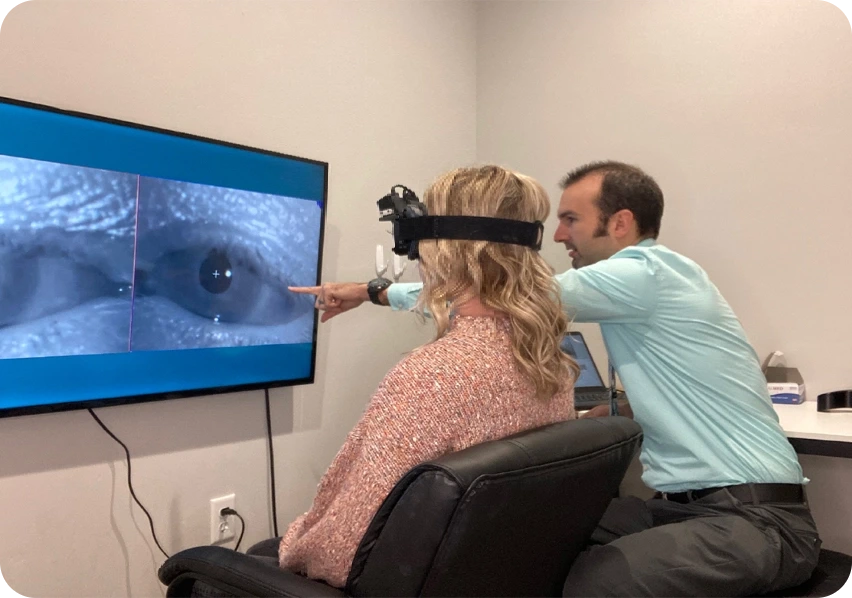
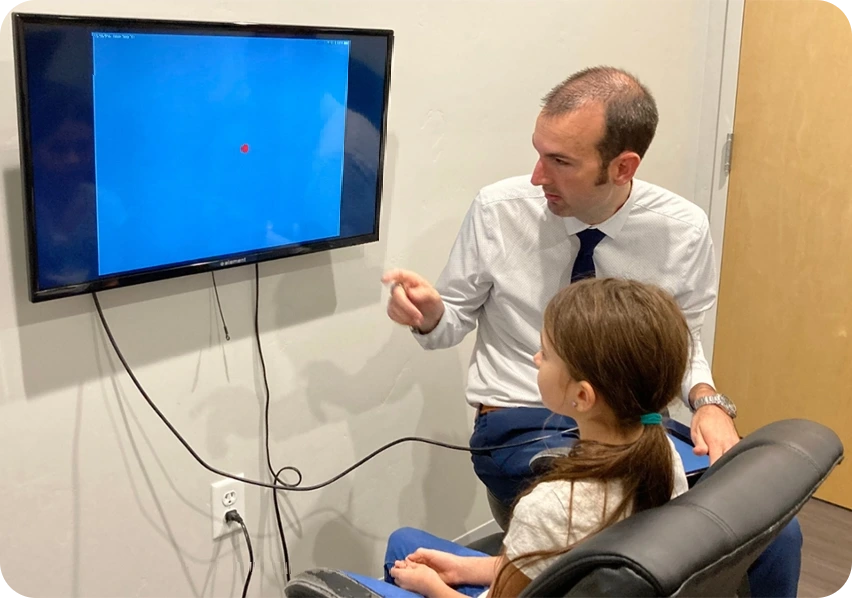
At Peak Brain and Body, we use advanced neurological diagnostics to look deeper than conventional imaging. We assess brain function utilizing video oculography, computerized balance posturography, and, for some, we do brain mapping—so we don’t miss what others might.

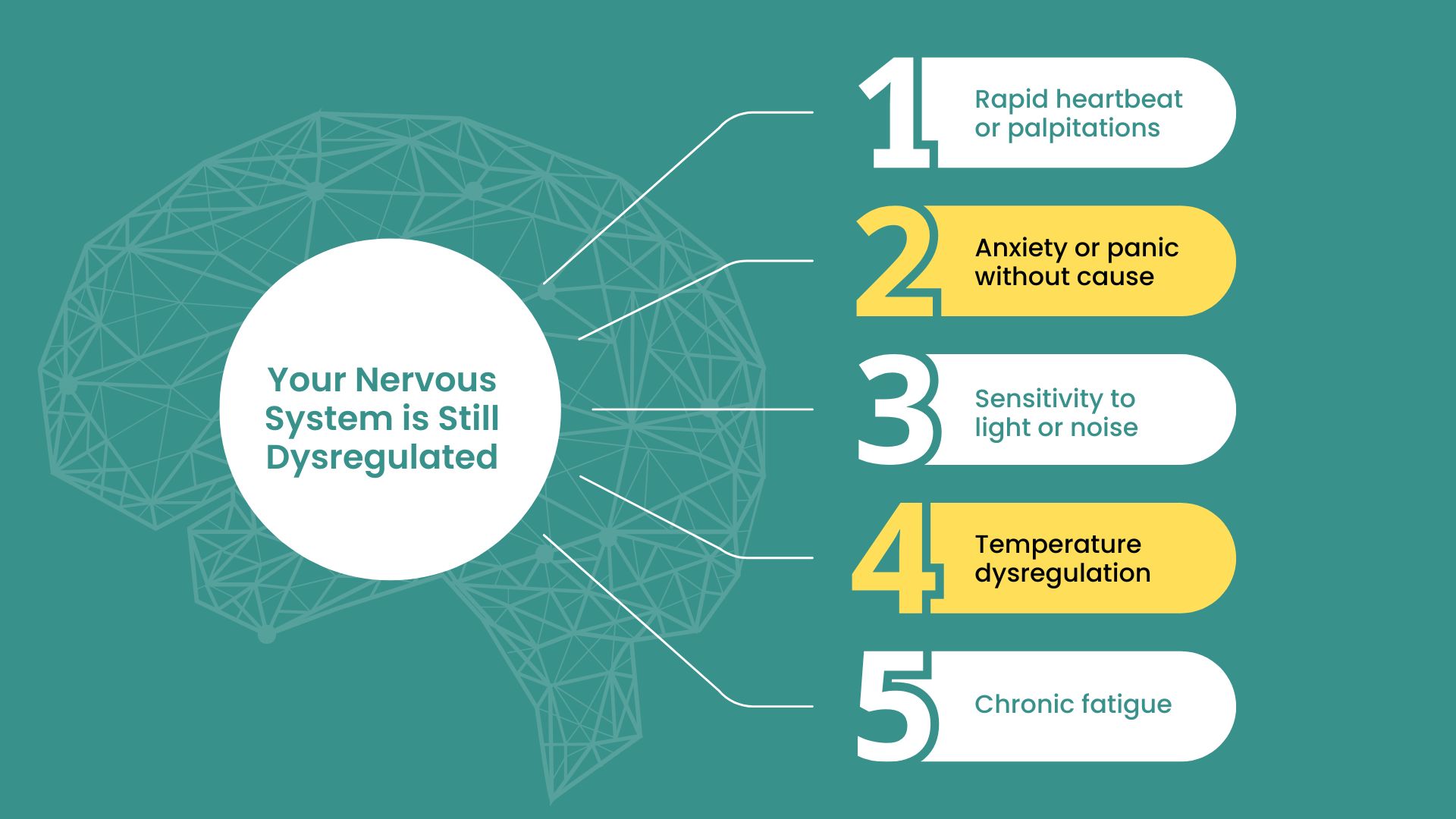
2. Your Nervous System is Still Dysregulated

The brain controls everything—including your autonomic nervous system, which regulates sleep, digestion, heart rate, and blood pressure. After a concussion, this system can become imbalanced, leading to symptoms like

  • Rapid heartbeat or palpitations

  • Anxiety or panic without cause

  • Sensitivity to light or noise

  • Temperature dysregulation

  • Chronic fatigue

Infographic on nervous system dysregulation symptoms after concussion by Peak Brain and Body, including rapid heartbeat, anxiety, light sensitivity, temperature dysregulation, and chronic fatigue.

Your Nervous System is Still Dysregulated—Peak brain and body

We often find that concussion patients are dealing with dysautonomia or even conditions like POTS (Postural Orthostatic Tachycardia Syndrome)—but no one has put the pieces together. This is where neurotherapy for concussion recovery can help restore optimal brain function.

3. Inflammation is Keeping Your Brain Foggy

Your brain and immune system are deeply connected. After an injury, inflammation is a normal part of healing, but in some people, it never turns off. If you have underlying autoimmune conditions, gut dysfunction, or chronic stress, your inflammation can linger and impact your brain’s ability to recover.

This is why our approach includes functional medicine—we explore the whole-body contributors to lingering brain symptoms, including hormones, gut health, immune triggers, and nutrient deficiencies. As part of this, we may recommend a peptide therapy concussion recovery plan to support brain healing and cellular repair.

4. Your Recovery Plan Was Incomplete

Standard concussion advice—rest, avoid screens, and wait—isn’t enough for everyone. Medications may only mask symptoms without addressing the root causes. Generic therapy isn’t specific to what you need and, in many instances, will make you worse.

At Peak Brain and Body, we create customized recovery plans that go beyond rest, using:

  • Functional Neurology: Brain-based therapies tailored to your unique brain patterning

  • Peptide Therapy: Cutting-edge support for brain healing and cellular repair

  • Targeted Nutrition: Identifying deficiencies and supporting brain function

  • Vestibular Rehab for Post-Concussion Dizziness: Restoring balance and reducing vertigo

  • Oculomotor Therapy After Concussion: Improving visual tracking and coordination

  • Multimodal Physical Therapy Post Concussion: Combining multiple approaches for better outcomes

  • Autonomic Regulation Training: To calm an overactive nervous system

We may also incorporate light cardio exercises during concussion recovery and sleep hygiene concussion recovery tips to optimize healing speed and long-term outcomes.

So, What Can You Do Now?

If you’re still struggling with post-concussion symptoms, here’s what we recommend:

Stop Accepting “It’s All in Your Head”
You know something’s wrong. And you deserve answers. Don’t settle for being told your labs are “normal” when you feel anything but. Your experience is valid.

Seek a Provider Who Looks at the Whole Picture
Dr. Spencer Zimmerman is Florida’s only dual-licensed Doctor of Chiropractic and Nurse Practitioner specializing in Functional Neurology, Functional Medicine, and Peptide Therapy. He’s walked this road with his own family and has helped thousands who felt like lost causes.

Get Evaluated with Advanced Testing
Your brain is not a one-size-fits-all organ. We perform in-depth assessments to map how your brain is communicating, regulating, and processing information. This helps us create a treatment plan that’s unique to your physiology, not just your diagnosis.

Start a Personalized Healing Protocol
Our patients often say, “I wish I’d found you sooner.” That’s because we offer a level of care that goes far beyond the traditional route. Whether it’s optimizing sleep, balancing your nervous system, reducing inflammation, or retraining your brain’s pathways, our protocols are designed for long-term recovery, not short-term symptom suppression.

Conclusion

You’re not broken. You just haven’t had the right method—yet.

At Peak Brain and Body, we believe in restoring hope through thoughtful, integrative care. We understand the frustration of feeling dismissed and the exhaustion of trying everything without results. That’s why we created a center where your story matters and your healing is possible.

Whether you’re local to Tampa or traveling from out of town, we’re here to help you. Request an appointment today!

Recovery From Post-Concussion Syndrome Is Possible With Advanced Diagnostics And Therapies.

Post-Concussion Syndrome Recovery Treatments

Peak Brain and Body is the leading post-concussion syndrome treatment provider in Wesley Chapel and greater Tampa Florida. We are going to review what Dr. Zimmerman has learned over the past 12 years of helping individuals with post concussion syndrome recovery.

If you are reading this then you are either dealing with ongoing concussion symptoms, have a loved one struggling, or are wondering if this may explain why you feel the way you do. So, what exactly is post-concussion syndrome?

Post-concussion syndrome is a term used to describe when an individual continues to have ongoing symptoms beyond 3 months after a concussion occurred. What are symptoms that someone often experiences with post-concussion syndrome, you don’t need all of these to meet criteria.

Post-Concussion Syndrome Treatment

If you are reading this then you are either dealing with ongoing concussion symptoms, have a loved one struggling, or are wondering if this may explain why you feel the way you do. So, what exactly is post-concussion syndrome? Post-concussion syndrome is a term used to describe when an individual continues to have ongoing symptoms beyond 3 months after a concussion occurred. What are symptoms that someone often experiences with post-concussion syndrome, you don’t need all of these to meet criteria.

    • Headache

    • Brain Fog

    • Fatigue

    • Mood Changes

    • Depression

    • Blurry Vision
    • Dizziness
    • Light Sensitivity
    • Noise Sensitivity
    • Insomnia
    • Poor Concentration
    • Problems Finding Words
    • Migraines
    • Anxiety
    • Forgetfulness
    • Balance Issues

Yes, it is common to have many of these symptoms and not just one or two. No you aren’t crazy, it isn’t just a mental health issue, and post concussion syndrome recovery IS possible.

Post-Concussion Syndrome Myths

Have you been told:

    • Your symptoms will go away on their own

    • Your imaging is normal and nothing is wrong

    • You are depressed or anxious, not dealing with a concussion

    • Concussions don’t last that long

    • There is nothing you can do

If so, know that you are not alone. Each year millions of concussions occur in the United States and the reported numbers are far below what actually occurs due to individuals not seeking care or the diagnosis is missed. Research suggests that nearly 50% of those diagnosed in a hospital setting will continue to have symptoms a year later. This is much different than the initial thought of 5-10%.

It’s not simply the fact that you haven’t recovered, but it’s the lack of understanding from providers, family, friends, and co-workers that is really frustrating as it changes what gets the focus.

This leads to many thinking their concussion is no longer impacting them and they set on a quest to treat their symptoms instead of actual post concussion syndrome recovery. The problem is, treating a symptom is just that. It is a symptom, it doesn’t address the underlying reason for why the symptom is there to begin with.

We are going to first discuss some of the things that happen in the brain following a concussion. After that we will discuss different treatment options that one should consider.

What Does A Concussion Do To The Brain?

Research over the years has given us tremendous insight into what happens in the brain following a concussion. These changes can persist for months and years following the injury.

    • Inflammation

    • Energy

    • Blood Flow and Oxygen Changes

    • Connections

Treatments For Post-Concussion Syndrome

There are many treatments or therapies for post concussion syndrome recovery that can be performed and this isn’t meant to be an all inclusive list.

Vestibular Therapy

When someone hears the term vestibular system they often think of the inner ear crystals, but this ignores much of what the vestibular system actually does. This system integrates information from the inner ears, central vestibular relay stations, cervical spine, and eye movements. When these work together appropriately you can function, but when they don’t you end up with a variety of symptoms.